
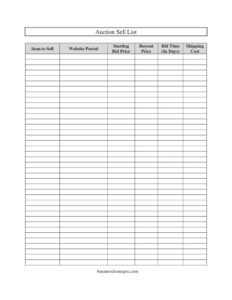
Auction Sell List
Track every item you list at auction with this free Auction Sell List template — record starting bids, buyout prices, and shipping in a free download.
PDF
DOCX
3 downloads
0
likes
Download Files
- DOCX
An Auction Sell List is a simple tracking sheet used to record every item you plan to sell at auction, along with the key pricing and timing details for each listing. People most often use it to keep their starting bids, buyout prices, shipping costs, and posting dates organized in one place. You can download it free in PDF or DOCX with no signup required.
What Is an Auction Sell List?
An Auction Sell List is a log or inventory document that captures the items you intend to sell through an online or in-person auction and the details that govern how each item is offered. It is typically maintained by an individual seller, reseller, estate liquidator, or small business that lists products across one or more auction platforms. The sheet documents what is being sold, the price points that frame each auction, the shipping cost a buyer should expect, the length of the bidding window, and where the listing was posted. Rather than scattering this information across screenshots and notes, the form consolidates it so you can compare listings, follow up on sales, and reconcile your results after the auction closes.
When Do You Need an Auction Sell List?
This form is useful any time you are managing more than a single listing and want a clear record of how each item is priced and where it lives. Common situations include:
- Reselling inventory online across platforms like general auction marketplaces, where keeping starting bids and buyout prices straight matters.
- Estate or downsizing sales where dozens of household items are being listed and you need to track what has gone up and at what price.
- Small business clearance of overstock or seasonal goods sold by auction to recover capital quickly.
- Collectibles and hobby selling, such as coins, cards, antiques, or memorabilia, where each item has a deliberate starting price and reserve-style buyout.
- Charity or fundraising auctions where organizers must record items, suggested starting bids, and the bidding period.
- Comparing platform performance by noting which website each item was posted to and how the pricing strategy performed.
What an Auction Sell List Should Have
A complete Auction Sell List should make every listing easy to identify and act on. At minimum it should include a clear description of the item to sell, the starting bid price, an optional buyout price for buyers who want to skip the bidding, the shipping cost the buyer pays, the length of the bidding window in days, and the website where the listing was posted. Including all of these in a single row per item lets you scan the sheet quickly, spot listings that are about to close, and confirm that your pricing is consistent. A good list also leaves room for notes so you can mark sold items, track winning bids, or flag listings that need to be relisted.
How to Fill Out an Auction Sell List
Work through the form one item per row, completing each field in order:
- Item to Sell: Enter a clear, specific description of the product, including brand, model, size, condition, or any detail a buyer needs to identify it.
- Starting Bid Price: Record the lowest opening price you will accept to launch the auction. Set it low enough to attract bidders but high enough to protect your cost.
- Buyout Price: Note the fixed price a buyer can pay to purchase the item immediately and end the auction. Leave blank if you are not offering a buyout.
- Shipping Cost: Enter the amount the buyer will pay for delivery, or note “free” or “local pickup” if applicable.
- Bid Time (In Days): Specify how many days the auction will run, such as 3, 5, 7, or 10 days.
- Website Posted: Record the platform or site where the listing was published so you can locate and manage it later.
Pricing Strategy Tips for Your Listings
The pricing fields on this form are where most of your profit decisions get made, so treat them deliberately. A lower starting bid can generate early activity and the appearance of momentum, which sometimes drives a higher final price; a higher starting bid protects you from selling below cost but may discourage bidders. Set the buyout price to reflect a fair retail value plus a small premium for convenience, since buyers paying it are choosing speed over a potential bargain. When you set shipping cost, weigh whether to charge actual carrier rates or bundle shipping into the item price to appear more attractive. Finally, match the bid time to the item: everyday goods often sell well in shorter windows, while rare or high-value pieces may benefit from a longer bidding period that gives more buyers a chance to discover them.
Using the List After the Auction Closes
The Auction Sell List is just as valuable after a listing ends as before it begins. Use it to reconcile which items sold, at what final price, and through which website. By comparing your recorded starting bid and buyout price against the actual outcome, you can refine future pricing. The list also doubles as a shipping checklist: once an item sells, you can confirm the shipping cost you quoted matches what you actually charged. Keeping the completed sheet gives you a running history of your sales activity that is useful for bookkeeping, tax preparation, and spotting which platforms and price points perform best for your inventory.
Common Mistakes to Avoid
- Vague item descriptions that make it hard to match a row to the actual listing or that confuse buyers.
- Setting a buyout price below the starting bid, which creates a nonsensical listing and frustrates bidders.
- Forgetting to record shipping cost, then absorbing an expense that erodes your profit.
- Leaving the website field blank, so you cannot quickly find or manage a live listing.
- Choosing a bid time that is too short for high-value items, cutting off potential bidders before they find the listing.
- Not updating the list as items sell, leaving you unsure which products are still active.
Frequently Asked Questions
What is an Auction Sell List used for? It is a tracking sheet that records every item you are selling at auction along with its starting bid, buyout price, shipping cost, bidding window, and the website where it is posted. Sellers use it to stay organized when managing multiple listings and to compare pricing and results across items and platforms.
How do I fill out an Auction Sell List? Enter one item per row, starting with a clear item description, then the starting bid price, buyout price, shipping cost, bid time in days, and the website where you posted it. Update each row as listings sell or need relisting so the sheet always reflects your current activity.
What is the difference between a starting bid and a buyout price? The starting bid is the lowest opening price you will accept to begin the auction, and the final sale price may rise above it through competitive bidding. The buyout price is a fixed amount a buyer can pay to purchase the item immediately, ending the auction without bidding.
Is an Auction Sell List a legally binding document? No, it is an internal tracking and inventory tool, not a contract. The binding terms of a sale are governed by the auction platform’s rules and your agreement with the buyer, while this list simply helps you organize and document your listings.
How long should an auction run? The right bid time depends on the item, but common windows range from a few days for everyday goods to seven or ten days for higher-value or collectible items. Longer windows give more potential buyers a chance to discover the listing, while shorter ones create urgency.
How much does this Auction Sell List template cost? It is completely free to download from Business Forms Pro in PDF or DOCX format, with no signup or payment required. You can fill it out digitally or print it, and reuse it for as many auctions as you like.
This Auction Sell List template is provided as a general example for informational purposes only and does not constitute legal, financial, or tax advice. Auction rules, fees, and seller obligations vary by platform and jurisdiction, so consult the relevant platform terms and a qualified professional for guidance specific to your situation.
Related Forms
- Home Food Storage Inventory Card
- Wilderness Emergency Checklist
- Beauty Salon Manicure And Pedicure Inventory Card
- Visitor Log
- Elder Care Daily Log
- Evidence Log
Browse more in Log and Inventory.