
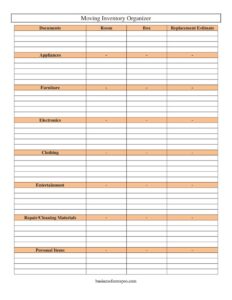
Moving Inventory Organizer
Track every box and item with a free Moving Inventory Organizer template—stay organized on moving day with a free download in PDF and DOCX.
PDF
DOC
0
likes
Download Files
- DOC
A Moving Inventory Organizer is a simple document used to list and track every item and box you pack, ensuring nothing gets lost or damaged during a move. People most often reach for one when relocating a home or office and need a reliable way to know exactly what was packed, which room it belongs to, and whether it arrived safely. You can download this template for free in both PDF and DOCX formats—no signup required.
What Is a Moving Inventory Organizer?
A Moving Inventory Organizer is a structured log that records the contents of your move, box by box and item by item. Homeowners, renters, and office managers use it to document what is being transported, assign each container to a destination room, and confirm everything is accounted for at the new location. It serves as a working checklist on packing day and as a reference when you unload and unpack. The organizer also doubles as supporting documentation if you ever need to file a claim with a moving company or insurer for lost or broken belongings. In short, it turns the chaos of a move into a manageable, written record you can check off as you go.
When Do You Need a Moving Inventory Organizer?
An inventory organizer is valuable any time you are transporting more than a handful of items. Common situations include:
- Moving to a new home or apartment and wanting to track which boxes belong in the kitchen, bedroom, or garage.
- Hiring professional movers and needing a count of items to verify nothing is missing on delivery.
- Relocating an office where equipment, files, and furniture must be matched to specific workstations or departments.
- Putting belongings into storage and wanting a record of what is in each unit or container.
- Moving long-distance or overseas, where shipments may be out of your hands for days or weeks.
- Documenting valuable or fragile items for insurance purposes before they are packed and transported.
What a Moving Inventory Organizer Should Have
A complete moving inventory captures enough detail to identify each container and confirm its safe arrival. Key elements include a box or item number for easy reference, a description of the contents, the room the box came from and the room it should go to, and the quantity or count of items inside. It is also helpful to note whether contents are fragile, the estimated value for higher-priced items, and a checkbox to mark each box as received at the destination. Adding a column for condition on arrival lets you flag damage immediately. Finally, space for the move date, your name, origin address, and destination address ties the whole inventory together as a single, complete record.
How to Fill Out a Moving Inventory Organizer
- Enter your details and dates: Write your name, the origin address, the destination address, and the planned moving date at the top so the inventory is clearly identified.
- Assign a box or item number: Give each container a unique number and write that same number on the physical box with a marker.
- Describe the contents: List what is inside—be specific enough to recognize the box later (for example, “kitchen pots and pans” rather than just “kitchen”).
- Record the source room: Note which room the items came from to keep similar belongings grouped.
- Note the destination room: Indicate where the box should be placed in the new space so movers or helpers can sort quickly.
- Add quantity and value: Enter the item count and, for valuables, an estimated value for insurance reference.
- Flag fragile or special items: Mark boxes that need careful handling.
- Check off on arrival: As each box is unloaded, mark it received and note any damage.
Tips for an Effective Moving Inventory
The most useful inventory is one you actually keep current. Number boxes in the order you pack them and write the number on at least two sides plus the top so it is visible no matter how the box is stacked. Color-code by destination room with stickers or colored tape, and match those colors to your list for fast sorting on the other end. Photograph the contents of high-value boxes before sealing them; pair the photo file name with the box number on your sheet. Keep one master copy of the organizer with you—not packed inside a box—so you can reference it throughout the move. If you are using professional movers, share a copy with them and reconcile your numbers against their delivery sheet before signing off.
Using Your Inventory for Insurance and Claims
If anything goes missing or arrives damaged, a detailed inventory is your strongest evidence. Record estimated values and conditions before the move so you have a clear “before” baseline. When boxes are delivered, inspect them promptly and note discrepancies on your organizer the same day, since many movers and insurers impose tight deadlines for reporting loss or damage. Keep the completed inventory along with receipts, photos, and the mover’s bill of lading in one folder. Requirements and coverage limits vary by carrier and by region, so review your moving contract or homeowner’s policy to understand what is protected and what documentation is expected.
Common Mistakes to Avoid
- Vague descriptions: Writing only “misc” or “stuff” makes boxes impossible to identify later—be specific.
- Skipping the box numbers: An inventory is useless if the numbers on your list don’t match the numbers on the boxes.
- Forgetting the destination room: Without it, everything piles up in one spot and unpacking takes far longer.
- Not flagging fragile items: Unmarked breakables are far more likely to be stacked incorrectly.
- Packing the inventory away: Keep your master copy on hand, never sealed inside a box.
- Failing to check off on arrival: Skipping the receipt check means you may not notice a missing box until it’s too late to claim.
Frequently Asked Questions
What is a Moving Inventory Organizer used for? It is used to list and track everything you pack during a move so you can confirm each box and item arrives safely. It helps you sort boxes into the right rooms, identify contents quickly, and document belongings in case you need to file a damage or loss claim.
How do I fill out a moving inventory? Start by adding your name, addresses, and move date, then give each box a unique number and write that number on the box itself. List the contents, source room, destination room, quantity, and value, flag anything fragile, and check off each box as it’s received at the new location.
Is this Moving Inventory Organizer free to download? Yes. You can download the template for free in both PDF and DOCX formats with no signup required. The DOCX version is fully editable so you can add or remove columns to fit your move.
Do I need to share my inventory with the movers? It is a good idea if you hire professionals. Sharing a copy lets you reconcile your box count against their delivery sheet before you sign, which helps confirm nothing was left behind or lost in transit.
Can I use this inventory for an insurance claim? An inventory with descriptions, values, and arrival conditions provides useful documentation if you need to report loss or damage. Coverage rules and deadlines vary by carrier and location, so check your moving contract or insurance policy for specific requirements.
How detailed should each entry be? Detailed enough that you can recognize the box without opening it—name the main contents and the room rather than writing a generic label. For valuable or fragile items, add the quantity, estimated value, and a fragile flag so they receive proper handling.
This Moving Inventory Organizer template is a general example provided for informational purposes only and does not constitute legal, financial, or insurance advice. Coverage, claim deadlines, and documentation requirements vary by moving company and jurisdiction—consult your moving contract, insurer, or a qualified professional for guidance specific to your situation.
Related Forms
- Semi Annual Safety And Maintenance Update
- Social Media Tracker
- Pledge Log
- Log Sheet
- Asset Inventory
- Advertisement Tracker
Browse more in Log and Inventory.