
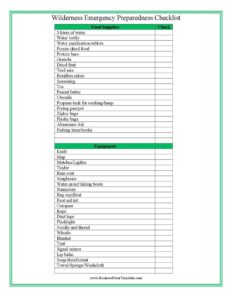
Wilderness Emergency Checklist
Download a free Wilderness Emergency Checklist template to pack food, water, gear, and first aid for any trip — free PDF and DOCX download, no signup.
PDF
0
likes
Download Files
A Wilderness Emergency Checklist is a printable packing and preparedness list that helps you confirm you have the food, water, equipment, and safety gear needed before heading into the backcountry. Most people use it to avoid forgetting a critical item — like water purification tablets, a compass, or a first aid kit — when a missing piece could turn a setback into a real emergency. It’s free to download here in both PDF and DOCX formats, with no signup required.
What Is a Wilderness Emergency Checklist?
A Wilderness Emergency Checklist is a structured inventory of supplies and gear divided into clear categories such as food, water, cooking equipment, and survival tools. It is typically used by hikers, campers, backpackers, hunters, scout leaders, and trip organizers to verify that every essential is packed before leaving cell coverage and resupply points behind. Rather than relying on memory, you check off each item as it goes into your pack. The form documents what you intended to bring and serves as a reference if you need to ration supplies, repack, or brief a group. It is part packing list, part safety document, and part planning tool that turns a vague “I think I have everything” into a verified, item-by-item record.
When Do You Need a Wilderness Emergency Checklist?
This checklist is useful any time you’ll be away from easy help, services, or shelter. Common situations include:
- Multi-day backpacking trips where you carry everything on your back and cannot restock food or water along the way.
- Remote camping in areas with no ranger station, store, or reliable phone signal nearby.
- Day hikes in unfamiliar or rugged terrain where weather, navigation, or injury could force an unplanned overnight stay.
- Group or youth outings, such as scouting trips, where a leader must confirm gear for several people and assign shared items like the tent, rope, and first aid kit.
- Hunting and fishing expeditions that rely on items like fishing lines, hooks, a knife, and propane for cooking the catch.
- Seasonal or emergency “bug-out” preparation, where a pre-stocked kit lets you leave quickly with food, water, and survival essentials already accounted for.
What a Wilderness Emergency Checklist Should Have
A complete checklist groups items so nothing slips through the cracks. The core categories on this template are food and water, cooking and storage supplies, navigation and survival equipment, weather protection, and first aid and hygiene. Within those groups it should list specific quantities where they matter — such as 3 liters of water — and include both consumables (freeze-dried food, protein bars, water purification tablets) and durable gear (knife, compass, tent, flashlight). A good checklist also leaves room to check off each item, note who is carrying shared equipment, and flag anything that still needs to be purchased or replaced before departure.
How to Fill Out a Wilderness Emergency Checklist
- Start with the water section: confirm you’re carrying at least 3 liters of water, a refillable water bottle, and water purification tablets for treating natural sources.
- Work through food supplies, checking off freeze-dried food, protein bars, granola, dried fruit, trail mix, bouillon cubes, seasoning, tea, and peanut butter based on trip length and calorie needs.
- Verify cooking and storage items: utensils, a propane tank for cooking or your lamp, a frying pan or pot, Ziploc and plastic bags, aluminum foil, and fishing lines and hooks if you plan to fish.
- Move to equipment and survival tools — knife, map, matches or a lighter, tinder, rope, duct tape, compass, flashlight, whistle, signal mirror, and a tent.
- Check weather and skin protection: rain coat, sunglasses, waterproof hiking boots, sunscreen, bug repellent, and lip balm.
- Confirm safety and repair items: first aid kit, needle and thread, and a blanket.
- Finish with hygiene: soap or disinfectant and a towel, sponge, or washcloth. Mark anything missing so you can buy or borrow it before you leave.
Tips for Building a Reliable Kit
Adapt the quantities to your trip rather than treating the list as one-size-fits-all. A weekend solo hike needs less food than a week-long group expedition, and cold or high-altitude environments call for extra insulation beyond a single blanket. Pack in waterproof layers — the Ziploc and plastic bags on this list double as dry storage for matches, tinder, and your first aid kit. Test gear before you go: light the propane, check the flashlight batteries, and inspect the tent. Distribute heavy shared items like the propane tank, rope, and pot across the group so no one person is overloaded.
How This Differs From a General Packing List
A vacation packing list focuses on comfort and clothing; a wilderness emergency checklist prioritizes survival and self-sufficiency. The emphasis here is on the items that keep you safe when help is far away — purification for clean water, a compass and map for navigation, a whistle and signal mirror for rescue, and a first aid kit for injuries. Treat the survival items as non-negotiable even on short outings, because emergencies rarely announce themselves in advance. Keep a copy of the completed checklist with a trusted contact who knows your route and return time.
Common Mistakes to Avoid
- Underestimating water. Three liters is a baseline, not a maximum — heat, exertion, and longer routes demand more, plus reliable purification tablets.
- Skipping navigation tools. Phones lose signal and battery; carry the physical map and compass and know how to use them.
- Forgetting fire and signaling gear. Matches, a lighter, tinder, a whistle, and the signal mirror are small but critical for warmth and rescue.
- Packing food you can’t prepare. Bring the propane, pot, and utensils that match your meals instead of cooking-dependent food with no way to heat it.
- Neglecting the first aid kit. Carrying one isn’t enough — check that it’s stocked and add the needle, thread, and duct tape for repairs.
- Not testing gear beforehand. Dead flashlight batteries or an empty propane tank discovered in the field are easily avoided at home.
Frequently Asked Questions
What is a Wilderness Emergency Checklist used for? It is used to verify that you’ve packed all the essential food, water, equipment, and safety gear before heading into remote areas. By checking off each item, you reduce the risk of forgetting something critical when resupply or rescue isn’t readily available.
How do I fill out the checklist? Go through each category — water, food, cooking supplies, equipment, weather protection, first aid, and hygiene — and check off every item as you pack it. Mark anything you’re missing so you can buy or borrow it, and adjust quantities to match your trip’s length and conditions.
How much water should I bring? The template lists 3 liters as a starting point, but your needs depend on heat, exertion, and how long you’ll be out. Always pack the water purification tablets so you can safely treat additional water from streams or lakes.
Is this checklist suitable for group trips? Yes. You can use one copy to assign shared items like the tent, propane tank, rope, and first aid kit across the group, while each person confirms their own water, food, and personal gear.
Can I customize the list for my trip? Absolutely. The DOCX version is fully editable, so you can add items, remove what you don’t need, and set quantities for your specific destination, season, and group size.
Is the Wilderness Emergency Checklist free to download? Yes. You can download it free in both PDF and DOCX formats with no signup required, print as many copies as you like, and reuse it for every trip.
This checklist template is a general example provided for informational purposes only and is not professional safety, medical, or survival advice. Conditions, regulations, and gear requirements vary by location and activity — consult experienced guides, local land managers, and qualified professionals before undertaking any wilderness trip.
Related Forms
- Website Password Tracker
- Interview Preparation Worksheet
- List of Non-Negotiables
- Inventory Tag
- Yearly Multiple Project Timetable
- Cleaning Checklist
Browse more in Log and Inventory.