
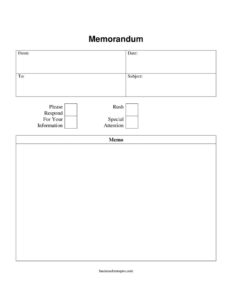
Blank Memo
Download a free blank memo template to send clear internal messages with from, to, date, subject and priority fields — free download in PDF and DOCX.
PDF
DOCX
1 downloads
0
likes
Download Files
- DOCX
A blank memo is a simple, reusable template for sending short internal messages within an organization, and people most often reach for one to announce a policy, request a quick action, or pass along information without the formality of a full letter or email thread. It captures the essentials — who it’s from, who it’s to, the date, the subject, and the priority — in a clean, professional layout. This blank memo is free to download in both PDF and DOCX formats, with no signup required.
What Is a Blank Memo?
A blank memo is an unfilled memorandum form used for internal business communication. It is typically issued by a manager, department head, team lead, or any employee who needs to circulate a message to colleagues, a team, or an entire office. Unlike a letter, it skips greetings and signatures and gets straight to the point, documenting a single topic in a structured header followed by a short body. The blank version lets you reuse the same layout for many purposes — announcements, reminders, requests, and updates — while keeping a consistent, recognizable format. With checkbox prompts like please respond, for your information, rush, and special attention, this memo also flags how the reader should treat the message at a glance.
When Do You Need a Blank Memo?
A memo is the right tool whenever a message is internal, brief, and worth documenting. Common situations include:
- Announcing a policy or procedure change — new office hours, an updated expense process, or a revised dress code that everyone needs to read.
- Requesting a quick action or response — asking team members to confirm attendance, submit timesheets, or review a draft by a deadline.
- Sharing information for the record — distributing meeting outcomes, reminders, or updates marked for your information that need no reply.
- Flagging urgent matters — using the rush or special attention options to escalate something time-sensitive, like a building closure or a system outage.
- Documenting decisions — creating a dated paper trail of a directive so there’s a clear reference later.
- Onboarding or all-staff notices — welcoming a new hire or reminding staff about an upcoming holiday schedule.
What a Blank Memo Should Have
A complete memo is easy to scan and leaves no doubt about its purpose. At minimum it should include a clear header with the sender, recipient, date, and subject line, followed by a focused body that covers one topic. The priority indicators — please respond, for your information, rush, and special attention — tell the reader how to act before they read a single sentence. A good memo also keeps the body concise: a short opening that states the purpose, the key details in the middle, and a clear closing line that says what (if anything) the reader should do next. Consistency in formatting across memos helps staff recognize and prioritize them quickly.
How to Fill Out a Blank Memo
- From: Enter your name, and your title or department if it adds context. This identifies who is responsible for the message.
- To: Name the recipient, group, or distribution list — for example, “All Staff,” “Marketing Team,” or a specific person. Be precise so the right people read it.
- Date: Write the date the memo is issued. This anchors the message in time and is useful for record-keeping and deadlines.
- Subject: Summarize the topic in a few words, such as “Updated Parking Policy” or “Q3 Report Due Friday.” A specific subject helps readers triage.
- Priority checkboxes: Mark the option that fits. Check please respond if you need a reply, for your information if no action is required, rush if it’s time-sensitive, or special attention for items needing careful review.
- Body: In the space below the header, state your purpose in the first sentence, add supporting details, and end with the action you want and any deadline.
Tips for Writing an Effective Memo
Keep each memo to a single subject; if you have two unrelated topics, send two memos so neither gets lost. Lead with the most important point — busy readers may only scan the first line. Use short paragraphs or bullets for steps and dates so the key facts stand out. Be deliberate with the priority checkboxes: overusing rush or special attention trains people to ignore them, so reserve those flags for genuinely urgent items. Finally, proofread the subject line and any names before sending, since the header is the first thing recipients judge.
Memo vs. Email vs. Letter
A memo, an email, and a business letter overlap but serve different purposes. A letter is formal and usually goes to someone outside the organization, with a salutation and signature block. An email is fast and informal and works for ongoing back-and-forth. A memo sits in between: it’s internal like email but more structured and official, making it ideal for announcements you want everyone to read the same way and possibly keep on file. You can attach this memo to an email, print it for a bulletin board, or distribute it as a PDF — the consistent header keeps the message clear no matter how it travels.
Common Mistakes to Avoid
- Vague subject lines — “Update” tells readers nothing; name the actual topic.
- Cramming multiple topics into one memo, which buries important points and confuses next steps.
- Skipping the date, which makes the memo useless as a dated record or deadline reference.
- Overusing priority flags so that rush and special attention lose their meaning.
- Forgetting the call to action — if you checked please respond, say exactly what response you need and by when.
- Addressing it to the wrong audience, sending sensitive or all-staff content to people who shouldn’t receive it.
Frequently Asked Questions
What is a blank memo used for? A blank memo is a reusable template for internal communication, such as announcements, reminders, requests, and updates. You fill in the from, to, date, and subject fields and write your message in the body. The priority checkboxes let you signal how urgent or actionable the message is.
How do I fill out the priority checkboxes? Mark only the option that matches the message: please respond when you need a reply, for your information when no action is required, rush for time-sensitive items, and special attention for things needing careful review. Choose one in most cases so the signal stays clear. Avoid checking several at once unless it’s genuinely warranted.
Does a memo need to be signed? Memos generally don’t require a formal signature the way letters do, because the from line already identifies the sender. Some organizations add initials or a signature at the bottom for authorization on directives or approvals. Follow your workplace’s convention if one exists.
Is a memo legally binding? A memo is primarily a communication and recordkeeping tool, not a contract, so it usually isn’t binding on its own. However, it can document instructions, policies, or decisions that carry weight within an organization. If you need an enforceable agreement, use a contract drafted for that purpose.
Can I edit this blank memo template? Yes. Download the DOCX version to customize the header, add your company name or logo, and adjust the priority options to fit your needs. The PDF version is ready to print or fill in if you prefer a fixed layout.
How much does this blank memo template cost? It is completely free to download here in both PDF and DOCX formats, with no signup or payment required. You can reuse it as often as you like for any internal message. Save a copy as your standard template to keep your memos consistent.
This blank memo template is provided as a general example for informational purposes only and does not constitute legal, financial, or professional advice. Internal communication and recordkeeping practices vary by organization and jurisdiction; consult a qualified professional for guidance on your specific situation.
Related Forms
- Funeral Planning Form
- Recipes to Try
- Book Club Ballot
- Membership Cancellation Form
- Hotel Comparison Chart
- Entry Form
Browse more in Miscellaneous.