
Course Syllabus
Build a clear, organized course syllabus with this free template—outline schedule, grading, and assignments. Free download in PDF and DOCX.
PDF
DOCX
0
likes
Download Files
- DOCX
A course syllabus is the foundational document an instructor gives students at the start of a class, laying out what the course covers, how it is graded, and what is expected week to week. People most often use a syllabus to set clear expectations on day one and avoid confusion about deadlines and grading later. This template is free to download in PDF and DOCX, with no signup required.
What Is a Course Syllabus?
A course syllabus is a structured outline of a class created by the instructor or department and distributed to enrolled students. It documents the essential details—course title and number, the professor’s contact information, the term schedule, the topics covered each session, assignments, and how the final grade is calculated. In many institutions the syllabus functions as an informal contract between teacher and learner, defining policies and responsibilities for the term. Whether you teach a college seminar, a high school subject, a continuing-education workshop, or an online course, a clear syllabus helps students plan their time, understand grading, and know how to reach you. It also serves as a reference you can point back to whenever questions about policy or deadlines arise.
When Do You Need a Course Syllabus?
A syllabus is useful any time you are leading a structured learning experience. Common situations include:
- Starting a new semester or term at a college, university, or school and needing to hand students a roadmap on the first day.
- Launching an online or self-paced course where students need written guidance because there is no in-person orientation.
- Teaching a workshop, bootcamp, or training series for adult learners who want to know the schedule and outcomes up front.
- Submitting a course for departmental or accreditation review, where a complete syllabus is typically required documentation.
- Substituting or co-teaching and needing a shared reference so everyone follows the same plan.
- Revising a course year over year, using last term’s syllabus as a starting template to update dates and readings.
What a Course Syllabus Should Have
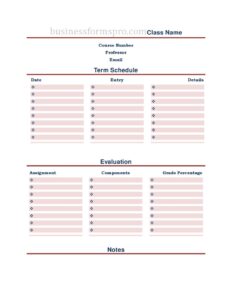
A complete syllabus gives students everything they need to succeed without having to ask. The essentials include a clear class name and course number so it is easy to identify, the professor’s name and email for contact, and a term schedule with start and end dates. It should map out the topics or entries covered by date, describe assignments and their components, and spell out the evaluation method with a transparent grade percentage breakdown. A solid syllabus also includes a notes section for policies on attendance, late work, academic integrity, and accommodations. Clear formatting—headings, tables, and dates—makes the document scannable and reduces follow-up questions throughout the term.
How to Fill Out a Course Syllabus
- Class Name: Enter the full course title as it appears in the catalog (for example, “Introduction to Microeconomics”).
- Course Number: Add the official identifier such as ECON 101 or the section code so students can match it to their registration.
- Professor: List the instructor’s name and title; add co-instructors or teaching assistants if relevant.
- Email: Provide the best contact address and note your typical response time or office hours.
- Term Schedule: Specify the term, meeting days, times, and location or virtual link.
- Date / Entry / Details: For each session, enter the date, the topic or entry heading, and supporting details such as readings or activities.
- Assignment & Components: Describe each assignment and break it into its components (drafts, presentations, exams).
- Evaluation & Grade Percentage: List how each component is weighted toward the final grade so the percentages add to 100.
- Notes: Record class policies, deadlines, and any special instructions.
Building a Clear Grading Breakdown
The grading section is where students focus most, so make it unambiguous. Use the evaluation and grade percentage fields to show exactly how the final mark is earned—for instance, 30% exams, 25% projects, 25% participation, and 20% final. Confirm the percentages total 100 and that each assignment listed in the schedule corresponds to a weighted component. If you use a letter-grade scale, include the cutoffs (such as 90–100 = A) in the notes. Being precise here protects you from grade disputes and helps students prioritize their effort across the term.
Keeping the Syllabus Useful All Term
A syllabus is a living document. Save your completed file in both PDF (for distribution) and DOCX (for editing) so you can update dates, swap readings, or adjust deadlines as the term unfolds. When you make a change, note the revision date and announce it to students so everyone is working from the same version. Many instructors post the syllabus to a learning-management system in addition to handing out a copy, ensuring it stays accessible. Reusing last term’s file as a starting point saves significant time while keeping your formatting consistent year to year.
Common Mistakes to Avoid
- Grade weights that don’t add to 100%—double-check the math in your evaluation breakdown.
- Missing or wrong dates in the term schedule, which throws off the whole calendar.
- Vague assignment descriptions that leave students unsure what to submit or when.
- Outdated contact information, so students can’t reach you with questions.
- Omitting key policies on late work, attendance, or academic integrity from the notes section.
- Forgetting to update a reused syllabus, leaving last term’s dates and deadlines in place.
Frequently Asked Questions
What is a course syllabus used for? A course syllabus communicates the structure, schedule, grading, and policies of a class to students. It serves as a single reference point for the entire term and helps prevent misunderstandings about expectations and deadlines.
How do I fill out this course syllabus template? Start by entering the class name, course number, professor, and email, then build the term schedule date by date using the entry and details fields. Finish by listing assignments, breaking them into components, and assigning grade percentages that total 100.
Is a syllabus a binding contract? Many institutions treat the syllabus as a quasi-contract between instructor and students, but its exact status depends on your school’s policies. To stay flexible, many instructors include language noting the syllabus may be revised with advance notice.
How detailed should the schedule be? Include enough detail that a student can plan ahead—at minimum the date, topic, and any readings or assignments due. A weekly or per-session breakdown is usually ideal, balancing clarity with room to adjust as the term progresses.
Can I edit the template after downloading? Yes. Download the DOCX version to add your branding, expand the schedule, or adjust the grading table, and export a PDF to distribute to students. The template is fully editable to fit your course.
How much does this template cost? Nothing—this course syllabus template is completely free to download in both PDF and DOCX, with no signup or account required. You can use it for as many courses and terms as you like.
This course syllabus template is a general example provided for informational purposes only and does not constitute legal, academic, or institutional advice. Requirements and policies vary by school, district, and jurisdiction—consult your institution’s guidelines or a qualified administrator before finalizing your syllabus.
Related Forms
- VIP Pass
- Premarital Counseling Questionnaire
- Set List
- Babysitting Instructions
- Todays Focus Sign
- RSVP Guest List
Browse more in Miscellaneous.