
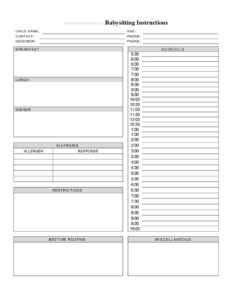
Babysitting Instructions
Download a free Babysitting Instructions template to give your sitter emergency contacts, routines, and house rules — free PDF and DOCX download.
PDF
DOCX
2 downloads
0
likes
Download Files
- DOCX
A Babysitting Instructions form is a simple one-page sheet parents fill out to give a sitter everything they need to care for their children safely while the parents are away. The most common reason people use it is to put emergency contacts, bedtime routines, allergies, and house rules in one easy-to-find place so the sitter never has to guess. You can download this Babysitting Instructions template for free in both PDF and DOCX formats — no signup required.
What Is a Babysitting Instructions Form?
A Babysitting Instructions form is a written reference that parents or guardians complete and leave with a caregiver before stepping out. It documents the essential details of caring for one or more children: who to call in an emergency, what each child can and cannot eat, when they nap or go to bed, and how to reach the parents. Anyone who hires a sitter — whether a teenage neighbor, a relative, or a professional nanny — can use it. The goal is straightforward: replace verbal, last-minute reminders with a clear, complete document the sitter can refer to at any moment during the evening or weekend.
When Do You Need a Babysitting Instructions Form?
This form is useful any time you leave your children in someone else’s care, but a few situations make it especially valuable:
- A date night or evening out — when you’ll be unreachable for stretches and want the sitter prepared for bedtime and bath time.
- A first-time or new sitter — someone unfamiliar with your home, your kids’ habits, and where supplies are kept.
- A child with allergies or medical needs — so dosing instructions, food restrictions, and warning signs are written down, not remembered.
- An overnight or weekend trip — when the sitter needs morning routines, meal plans, and a longer list of contacts.
- A regular sitter on an unusual day — a special schedule, a playdate, or an early bedtime that differs from the norm.
- Grandparents or relatives helping out — even familiar caregivers benefit from current contact numbers and updated routines.
What a Babysitting Instructions Form Should Have
A complete instructions sheet covers four areas: contacts, each child’s details, the schedule, and house and safety rules. Under contacts, include the parents’ cell numbers, a trusted backup adult, the pediatrician, and emergency services. For each child, note their name, age, allergies, medications, and comfort items. The schedule should spell out meals, naps, screen-time limits, and bedtime. Finally, house rules cover what the sitter may or may not do — opening the door to strangers, having visitors, where the first-aid kit is, and how to lock up. The more specific you are, the less the sitter has to interpret on their own.
How to Fill Out a Babysitting Instructions Form
Work through the form top to bottom so nothing is missed:
- Date and outing details: Write the date, the time you’re leaving, and your expected return time.
- Parent/guardian contacts: List your full names and the best cell numbers to reach each of you, plus where you’ll be.
- Emergency contacts: Add a nearby relative or neighbor, the pediatrician’s name and number, and the local emergency number.
- Children’s information: For each child, enter name, age, allergies, and any medication with dose and timing.
- Meals and snacks: Note what to feed them, when, and any foods to avoid.
- Nap and bedtime routine: Spell out the wind-down steps, bath, bedtime, and comfort items like a favorite blanket.
- Rules and limits: Record screen-time limits, off-limits areas, and visitor policy.
- House logistics: Show where the first-aid kit, snacks, diapers, and exits are, and how to lock up.
- Sign and post it: Leave the sheet somewhere visible, like the fridge.
Tips for Making the Instructions Truly Useful
The best instructions are scannable in an emergency, not buried in paragraphs. Use short lines and bold the most critical items — allergies and emergency numbers should jump off the page. Walk the sitter through the sheet in person when they arrive rather than just handing it over; point out where the first-aid kit lives and which door you use. If a child takes medication, write the exact dose and time rather than “a little before bed,” and consider setting out the dose in advance. Keep a copy in your phone too, so you can reference it if the sitter calls with a question while you’re out.
How It Differs From a Medical Authorization Form
A Babysitting Instructions sheet is a practical care guide; it is not the same as a medical consent or authorization document. If your child may need treatment and you’ll be hard to reach — for example, on a longer trip — many parents pair the instructions with a separate signed authorization that gives the caregiver permission to seek medical care. The instructions tell the sitter what to do day to day; the authorization gives them legal standing in a clinic or hospital. For a routine evening out, the instructions sheet alone is usually enough.
Common Mistakes to Avoid
- Leaving out a backup contact — if both parents are unreachable, the sitter needs a second adult to call.
- Being vague about allergies or medication — write exact foods to avoid and precise doses and times.
- Forgetting bedtime details — skip the routine and you may return to an overtired, unhappy child.
- Not showing where supplies are — diapers, snacks, and the first-aid kit should be findable without you.
- Outdated phone numbers — double-check every number before you walk out the door.
- Handing it over without a walk-through — a quick verbal review catches gaps the sheet alone won’t.
Frequently Asked Questions
What is a Babysitting Instructions form? It is a one-page sheet where parents write down emergency contacts, each child’s needs, the daily schedule, and house rules for a sitter. It keeps everything the caregiver needs in one place so they aren’t relying on memory. It’s a practical care document, not a legal contract.
How do I fill out the Babysitting Instructions template? Start with the date and your return time, then add your contact numbers and a backup adult. Fill in each child’s allergies, medications, meals, and bedtime routine, then list house rules and where supplies are kept. Post the finished sheet where the sitter can easily see it.
Does a Babysitting Instructions form need to be notarized or signed? No. It’s an informal reference document, not a legal agreement, so notarization and witnesses aren’t required. A parent’s signature and the date simply confirm the instructions are current.
Should I include medical authorization on this form? For a short outing the basic instructions are usually enough, but for longer absences some parents add a separate signed authorization allowing the sitter to seek medical care. Keep that consent document distinct from the day-to-day instructions. Check what your provider or facility requires.
How much does this template cost? Nothing — you can download it free from Business Forms Pro in PDF and DOCX, with no signup needed. The DOCX version lets you edit fields, add children, or change routines to fit your family.
How detailed should the instructions be? Detailed enough that a sitter who has never met your family could care for your children confidently. Always spell out allergies, medications, emergency numbers, and bedtime, while keeping the layout short and scannable. When in doubt, include more rather than less.
This Babysitting Instructions template is a general example provided for informational purposes only and is not legal, medical, or professional advice. Childcare and medical-consent requirements vary by jurisdiction. For situations involving medical authorization or specific health needs, consult a qualified professional.
Related Forms
- RSVP Guest List
- US Time Zone Mini Reference
- Raffle Ticket
- Restaurant Shift Schedule
- Obedience School Intake Form
- Large-Print Guest List
Browse more in Miscellaneous.