
Bad Check Notice
Download a free Bad Check Notice template to formally demand payment on a bounced check, including bank fees—free PDF and DOCX download, no signup.
DOCX
0
likes
Download Files
- DOCX
A Bad Check Notice is a written letter that tells someone their check was returned by the bank for insufficient funds and formally requests payment of the original amount plus any bank charges. People most often use it when a customer’s check bounces and they need a clear, documented way to ask for the money owed. You can download this Bad Check Notice free in PDF and DOCX formats, with no signup required.
What Is a Bad Check Notice?
A Bad Check Notice is a formal demand letter sent by a business or individual who received a check that the bank declined to honor, usually because the account had insufficient funds (often shown as “NSF”). It is issued by the payee—the person or company that was supposed to receive the money—and addressed to the check writer. The notice documents the specific check details, explains that it was returned, and asks for replacement payment, typically by certified check, covering the original amount plus the fee the bank charged for the bounced item. It serves as both a polite reminder and a paper trail that can support later collection efforts if the debt is not resolved.
When Do You Need a Bad Check Notice?
This letter is useful any time a payment fails at the bank and you need to give the writer a fair chance to make it right. Common situations include:
- A retail customer pays by personal check and it is returned marked “insufficient funds” or “NSF” days later.
- A tenant’s rent check bounces and you need to request the rent plus the bank’s return fee.
- A small business receives a payment from a client whose check does not clear, leaving an unpaid invoice.
- A contractor or service provider is paid for completed work with a check that the bank rejects.
- A check is returned because the account was closed or the signature did not match, and you want a documented record before pursuing collection.
- You need formal written notice as a required step before sending an account to a collection agency or escalating the matter.
What a Bad Check Notice Should Have
A complete Bad Check Notice clearly identifies everyone involved and leaves no doubt about the amount owed. It should include your name and contact information as the payee, the date of the letter, and the check writer’s name and address. The body must state that the check was returned for insufficient funds and reference the specific check number, the date written on the check, and its original dollar amount. Crucially, it should spell out the requested replacement amount: the original sum, the bank charge, and the combined total. Mentioning that copies of the bank’s return notice and the check are enclosed adds weight and credibility, and a polite, professional tone keeps the door open for a quick, friendly resolution.
How to Fill Out a Bad Check Notice
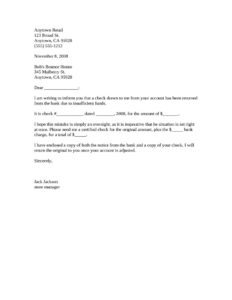
- At the top, enter your business or personal name, street address, city, state, ZIP code, and phone number—in the sample, “Anytown Retail, 123 Broad St., Anytown, CA.”
- Add the date you are sending the letter.
- Enter the recipient’s name and full mailing address—the person or business that wrote the check.
- In the greeting line (“Dear ______:”), fill in the check writer’s name.
- In the first sentence of the body, the letter explains a check was returned due to insufficient funds; no edit is usually needed here.
- Fill in the check number after “check #.”
- Enter the date the check was written.
- Enter the original check amount in the “$______” field.
- Fill in the bank charge amount you incurred for the returned item.
- Add the two figures and enter the total amount due requested as a certified check.
- Confirm you have enclosed copies of the bank notice and the check, then sign with your name and title (for example, “store manager”).
Setting the Right Tone and Adding Fees
The sample letter strikes a measured, courteous tone—it assumes the bounced check is “simply an oversight” and asks for the situation to be corrected at once. This approach is intentional: most returned checks really are honest mistakes, and a respectful first notice often gets paid faster than an aggressive one. When deciding what bank charge to add, use the actual fee your own bank assessed for the returned deposit so the figure is defensible. Some states also allow a statutory service charge for bad checks, but the permitted amount varies widely by jurisdiction, so check your local rules before adding anything beyond your documented costs. Requesting payment by certified check, money order, or cash protects you from a second bounce.
What Happens After You Send It
Send the notice promptly and keep a dated copy for your records; mailing it with a tracking or certified mail option helps prove the recipient received it. Hold the original check until the account is settled—offer to return it once payment clears, as the sample states. If the writer pays the full total, the matter is closed and you simply return their original check. If they ignore the letter or fail to pay within a reasonable time, this notice becomes valuable evidence supporting further steps, such as a follow-up demand, small claims court, or referral to a collection agency. Many jurisdictions require that the writer be given written notice and a chance to pay before additional penalties apply, which is exactly what this letter provides.
Common Mistakes to Avoid
- Leaving the check number, date, or original amount blank—vague references make the demand easy to dispute.
- Forgetting to add and total the bank charge, so the writer underpays and you absorb the fee.
- Using a threatening or accusatory tone in a first notice, which can sour an otherwise easy resolution.
- Failing to enclose copies of the bank’s return notice and the check as supporting proof.
- Mailing the original check instead of a copy—always keep the original until you are paid.
- Not keeping a dated copy of the letter and proof of mailing for your records.
Frequently Asked Questions
What is a Bad Check Notice used for? It is a formal letter that informs a check writer their payment was returned by the bank for insufficient funds and requests replacement payment for the original amount plus any bank fee. It also creates a documented record of your demand, which is helpful if the debt is not paid and you need to escalate.
How do I fill out a Bad Check Notice? Enter your contact details and the date, add the recipient’s name and address, then fill in the check number, the date on the check, and its original amount. Add your bank’s return charge, total the two figures, and sign with your name and title.
How much can I charge for a bounced check? You can request reimbursement of the actual bank fee you were charged for the returned item. Some states also permit a separate statutory service charge, but the allowed amount varies by jurisdiction, so verify your local rules before adding extra penalties.
Is a Bad Check Notice legally binding? The notice itself is a demand letter, not a contract or court order, so it does not by itself force payment. However, sending written notice is often a required and important first step before pursuing collection or legal action, and it strengthens your position if the matter goes further.
Does a Bad Check Notice need to be notarized? No, this type of demand letter does not require notarization or witnesses. Your signature, title, and the enclosed copies of the bank notice and check are generally enough to make it effective.
How much does this template cost? Nothing—you can download this Bad Check Notice free from Business Forms Pro in both PDF and DOCX formats, with no signup or payment required. Customize the fields for your situation and send it the same day.
This template is provided as a general example for informational purposes only and does not constitute legal, financial, or tax advice. Laws and requirements regarding returned checks and recoverable fees vary by jurisdiction. Consult a qualified attorney or professional for guidance on your specific situation.
Official resource: for the rules that apply to your situation, see the Consumer Financial Protection Bureau.
Related Forms
- Appraisal Worksheet
- Monthly Bank Reconciliation
- Large-Print Bill Tracker
- Credit Card History
- Why Denied Credit letter
- Restaurants Cash Envelope
Browse more in Money.