
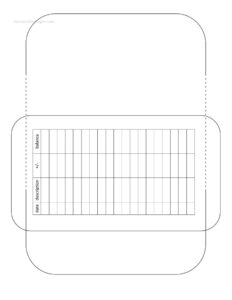
Blank Cash Envelope
Download a free Blank Cash Envelope template to organize budgeting cash by category, track spending, and stay on plan — free PDF and DOCX download.
PDF
DOCX
1 downloads
0
likes
Download Files
- DOCX
A Blank Cash Envelope is a simple printable template you fill in to label and track cash set aside for a specific spending category, and it’s the cornerstone of the popular cash envelope budgeting method. Most people use it to physically separate money for things like groceries, gas, or dining out so they only spend what’s allotted. You can download it free in PDF or DOCX with no signup required.
What Is a Blank Cash Envelope?
A Blank Cash Envelope is a paper template designed to hold physical cash and record how that cash is used over a budgeting period. Unlike a pre-printed envelope, the blank version lets you write in your own category name, starting amount, and a running log of deposits and withdrawals. Individuals, families, students, and anyone practicing zero-based or cash-stuffing budgeting use it to control discretionary spending. It documents how much money was placed in the envelope, what was taken out and when, and what remains. Because it’s blank, the same template works for any category — turning a plain envelope into a visual, hands-on tool for staying within a set limit each week or month.
When Do You Need a Blank Cash Envelope?
The cash envelope system shines whenever you want a hard, physical limit on spending. Common situations include:
- Monthly grocery budgeting — load a set amount and stop shopping when the envelope is empty.
- Curbing impulse purchases — using cash for dining out, coffee, or entertainment makes overspending obvious.
- Paying down debt — assign envelopes to variable categories so leftover funds go toward balances.
- Teaching kids about money — give children an allowance envelope they manage themselves.
- Sticking to a vacation or holiday fund — set aside cash gradually and track contributions on the log.
- Managing irregular income — freelancers and gig workers divide each payment into category envelopes as money arrives.
Types of Cash Envelope Categories
Most budgeters keep separate envelopes for variable, hard-to-control expenses rather than fixed bills paid by autopay. Typical categories include groceries, household supplies, gas and transportation, eating out, personal care, clothing, entertainment, gifts, and a small miscellaneous or “blow” fund. Because this template is blank, you decide the categories that match your real life and refill them on your own schedule.
What a Blank Cash Envelope Should Have
A complete, useful cash envelope template gives you space for a few key elements. It should clearly identify the spending category, show the budgeted or starting amount for the period, and provide a dated log to record each time you add or remove cash. A running balance column lets you see at a glance how much is left without counting bills. Finally, a date or period label keeps each envelope tied to the correct week or month so old totals don’t get mixed up with the new cycle.
How to Fill Out a Blank Cash Envelope
Because the template is intentionally blank, you fill it in to match your own budget. Follow these steps:
- Write the category name at the top — for example, “Groceries,” “Gas,” or “Eating Out” — so the envelope’s purpose is unmistakable.
- Enter the budget period, such as the month or the week’s start and end dates, to keep cycles separate.
- Record the starting amount you’re loading into the envelope, then place that cash inside.
- Log each transaction as it happens: write the date, a short description of what you bought, and the amount you removed.
- Update the running balance after every withdrawal so you always know how much remains.
- Note any deposits if you add more cash mid-period, recording the date and amount.
- Review at the end of the period, total your spending, and decide whether to roll leftover cash forward or move it to savings.
Tips for Making the Cash Envelope System Work
The method only succeeds if the envelopes are easy to use and you stay consistent. Withdraw your total budgeted cash in usable denominations — a mix of small bills makes paying exact amounts simpler. Keep a few coins handy or round purchases so your log stays clean. Store envelopes together in a folder, accordion file, or zip pouch so nothing gets lost. When an envelope runs empty, treat it as a stop sign rather than borrowing from another category; if you must borrow, write it down so you can adjust next period. Reviewing your logs at month’s end reveals which categories you consistently under- or over-budget, letting you fine-tune the amounts going forward.
Cash Envelopes vs. Digital Budgeting
Apps and spreadsheets track spending automatically, but physical cash creates a psychological barrier that digital balances can’t match — handing over real bills feels different from tapping a card. Many people use a hybrid approach: cash envelopes for the variable categories where overspending is easiest, and automatic payments for fixed bills like rent and utilities. This printable envelope is a low-tech, low-cost way to test the method before committing to any paid tool, and it works even when you don’t have a smartphone or internet access.
Common Mistakes to Avoid
- Forgetting to log withdrawals — an untracked envelope quickly loses its accuracy and purpose.
- Creating too many envelopes — start with three to five categories so the system stays manageable.
- Borrowing between envelopes without recording it, which hides overspending and defeats the budget.
- Loading too much or too little cash — base each amount on past spending, not guesses.
- Leaving large sums in envelopes for long periods instead of banking or saving the surplus.
- Skipping the end-of-period review, missing the chance to adjust amounts for next cycle.
Frequently Asked Questions
What is a blank cash envelope used for? It’s used to hold and track physical cash set aside for a single spending category, such as groceries or gas. By writing the category, starting amount, and a log of withdrawals on the envelope, you can see exactly how much you’ve spent and how much remains. It’s the central tool of the cash envelope budgeting system.
How do I fill out a blank cash envelope? Start by writing the category name and budget period at the top, then record the starting cash amount you place inside. Each time you spend, log the date, what you bought, and the amount removed, and update the running balance. At the end of the period, total your spending and decide whether to carry over or save any leftover cash.
Is the cash envelope method effective? Many people find it effective because spending physical cash feels more tangible than swiping a card, which naturally discourages overspending. Its success depends on consistently logging transactions and stopping once an envelope is empty. It works especially well for variable categories where impulse spending is common.
How many cash envelopes should I have? Most budgeters start with three to five envelopes covering their most variable expenses, like groceries, dining out, and personal spending. Too many envelopes become hard to manage and tempting to borrow from. You can always add categories later as you get comfortable with the system.
Should I use cash envelopes for fixed bills? Generally no — fixed bills like rent, insurance, and utilities are usually paid by check, autopay, or bank transfer and don’t benefit from the cash approach. Reserve envelopes for flexible, hard-to-control categories where a hard spending limit helps most. A hybrid of cash for variable costs and automatic payments for fixed ones works well for many people.
How much does this template cost? This Blank Cash Envelope template is completely free to download from Business Forms Pro in both PDF and DOCX formats, with no signup required. You can print as many copies as you need and reuse them every budgeting period. Edit the DOCX version if you’d like to add or rename fields before printing.
This template is a general example provided for informational purposes only and does not constitute financial, budgeting, or tax advice. Personal budgeting needs and best practices vary by individual circumstances — consult a qualified financial professional for guidance specific to your situation.
Official resource: for the rules that apply to your situation, see the Consumer Financial Protection Bureau.
Related Forms
- Payment Calculator per $100000
- Fund Raiser Source Log
- Projected Sales
- Advertising Budget
- Petty Cash Out
- Emergency Cash Envelope
Browse more in Money.