
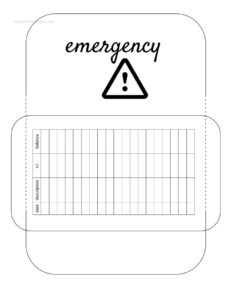
Emergency Cash Envelope
Download a free Emergency Cash Envelope template to organize, label, and track your emergency cash savings at home — free PDF and DOCX download.
PDF
DOCX
0
likes
Download Files
- DOCX
An Emergency Cash Envelope is a simple printable label and tracking sheet you wrap around or attach to the cash you set aside for unexpected expenses. People use it most often to keep a dedicated stash of emergency money clearly labeled, sealed, and accountable so it isn’t accidentally spent on everyday purchases. You can download this Emergency Cash Envelope template for free in both PDF and DOCX formats, with no signup required.
What Is an Emergency Cash Envelope?
An Emergency Cash Envelope is a tool from the cash-stuffing or envelope budgeting method, designed specifically to hold money reserved for genuine emergencies — car repairs, medical co-pays, urgent travel, or a sudden gap in income. Unlike a general spending envelope, this one is meant to stay sealed until a real emergency arises. The label area identifies the envelope’s purpose, the target amount you’re saving toward, and a running log of deposits and withdrawals. Households, students, and anyone building a small physical cash buffer use it to bring structure and discipline to money they keep at home. It turns a plain envelope into an accountable, trackable part of your overall budgeting system.
When Do You Need an Emergency Cash Envelope?
This envelope is useful any time you want a clearly defined, physically separate pool of emergency money. Common situations include:
- Building a starter emergency fund — saving your first few hundred dollars in cash before opening a dedicated savings account.
- Using the cash-stuffing method — allocating a fixed amount of each paycheck into category envelopes, with one reserved strictly for emergencies.
- Keeping a household “break glass” fund — money the whole family knows about for true urgencies like a broken appliance or unexpected bill.
- Preparing for power or banking outages — having physical cash on hand when cards or ATMs may be unavailable.
- Teaching kids or teens to save — a visual, hands-on way to show how a fund grows and when it’s appropriate to use it.
- Travel and on-the-road reserves — a labeled envelope of emergency cash tucked into a glovebox, go-bag, or luggage.
What an Emergency Cash Envelope Should Have
A useful emergency cash envelope does more than hold bills — it documents the fund’s purpose and movement. The essentials include a clear title or category name, a savings goal or target amount, the current balance, and a transaction log with dates, amounts added or removed, and a short note explaining each change. Many people also include a start date, the owner’s name (especially in shared households), and a brief rule reminding everyone what counts as an emergency. A signature or initial line beside each withdrawal adds accountability. Together these elements turn an ordinary envelope into a small, self-contained ledger you can audit at a glance.
How to Fill Out an Emergency Cash Envelope
Follow these steps to set up and maintain your envelope:
- Title the envelope. Write “Emergency Cash” or a more specific label such as “Car Repair Reserve” so its purpose is unmistakable.
- Set your goal amount. Enter the target you’re working toward — for example, $500 or one month of essential expenses.
- Record the start date. Note the day you began the fund so you can track progress over time.
- Add the owner’s name. In a shared home, identify whose envelope it is or mark it as a household fund.
- Log every deposit. Each time you add money, write the date, the amount, and the new running balance.
- Log every withdrawal. When you remove cash, record the date, amount, and a short reason — and update the balance immediately.
- Reconcile the balance. Periodically count the cash and confirm it matches the figure on the log; correct any discrepancy with a dated note.
- Reseal and store safely. Place the envelope in a secure, discreet location and re-seal it after each entry.
Tips for Keeping Your Emergency Fund Disciplined
The hardest part of any emergency fund is leaving it alone. Define in advance what qualifies as an emergency — an unexpected, necessary, and urgent expense — and write that definition on the envelope itself. A new gadget or a dinner out is not an emergency. Many savers build a small barrier to spending by storing the envelope somewhere slightly inconvenient, so they pause before dipping in. When you do spend from it, treat replacing the money as a priority in your next budget. Reviewing the transaction log every month keeps you honest and shows your progress, which is motivating in its own right.
Cash Envelope vs. Bank Savings
A cash envelope and a bank savings account serve complementary roles. Physical cash is immediate, tangible, and available even when banking systems are down, which makes it ideal for a small first-tier emergency buffer. However, cash earns no interest, can be lost or stolen, and isn’t insured the way deposits are. Many people use the envelope as a starter fund and, once it reaches a comfortable level, transfer larger reserves into an insured, interest-bearing account while keeping a modest amount in cash at home. Choose the balance that fits your security situation and comfort level.
Common Mistakes to Avoid
- Not logging transactions — failing to record deposits and withdrawals quickly makes the balance unreliable.
- Treating it as spending money — borrowing from the fund for non-emergencies defeats its purpose.
- Leaving it unsealed or visible — store it discreetly and securely to reduce the risk of theft or loss.
- Setting no goal — without a target amount it’s hard to know when the fund is adequate.
- Forgetting to replenish — after using emergency cash, neglecting to refill it leaves you exposed next time.
- Keeping too much cash at home — large uninsured amounts are safer in a bank account.
Frequently Asked Questions
What is an emergency cash envelope used for? It’s used to hold and track physical cash reserved strictly for genuine emergencies, such as urgent repairs, medical costs, or income gaps. The label and log keep the fund organized and separate from everyday spending money. It’s a core tool in the cash-stuffing budgeting method.
How much should I keep in an emergency cash envelope? There’s no single right amount — it depends on your expenses and comfort level. Many people start with a small target like $500 to $1,000 in cash and keep larger reserves in an insured bank account. Set a goal that feels achievable and adjust it as your situation changes.
Is keeping cash in an envelope safe? Cash at home is convenient but carries risks of theft, fire, and loss, and it isn’t insured like a bank deposit. Store the envelope discreetly in a secure spot, and avoid keeping very large sums on hand. Consider a fireproof container for added protection.
How do I track money in the envelope? Use the transaction log on the template to record the date, amount, and reason for every deposit and withdrawal, updating the running balance each time. Count the cash periodically to confirm it matches the log. This makes the envelope a simple, accountable ledger.
Is this template legally binding? No. An emergency cash envelope is a personal budgeting and organizing tool, not a contract or legal document. It simply helps you label and track your own savings; it carries no legal obligation.
Is the Emergency Cash Envelope template free to download? Yes. You can download this template completely free in PDF and DOCX formats with no signup required. Print it as-is or open the DOCX to customize the labels, goal amount, and log to fit your own budgeting system.
This Emergency Cash Envelope template is a general example provided for informational purposes only and does not constitute financial, tax, or legal advice. Personal financial decisions and savings strategies vary by individual circumstances — consult a qualified financial professional for guidance specific to your situation.
Official resource: for the rules that apply to your situation, see the Consumer Financial Protection Bureau.
Related Forms
- Tax Refund Status Tracker
- Bill Organizer
- Utilities Annual Use Tracker
- Coffee Cash Envelope
- Pets Cash Envelope
- Saving Cash Envelope
Browse more in Money.