
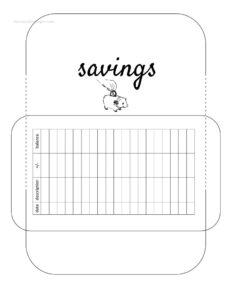
Saving Cash Envelope
Use a free Saving Cash Envelope template to organize budget cash, track deposits, and reach savings goals faster — free download in PDF and DOCX.
PDF
DOCX
0
likes
Download Files
- DOCX
A Saving Cash Envelope is a simple physical or printable envelope used to set aside and track cash for a specific savings goal or budget category, and most people reach for it to bring discipline to spending without relying on apps or bank fees. It’s a cornerstone of the popular cash envelope budgeting method, and you can download this template free in both PDF and DOCX, with no signup required.
What Is a Saving Cash Envelope?
A Saving Cash Envelope is a labeled container — printed or repurposed — where you store physical money allocated to a single purpose, such as groceries, an emergency fund, or a holiday trip. Anyone managing a household budget can use one: students, couples, freelancers, or families practicing the envelope system. The envelope documents how much cash you started with, what you added, what you withdrew, and the running balance, so the goal stays visible. Because the money is tangible and finite, the envelope naturally discourages overspending. Unlike a bank statement, it gives you an at-a-glance, real-world view of progress toward a target you can see and touch.
When Do You Need a Saving Cash Envelope?
The envelope is most useful whenever you want a clear, low-tech way to separate money by purpose. Common situations include:
- Building an emergency fund by depositing a fixed amount each payday until you hit a milestone.
- Sticking to a grocery or dining budget for the month, spending only what’s inside the envelope.
- Saving for a planned purchase like a vacation, a new appliance, or holiday gifts.
- Managing irregular income as a freelancer, so set-aside cash covers taxes or quiet months.
- Teaching kids or teens how saving works with visible, hands-on money.
- Curbing impulse spending by capping discretionary categories such as entertainment or coffee.
Types of Cash Envelopes
While the format is consistent, people use envelopes in a few different ways. Spending envelopes hold the cash you intend to spend within a period, like fuel or groceries, and the goal is to make it last. Savings envelopes hold money you are accumulating and ideally never touch until a target date. Some budgeters keep sinking-fund envelopes for predictable but infrequent costs — car registration, insurance, or annual subscriptions — adding a little each month so the bill never stings. Knowing which type yours is helps you decide how often to label, deposit, and review it.
What a Saving Cash Envelope Should Have
A useful envelope is more than a place to stash bills. To make it work, include:
- A clear category or goal name so the purpose is obvious.
- A target amount you’re working toward, if it’s a savings goal.
- A starting balance for the period or goal.
- A running log of deposits and withdrawals with dates.
- A current balance column so you always know what remains.
- Optional notes for reminders, like “don’t dip into this.”
How to Fill Out a Saving Cash Envelope
Filling out the template takes only a minute and keeps your cash accountable:
- Name the envelope. Write the category or goal on the front — for example, “Groceries,” “Emergency Fund,” or “Summer Trip.”
- Set the goal amount. If you’re saving toward a target, note the total you want to reach so progress is measurable.
- Record the start date and starting balance. Enter how much cash you’re placing inside at the beginning of the period.
- Log each deposit. Every time you add money, write the date and amount on the next line.
- Log each withdrawal. When you take cash out, note the date, amount, and what it was for.
- Update the running balance. After each entry, add or subtract to show the current total inside.
- Add notes if needed. Use the notes line for reminders or to flag the deadline for your goal.
Keep the math current after every transaction so the figure on paper always matches the cash inside.
Tips for Making the Envelope System Work
The envelope method succeeds on consistency, not perfection. Fund your envelopes right after payday so the money is allocated before it disappears into everyday spending. Use a dedicated envelope per category rather than mixing goals, which keeps your tracking honest. Count the cash whenever you record an entry to catch errors early. If an envelope runs empty before the period ends, resist borrowing from another — that’s the system doing its job by showing you a limit. For savings envelopes, consider depositing accumulated cash into a bank account periodically for safekeeping, then logging the transfer so your records stay accurate.
Keeping Cash Safe
Physical cash carries risks a bank balance doesn’t, so store envelopes in a secure, discreet place at home rather than carrying large amounts. Avoid leaving big balances in spending envelopes you take out shopping; bring only what you expect to use. Many people keep long-term savings envelopes as a tracking record while the actual money sits in a savings account, combining the clarity of the envelope with the security and interest of a bank. Whatever you choose, the written log remains valuable as a personal record of your habits and progress.
Common Mistakes to Avoid
- Forgetting to log withdrawals — the balance becomes meaningless if entries are skipped.
- Mixing multiple goals in one envelope, which blurs how much belongs to each purpose.
- Borrowing between envelopes without recording it, defeating the budget’s boundaries.
- Not setting a target for savings envelopes, leaving no way to measure progress.
- Leaving large sums unsecured at home or carrying them around unnecessarily.
- Letting the log fall behind so the paper balance no longer matches the cash inside.
Frequently Asked Questions
What is a Saving Cash Envelope used for? It’s used to separate and track physical cash for a specific budget category or savings goal, such as groceries or an emergency fund. The envelope shows your starting balance, deposits, withdrawals, and current total, making it easy to stay within limits. It’s a core tool in the cash envelope budgeting method.
How do I fill out the envelope template? Label it with a category or goal, note any target amount, and record your starting balance and date. Each time you add or remove cash, log the date and amount, then update the running balance. Keeping it current after every transaction ensures the paper total always matches the money inside.
Is the envelope method better than a budgeting app? Neither is universally better — it depends on your habits. The envelope method makes spending tangible and physically limited, which helps many people curb impulse purchases. Apps offer convenience and automation. Some budgeters combine both, using envelopes for visibility and a bank account for security.
Can I use this for an emergency fund? Yes, an envelope works well for building an emergency fund by depositing a set amount each payday and tracking it on the log. For larger balances, many people keep the cash in a savings account for safety while still using the envelope as a record of contributions and progress toward their target.
How much does this template cost? It is completely free to download here in both PDF and DOCX formats, with no signup or payment required. You can print it as often as you like and create a separate envelope for each budget category or goal you want to track.
Can I print multiple envelopes for different categories? Absolutely. The recommended approach is one envelope per category — like rent, fuel, dining, and savings — so each goal stays clearly separated. Print as many copies as you need and label each one for its specific purpose to keep your overall budget organized.
This Saving Cash Envelope template is a general example provided for informational purposes only and is not financial, tax, or budgeting advice. Personal financial circumstances vary, so consider consulting a qualified financial professional before making important money decisions.
Official resource: for the rules that apply to your situation, see the Consumer Financial Protection Bureau.
Related Forms
- Credit Memo
- Roommate Utilities Tracker
- Petty Cash
- Home Budget Cuts Worksheet
- Monthly Bill Organizer
- Weekly Bookkeeping Record
Browse more in Money.