
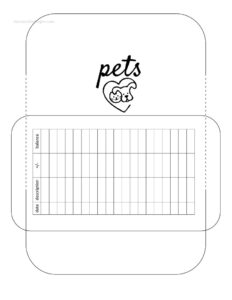
Pets Cash Envelope
Use our free Pets Cash Envelope template to budget food, vet visits, and grooming with the cash envelope method — free download in PDF and DOCX.
PDF
DOCX
0
likes
Download Files
- DOCX
A Pets Cash Envelope is a simple budgeting tool used to set aside physical cash for pet-related expenses like food, vet bills, grooming, and supplies. People use it most often to stop overspending on their animals and to keep pet costs separate from the rest of the household budget. It’s free to download here in both PDF and DOCX, so you can print it as-is or customize it before printing.
What Is a Pets Cash Envelope?
A Pets Cash Envelope is a labeled envelope — or a printable envelope template — dedicated to holding the cash you’ve budgeted for your pets each month. It’s a core part of the cash envelope (or “envelope system”) method of budgeting, where you divide your spending money into category envelopes and only spend what’s inside each one. The Pets envelope documents how much you allocated, what you spent it on, and how much remains. It’s used by individuals, couples, and families who want a tangible, visual way to control discretionary spending and avoid impulse purchases at the pet store or vet.
When Do You Need a Pets Cash Envelope?
This envelope is useful any time pet expenses tend to creep beyond what you planned. Common situations include:
- You follow a cash-based or zero-based budget and want a dedicated category for animal care.
- Your monthly spending on kibble, treats, and litter keeps surprising you and you want a hard limit.
- You’re saving up for predictable costs like annual vaccinations, dental cleanings, or a grooming appointment.
- You have multiple pets and need to see the true combined cost of food, toys, and supplies.
- You’re trying to break the habit of impulse buying at the pet store and want only cash on hand.
- You’re building a small buffer for unexpected vet visits or emergency medication.
What a Pets Cash Envelope Should Have
A complete pets envelope makes it easy to track money at a glance. The most useful elements are a clear category label (“Pets”), the budgeted amount for the period, a running log of deposits and withdrawals, the date of each transaction, a short note describing what each amount was for, and a current balance line. A good template also leaves room for the month or pay period and, optionally, a target savings goal so you can build toward larger costs like a vet bill or pet insurance deductible.
How to Fill Out a Pets Cash Envelope
Because this is a flexible budgeting template, you fill it in with your own numbers each cycle. Follow these steps:
- Write Pets as the category name on the front so it’s instantly recognizable in your envelope set.
- Add the month or pay period the envelope covers, such as “June” or “June 1–15.”
- Enter your budgeted amount — the total cash you’re allocating to pet expenses this period.
- Place that exact amount of cash inside the envelope.
- Each time you spend, log the date, a brief description (for example, “dog food,” “flea meds,” “groomer”), and the amount withdrawn.
- If you add cash mid-period, record it as a deposit so your totals stay accurate.
- Update the remaining balance after every transaction so you always know what’s left.
- At the end of the period, compare what you spent to what you budgeted and decide whether to roll leftover cash forward or adjust next month’s amount.
How to Set Your Pets Budget Amount
The hardest part of any cash envelope is choosing a realistic number. Start by reviewing two or three months of pet spending from bank or card statements and add up everything — food, treats, litter, bedding, toys, grooming, medications, and routine vet visits. Divide by the number of months to get an average, then round to a comfortable figure. Separate predictable monthly costs (food, litter) from occasional ones (annual shots, grooming) and consider keeping a small portion as a slow-building cushion for surprises. If you consistently run out before the period ends, your budget is too low; if cash piles up, you can lower it or redirect the surplus to a vet savings goal.
Tips for Using the Envelope System with Pets
To get the most from your Pets Cash Envelope, keep it with your other category envelopes and only take it out when you’re shopping for the animals. Pay in cash at the register so the spending feels real. If you order pet supplies online, withdraw the equivalent cash from the envelope and set it aside or return it to your account to keep the log honest. For variable costs like vet care, consider a separate “Pet Emergency” envelope so a single bill doesn’t wipe out the month’s food money. Revisit the budgeted amount every few months as your pet’s needs change — puppies, senior animals, and new pets all shift the numbers.
Common Mistakes to Avoid
- Not logging small purchases — treats and chews add up fast and quietly drain the envelope.
- Mixing pet cash with other categories, which defeats the purpose of tracking pet spending separately.
- Setting an unrealistic budget that’s far below your actual costs, leading you to abandon the system.
- Forgetting one-off expenses like vaccinations or grooming when you set the monthly amount.
- Skipping the balance update, so you no longer trust the number and stop using the envelope.
- Raiding the envelope for non-pet spending and never paying it back.
Frequently Asked Questions
What is a Pets Cash Envelope used for? It’s a budgeting envelope dedicated to holding the cash you plan to spend on your pets, including food, supplies, grooming, and routine vet care. By keeping that money physically separate and logging each transaction, you stay within a set limit and see exactly where your pet budget goes.
How do I fill out the Pets Cash Envelope? Label it “Pets,” note the month or pay period, write in your budgeted amount, and place that cash inside. Then record the date, description, and amount of each purchase, updating the remaining balance as you go so the envelope always reflects what’s actually left.
How much should I put in my Pets envelope each month? Base the amount on your real spending history — total a few months of pet expenses and average them, then round to a comfortable figure. Include predictable costs like food and litter plus a small cushion for occasional grooming or vet visits, and adjust as needed.
Can I use this for multiple pets? Yes. You can combine all your animals into one Pets envelope and use the description field to note which pet each purchase was for, or print a separate envelope per pet if you want to track their costs individually.
Is the cash envelope method better than budgeting on an app? Neither is universally better — it depends on what keeps you accountable. Many people find that handling physical cash makes spending feel more real and curbs impulse buys, while others prefer digital tracking. The envelope can also work alongside an app as a hands-on spending limit.
How much does this template cost? Nothing. The Pets Cash Envelope template is completely free to download here in both PDF and DOCX formats, with no signup required, so you can print it immediately or edit it to fit your budget first.
This template is a general example provided for informational purposes only and is not financial, tax, or budgeting advice. Your ideal pet budget and saving strategy depend on your personal circumstances, so consult a qualified financial professional if you need guidance tailored to your situation.
Official resource: for the rules that apply to your situation, see the Consumer Financial Protection Bureau.
Related Forms
- Release Of Security Agreement
- Truth In Lending Statement
- Gas Cash Envelope
- Employee Sales Commission Tracker
- Debt Payment Organizer
- Credit Memo
Browse more in Money.