
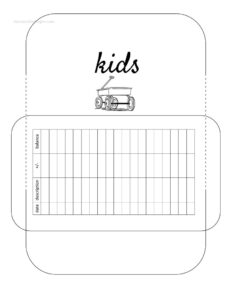
Kids Cash Envelope
Download a free Kids Cash Envelope template to teach children budgeting and saving with hands-on cash—free download in PDF and DOCX, no signup.
PDF
DOCX
1 downloads
0
likes
Download Files
- DOCX
A Kids Cash Envelope is a simple printable pouch that helps children manage real money for a single purpose—like saving, spending, or giving—by physically dividing their cash into labeled envelopes. Parents most often use it to teach budgeting basics in a hands-on, visual way. You can download this Kids Cash Envelope template for free in both PDF and DOCX formats, with no signup required.
What Is a Kids Cash Envelope?
A Kids Cash Envelope is a printable money envelope designed specifically for children using the popular cash envelope budgeting method. Instead of an abstract bank balance, kids see and touch the money in each category, which makes saving and spending feel real. Parents, grandparents, and teachers typically issue these envelopes to introduce allowance, chore pay, or birthday money in a structured way. Each envelope is labeled with a category—such as Save, Spend, or Give—and a place to track how much goes in and out. It documents a child’s running balance for that category and turns money lessons into a tangible, repeatable routine that builds healthy financial habits early.
When Do You Need a Kids Cash Envelope?
This template fits any situation where a child is handling physical cash and learning to make choices about it. Common scenarios include:
- Weekly allowance: Splitting a child’s allowance into save, spend, and give portions each week.
- Chore or job pay: Tracking money earned from household tasks so kids connect work with reward.
- Birthday and holiday gifts: Helping a child decide what to do with cash gifts instead of spending it all at once.
- Saving for a goal: Building toward a specific toy, game, or outing using a dedicated savings envelope.
- Classroom money lessons: Teaching a group of students budgeting concepts with a hands-on activity.
- Teaching generosity: Setting aside a giving portion for charity, church, or a gift for someone else.
Types of Cash Envelopes for Kids
Most families use a three-envelope system, though you can adapt it to fit your values and your child’s age. The classic categories are Save (money set aside for a longer-term goal), Spend (money available for everyday wants), and Give (money for charity or gifts to others). Some parents add a fourth Invest or Long-Term envelope for older kids. You can print one envelope per category and label each clearly so your child always knows which money is which.
What a Kids Cash Envelope Should Have
A useful kids cash envelope is clear, durable, and easy for a child to understand. Key elements include a labeled category name, the child’s name so multiple kids don’t mix up envelopes, and a simple ledger area to write deposits and withdrawals. A running balance line helps kids practice basic math and see their progress. Space for a savings goal—such as the item they’re working toward and the target amount—adds motivation. Decorative or color-coded labels make each envelope instantly recognizable, which is especially helpful for younger children who can’t yet read fluently.
How to Fill Out a Kids Cash Envelope
Because this is a flexible, kid-friendly template, you can complete it in a few minutes. Follow these steps:
- Write the child’s name on the front so each envelope belongs to one child.
- Choose and label the category—Save, Spend, Give, or a custom name your family uses.
- Set a goal (optional): write what the child is saving for and the dollar amount they need.
- Record each deposit: when money goes in, write the date, the source (allowance, chore, gift), and the amount.
- Record each withdrawal: when money comes out, note the date, what it was for, and the amount.
- Update the running balance after every transaction so the child can see how much remains.
- Cut, fold, and assemble the printed envelope along the marked lines, then tape or glue the edges.
- Place the cash inside and review the totals together at the end of each week or month.
Tips for Teaching Money With Cash Envelopes
Make the routine consistent—pay allowance or chore money on the same day each week so kids can plan. Let your child decide how to split the money within reasonable rules; ownership builds engagement. Celebrate progress toward a savings goal with a small acknowledgment rather than buying the item for them. For younger children, use coins and small bills so amounts feel manageable, and read the ledger aloud together. As kids grow, hand over more decision-making and introduce the idea of waiting and comparing prices before spending.
Cash Envelopes vs. a Piggy Bank
A piggy bank stores money but mixes every dollar together, hiding the difference between saving, spending, and giving. A kids cash envelope separates money by purpose and adds a written record, so children learn intentional budgeting rather than just accumulation. The ledger also teaches addition and subtraction in a real context. For families who eventually open a child’s bank account, the envelope system is a natural stepping stone that builds the same habits in physical form first.
Common Mistakes to Avoid
- Skipping the ledger: Putting cash in without recording deposits and withdrawals removes the main learning benefit.
- Mixing categories: Letting spend money creep into the save envelope defeats the system—keep each purpose separate.
- Refilling without earning: Topping up an empty spend envelope teaches that running out has no consequences.
- Making goals too big: A target that takes months can discourage young kids; start with short, achievable goals.
- Forgetting the child’s name: With multiple kids, unlabeled envelopes lead to arguments and lost money.
- Doing it for them: Filling out the envelope yourself misses the chance for the child to practice the math and decisions.
Frequently Asked Questions
What is a kids cash envelope used for? It’s used to teach children budgeting by dividing their real cash into labeled categories like Save, Spend, and Give. Each envelope holds money for one purpose and includes a place to track what goes in and out. The goal is to make money management visual, hands-on, and easy for kids to understand.
How do I fill out the kids cash envelope? Write the child’s name, label the category, and optionally set a savings goal at the top. Each time money is added or spent, record the date, amount, and reason, then update the running balance. Review the totals together regularly so your child stays involved.
What age is this template appropriate for? The envelope system works well for children roughly four and up, adjusting the complexity to their level. Younger kids can use coins and a simple deposit count, while older children can manage full ledgers, goals, and multiple categories. You can adapt the labels and amounts to fit your child’s age and abilities.
How many envelopes should my child have? Most families start with three—Save, Spend, and Give—which covers the core lessons of budgeting, patience, and generosity. Older kids may add an Invest or Long-Term envelope as their understanding grows. Print as many as you need, since each category lives in its own envelope.
Is this kids cash envelope free to download? Yes. You can download this Kids Cash Envelope template for free in both PDF and DOCX formats, with no signup or payment required. Print as many copies as you need and reuse it for each child or category.
Can I customize the categories and labels? Absolutely. The DOCX version lets you rename categories, adjust the goal section, and add your family’s own labels before printing. The PDF version is ready to print as-is if you prefer to write everything by hand.
This template is provided as a general example for informational and educational purposes only and is not financial advice. Money-teaching approaches and what works best for each family vary—use your own judgment and consult a qualified professional if you need guidance on financial education or planning.
Official resource: for the rules that apply to your situation, see the Consumer Financial Protection Bureau.
Related Forms
- Tax Records
- Investment Record
- Home Budget Cuts Worksheet
- Break Even Analysis
- Childrens Allowance Budget
- Personal Care Envelope
Browse more in Money.