
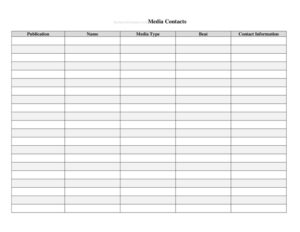
Media Contacts
Organize journalists, outlets, and press contacts with this free Media Contacts template, available as a free download in PDF and DOCX formats.
PDF
DOCX
2 downloads
0
likes
Download Files
- DOCX
A Media Contacts form is a structured list used by campaigns, advocacy groups, and communications teams to track journalists, editors, producers, and outlets they pitch and follow up with. People most often use it to keep press relationships organized in one place so the right reporter gets the right story at the right time. It’s free to download in both PDF and DOCX formats with no signup required.
What Is a Media Contacts Form?
A Media Contacts form is a working directory of the press and media professionals a political campaign, candidate, or organization wants to reach. It is created and maintained by a communications director, press secretary, or volunteer media coordinator, and it documents who each contact is, where they work, how to reach them, and what kinds of stories they cover. Rather than scattering reporter details across email threads, business cards, and text messages, the form consolidates everything into a single reference. It supports pitching press releases, scheduling interviews, coordinating endorsements, and building long-term relationships with local and national outlets. A clear, current media contacts list is one of the most valuable assets any political communications operation can build.
When Do You Need a Media Contacts Form?
Almost every public-facing political effort relies on consistent press outreach, and a contacts list keeps that outreach disciplined. Common situations include:
- Launching a campaign and needing to introduce the candidate to local, regional, and statewide reporters quickly.
- Distributing a press release or media advisory and wanting an accurate, deduplicated send list.
- Planning a press conference or event where you need to invite the right beat reporters and follow up afterward.
- Pursuing endorsements from editorial boards and needing the correct editors and submission contacts.
- Responding to breaking news when speed matters and you can’t afford to hunt for phone numbers.
- Onboarding a new press team member or volunteer who needs to inherit relationships without starting from scratch.
Types of Media Contacts to Track
Not every contact serves the same purpose, and a good list distinguishes between them. Print and online news reporters cover daily developments and benefit from timely tips. Editorial board members weigh in on endorsements and opinion pieces. Broadcast producers and assignment editors at TV and radio stations book segments and decide what airs. Beat specialists who focus on politics, local government, education, or the economy can be matched to relevant stories. Freelancers and bloggers may carry significant influence in niche or digital audiences. Grouping or tagging contacts by these roles lets you tailor each pitch instead of blasting the same message to everyone.
What a Media Contacts Form Should Have
To be genuinely useful, the form should capture enough detail to act fast without overcomplicating the list. Core elements include the contact’s full name, their job title or role, the outlet or organization they represent, and the beat or subject area they cover. It should also record direct phone numbers, email addresses, and preferred contact method, along with social media handles where relevant. Add fields for the city or coverage region, deadline patterns, and notes about past interactions or pitch history. A status indicator showing whether a contact is active, dormant, or do-not-contact helps keep the list clean. Finally, a date-last-updated field signals how fresh each entry is.
How to Fill Out a Media Contacts Form
Work through one contact at a time and keep entries consistent so the list stays sortable and reliable:
- Contact name: Enter the journalist’s full name, spelled exactly as it appears in their byline or station credit.
- Title and role: Note whether they are a reporter, editor, producer, columnist, or freelancer.
- Outlet or organization: Record the newspaper, station, website, or network they work for.
- Beat or coverage area: Specify their focus — politics, local news, business — so you can match stories appropriately.
- Phone and email: Add direct lines and the email they prefer for pitches; avoid generic newsroom inboxes when possible.
- Preferred contact method: Indicate whether they like email, text, or a call, and any timing preferences.
- Location and region: List the city or market they cover.
- Notes and history: Summarize past interactions, what they’ve covered, and any sensitivities.
- Status and date updated: Mark the contact active or inactive and stamp the date you last verified the information.
Keeping Your Media List Accurate
Press contacts change jobs frequently, so a media list decays faster than most directories. Schedule a quick review every few weeks to confirm emails still work, titles are current, and reporters are still on the same beat. When a pitch bounces back or a reporter announces a move, update the entry immediately rather than letting bad data linger. Maintaining the date-last-updated field gives the whole team a quick read on which entries can be trusted. A small, accurate list almost always outperforms a large, stale one because every send reaches a real, relevant person.
Privacy and Professional Etiquette
Treat the information in your Media Contacts form as sensitive and professional. Use direct contact details only for legitimate outreach, honor any reporter’s request to be removed or contacted differently, and never share the list publicly or sell it. Respecting deadlines and preferences builds the kind of trust that gets your future pitches read. Many newsrooms also have policies about how they want to be contacted, so following those preferences protects your relationships and your organization’s reputation.
Common Mistakes to Avoid
- Using generic newsroom emails when a direct reporter contact exists, which lowers the odds your pitch is seen.
- Letting the list go stale so emails bounce and titles are wrong by the time you need them.
- Mismatching beats, pitching a sports reporter a policy story and burning goodwill.
- Skipping the notes field, losing valuable context about prior coverage and preferences.
- Failing to mark do-not-contact requests, which can damage relationships and credibility.
- Storing the list insecurely, exposing private contact information to unauthorized people.
Frequently Asked Questions
What is a Media Contacts form used for? It is used to organize and track journalists, editors, producers, and outlets that a campaign or organization wants to reach with news, pitches, and event invitations. It keeps all press contact details in one consistent, searchable place. This helps communications teams act quickly and pitch the right person.
How do I fill out a Media Contacts form? Add one contact per row, recording their name, title, outlet, beat, direct phone and email, location, and any notes about past interactions. Mark each contact’s status and the date you last verified the information. Keep formatting consistent so the list stays easy to sort and filter.
Is this Media Contacts template free? Yes. You can download it free in both PDF and DOCX formats with no signup or payment required. You may customize it to fit your campaign or organization’s specific needs.
How often should I update my media contacts list? Review it every few weeks and update entries immediately whenever a pitch bounces or a reporter changes roles or outlets. Reporters move jobs and beats frequently, so regular maintenance keeps the list reliable. The date-last-updated field helps your team know which entries to trust.
Should I include personal or private contact details? Only include the contact information a journalist has provided or made available for professional outreach, and use it strictly for legitimate communications. Store the list securely and honor any request to be removed. Respecting privacy protects both your relationships and your organization’s reputation.
Can I use this form for non-political media outreach? Absolutely. While it’s built with political communications in mind, the same structure works well for nonprofits, businesses, public relations teams, and event organizers. Simply adjust the beats and categories to match your industry.
This Media Contacts template is a general example provided for informational purposes only and does not constitute legal, campaign-finance, or compliance advice. Rules governing political communications, disclosures, and data handling vary by jurisdiction, so consult a qualified professional or your election authority for guidance specific to your situation.
Related Forms
- Contribution Tracker
- Opponent Information Form
- Voting Demographics By Gender
- Contributor Mailing List
- Speaking Events Tracker
- Fundraising Budget Spreadsheet
Browse more in Political.