
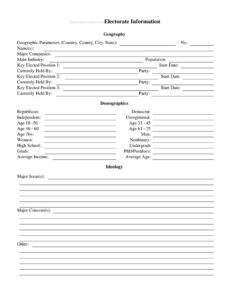
Electorate Information
Download a free Electorate Information form template in PDF and DOCX to collect accurate voter and constituent details quickly with this free template.
PDF
DOCX
6 downloads
0
likes
Download Files
- DOCX
An Electorate Information form is a structured document used to collect and record details about voters, constituents, or registered residents within a defined electoral district. People most commonly use it to build or update accurate voter rolls, manage constituent outreach, and keep contact records organized during campaigns or community engagement drives. You can download it free in both PDF and DOCX formats, with no signup required.
What Is an Electorate Information Form?
An Electorate Information form is a data-collection sheet that captures the personal, contact, and registration details of individuals tied to a particular electorate or voting area. It is typically issued by election offices, political campaign teams, party organizers, community associations, or candidate volunteers who need a consistent way to log who lives where and how to reach them. The form documents identifying information such as name, address, electoral district, and contact methods, alongside notes about voter status or engagement. Its core purpose is to centralize accurate, up-to-date constituent records so that communications, canvassing, and verification efforts are well organized and respectful of each person’s preferences.
When Do You Need an Electorate Information Form?
This form is useful any time you need to gather or confirm details about people within a voting area. Common situations include:
- Voter registration drives — collecting names, addresses, and eligibility details to help residents register or update their records.
- Campaign canvassing — door-to-door volunteers logging contact information and key issues a household cares about.
- Constituent casework — an elected official’s office recording who has reached out and what they need.
- Community town halls and events — capturing attendee details and follow-up preferences.
- Database verification — confirming that existing records match current residents and contact methods.
- Get-out-the-vote efforts — identifying supporters and noting whether they plan to vote early, by mail, or in person.
Types of Electorate Information You May Collect
Depending on your goal, the data you record will vary. A registration-focused form emphasizes eligibility, residency, and identifying details. A campaign outreach form leans toward contact preferences, issues of interest, and volunteer notes. A constituent service form prioritizes the nature of a request and how the person prefers to be reached. Many organizations combine these into one flexible template so a single sheet serves multiple purposes. Whatever the focus, the form should clearly separate factual record data from any subjective notes added by staff or volunteers.
What an Electorate Information Form Should Have
A complete and useful form generally includes the following elements:
- Full name of the individual, with space for preferred or known names.
- Residential address including street, city, and postal code to confirm which electorate they belong to.
- Electoral district or precinct identifier.
- Contact details such as phone number and email, plus a preferred contact method.
- Voter or registration status, where applicable.
- Issues or topics of interest for follow-up.
- Date of contact and the name of the volunteer or staff member who collected the information.
- Consent note confirming the person agreed to be contacted.
How to Fill Out an Electorate Information Form
Work through the form one section at a time so the record stays clean and complete:
- Enter the date at the top so you know when the information was gathered.
- Record the full name of the individual exactly as they provide it, including any preferred name.
- Write the residential address — street number, street name, unit, city, and postal code — used to confirm their electorate.
- Note the electoral district or precinct if known, or leave space to confirm later.
- Add contact details: phone number, email address, and any other reliable channel.
- Mark the preferred contact method so future outreach respects their choice.
- Indicate voter or registration status if relevant to your purpose.
- List issues or topics the person mentioned, keeping notes factual and brief.
- Confirm consent to be contacted, checking the appropriate box or signature line.
- Sign or initial as the volunteer or staff member who collected the data.
Handling Data Responsibly and Privacy Considerations
Electorate information is sensitive personal data, so handle it with care from the moment it is collected. Only gather what you genuinely need, store completed forms securely, and limit access to people who require it for legitimate purposes. Many jurisdictions have privacy and data-protection rules that govern how voter and constituent information can be collected, stored, and used — these requirements vary widely, so check the rules that apply to your region and organization. Always obtain clear consent before recording someone’s details, explain how the information will be used, and honor any request to be removed from your records. Avoid mixing personal data with unrelated marketing lists, and dispose of paper forms securely once they are no longer needed.
Tips for Accurate Constituent Records
Train volunteers to verify spelling of names and addresses on the spot, since small errors can scatter records or send mail to the wrong household. Use consistent formatting for phone numbers and dates so the data can be entered into a spreadsheet or database cleanly later. Add a short field for follow-up status so nothing falls through the cracks. When transferring paper forms into a digital system, double-check entries against the original to prevent typos that compound over time.
Common Mistakes to Avoid
- Skipping consent — recording contact details without permission can breach privacy rules and damage trust.
- Incomplete addresses — missing unit numbers or postal codes make it hard to confirm the correct electorate.
- Illegible handwriting that leads to data-entry errors when records are digitized.
- Mixing facts with opinions — keep volunteer impressions separate from verified data.
- Leaving forms unsecured in cars, bags, or open desks where sensitive information could be exposed.
- Forgetting to date the form, which makes it impossible to tell how current the information is.
Frequently Asked Questions
What is an Electorate Information form used for? It is used to collect and organize details about voters and constituents within an electoral area, such as names, addresses, contact information, and topics of interest. Campaigns, election offices, and community groups rely on it to keep accurate, up-to-date records for outreach and verification.
How do I fill out an Electorate Information form? Start with the date, then record the person’s full name, residential address, electoral district, and contact details. Note their preferred contact method, any issues they raised, and confirm their consent before signing or initialing as the person who collected the data.
Do I need consent to collect this information? In most cases, yes — you should obtain clear consent and explain how the information will be used before recording it. Privacy and data-protection requirements vary by jurisdiction, so check the rules that apply to your region before gathering or storing any personal details.
Is an Electorate Information form a legal document? It is primarily a record-keeping and data-collection tool rather than a binding legal contract. However, because it contains personal data, how you collect, store, and use it may be subject to privacy laws, so handle it responsibly and consult applicable regulations.
How much does this template cost? This Electorate Information form template is completely free to download from Business Forms Pro in both PDF and DOCX formats, with no signup or payment required. You can edit the DOCX version to match your organization’s specific fields.
How should completed forms be stored? Store them securely with restricted access, whether in a locked file or an encrypted digital system. Only keep the data as long as it is needed for its stated purpose, and dispose of paper copies securely when they are no longer required.
This template is a general example provided for informational purposes only and does not constitute legal, privacy, or compliance advice. Data-protection and election rules vary by jurisdiction — consult a qualified professional or your local election authority to ensure your data collection meets applicable requirements.
Related Forms
- Voting Demographics By Age
- Voting Demographics By Income
- Contributor Mailing List
- Contribution Tracker
- Candidate Favorability
- Fundraising Budget
Browse more in Political.