
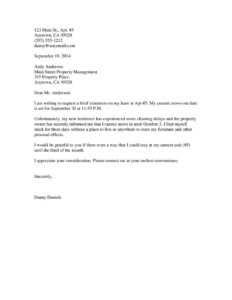
Rental Lease Extension Request
Download a free Rental Lease Extension Request template to ask your landlord for extra days on your lease in PDF or DOCX — free download, no signup.
PDF
DOCX
3 downloads
0
likes
Download Files
- DOCX
A Rental Lease Extension Request is a short letter a tenant sends to a landlord or property manager asking to stay in a rental unit beyond the agreed move-out or lease-end date. The most common reason people use it is a timing gap — a new home isn’t ready yet — and they need a few extra days before they have to leave. This template is free to download in both PDF and DOCX, with no signup required.
What Is a Rental Lease Extension Request?
A Rental Lease Extension Request is a written communication from a tenant to a landlord, leasing agent, or property management company asking to remain in a rented unit past the date the current lease or notice period ends. It documents who is requesting the extension, which unit is involved, the current scheduled move-out date, the new date the tenant hopes to stay until, and the reason behind the request. While it is not a binding contract on its own, it opens a formal, polite conversation and creates a record. If the landlord agrees, the parties typically follow up with a short written amendment or an updated lease confirming the new terms and any additional rent due.
When Do You Need a Rental Lease Extension Request?
Tenants reach for this letter whenever their planned departure and their next living situation don’t line up cleanly. Common scenarios include:
- A move-in delay at your new place. Your incoming home is being cleaned, repaired, or renovated and the owner can’t let you in until a few days after your lease ends.
- Closing or paperwork delays. A home purchase or new lease signing slips by several days, leaving you without a confirmed residence on your move-out date.
- Moving logistics. You can’t secure movers or a truck on the exact end date and need a short cushion to relocate furniture and belongings.
- Job or school timing. A start date, semester, or relocation timeline shifts and you need to extend your stay by a week or two.
- Family or medical reasons. An illness, emergency, or family obligation makes an immediate move impractical.
- Awaiting a longer-term renewal. You and the landlord are still negotiating a full renewal and need a brief bridge while the new lease is finalized.
What a Lease Extension Request Should Have
To be clear and persuasive, the letter should identify both parties and the specific unit, state the current move-out date, name the exact new date you want to stay until, and explain the reason concisely. A complete request also includes your contact information, the date, a polite closing, and an invitation for the landlord to respond. Keeping the tone courteous and the request specific — “three extra days,” not “a while longer” — makes it far easier for the landlord to say yes.
How to Fill Out a Rental Lease Extension Request
- Add your contact block. At the top, enter your name and current address, including the apartment or unit number (for example, 123 Main St., Apt. #5, Anytown, CA 95928), plus your phone number and email.
- Insert the date. Write the date you are sending the letter.
- Address the recipient. Enter the landlord or property manager’s name, company (such as Main Street Property Management), and mailing address, then open with a respectful greeting like “Dear Mr. Anderson.”
- State your request. In the first line, say you are requesting an extension on your lease for your specific unit.
- Give the current move-out date. Note the date and time your tenancy currently ends (for example, September 30 at 11:59 P.M.).
- Explain the reason. Briefly describe why you need more time, such as a cleaning delay at your new residence.
- Name the new date. Clearly state the date you would like to stay until (for example, October 3).
- Close politely. Thank the landlord, ask them to contact you at their earliest convenience, sign your name, and print it below.
After You Send the Request
Sending the letter is only the first step. Follow up by phone or email if you don’t hear back within a day or two, especially when your move-out date is close. If the landlord agrees, ask for the approval in writing — even a brief email reply confirming the new date helps protect you. Discuss whether prorated rent applies for the extra days; many landlords charge a daily rate for time beyond the lease end. If the extension is longer than a few days, the landlord may prefer a formal lease amendment or a short-term agreement. Keep copies of every message so the timeline and terms are documented.
Lease Extension vs. Lease Renewal
These two are often confused. A lease extension is usually a brief continuation of an existing lease under the same terms — a handful of extra days or weeks to cover a gap. A lease renewal creates a new lease term, often a year, and may involve renegotiated rent and updated terms. The letter on this page is geared toward the short, situational extension described above, though the same polite format can also start a renewal conversation.
Common Mistakes to Avoid
- Being vague about dates. Always state the exact current end date and the exact new date you need, not a fuzzy “a little longer.”
- Waiting until the last minute. Send the request as early as possible so the landlord has time to respond and rearrange any incoming tenant.
- Forgetting your unit number. In a multi-unit building, omitting the apartment number creates confusion.
- Assuming approval. Don’t stay past your end date until you have written confirmation; staying without permission can be treated as a holdover.
- Ignoring extra rent. Failing to ask about prorated charges can lead to a surprise bill or a dispute.
- Leaving no record. Sending only a verbal request leaves you without proof of the agreement.
Frequently Asked Questions
What is a Rental Lease Extension Request? It is a letter a tenant sends to a landlord or property manager asking to stay in a rental unit past the scheduled move-out or lease-end date. It identifies the unit, the current end date, the requested new date, and the reason. It is a starting point for an agreement, not a binding extension by itself.
How do I fill out a lease extension request? Add your contact details and the date, address the landlord, state your current move-out date, explain why you need more time, and clearly name the new date you’d like to stay until. Close politely and invite the landlord to respond. The template guides you through each of these steps.
Is a lease extension request legally binding? No, the request alone is just an ask. An extension becomes binding only when the landlord agrees, ideally in writing through a confirming email, a lease amendment, or a short-term agreement. Always get approval documented before relying on it.
Will I have to pay extra rent for the additional days? Often yes. Many landlords charge a prorated daily rate for any time beyond the lease end date, so it’s wise to ask about charges when you make the request. Confirm the amount in writing along with the new move-out date.
How early should I send the request? As soon as you know you’ll need more time. Giving the landlord at least a couple of weeks’ notice, when possible, increases your chances of approval and gives them time to adjust any incoming tenant’s schedule.
How much does this template cost? Nothing. You can download the Rental Lease Extension Request for free in PDF or DOCX format with no signup, then customize the names, dates, unit number, and reason to fit your situation.
This template is a general example provided for informational purposes only and is not legal advice. Landlord-tenant rules and notice requirements vary by state and locality, so consult your lease and a qualified professional before relying on this document for your specific situation.
Official resource: for the rules that apply to your situation, see HUD.
Related Forms
- Tenant Lease Renewal Letter
- Reasonable Accommodation Request Wheelchair
- Open House Sign In Sheet
- Home Showing Tracker
- Complaint Letter Against Tenant
- Lease Extension Approval
Browse more in Rental and Real Estate.