
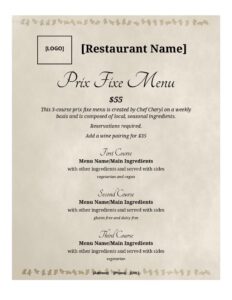
Prix Fixe Menu
Create a polished multi-course prix fixe menu with this free template, available as an editable DOCX and print-ready PDF download — no signup required.
DOCX
0
likes
Download Files
- DOCX
A prix fixe menu is a fixed-price menu that offers diners a set selection of courses for one all-inclusive price, and restaurants most often use it to streamline service for special events, holidays, and tasting experiences. This free prix fixe menu template is ready to download in editable DOCX and print-ready PDF formats, with no signup required.
What Is a Prix Fixe Menu?
A prix fixe menu (French for “fixed price”) is a curated meal in which guests pay a single set price for a predetermined number of courses, usually choosing one option per course from a short list of selections. Restaurants, caterers, and event venues issue it to control kitchen workflow, manage food costs, and present a cohesive dining narrative. Rather than ordering individually from an à la carte list, the diner receives a structured progression — typically an appetizer, an entrée, and a dessert. The format documents exactly what is included, the price, any optional upgrades such as wine pairings, and the terms that apply, giving both guests and staff a clear, shared reference for the meal.
When Do You Need a Prix Fixe Menu?
This menu format shines whenever you want predictable pacing and pricing. Common scenarios include:
- Holiday and special-occasion dining — Valentine’s Day, Mother’s Day, New Year’s Eve, and Thanksgiving services where a fixed menu keeps the kitchen efficient under heavy demand.
- Restaurant week or promotional events — citywide programs where venues advertise a set multi-course meal at a featured price point.
- Chef’s tasting experiences — a signature multi-course progression that showcases the kitchen’s best work at a single inclusive price.
- Private parties and group bookings — pre-set menus that simplify billing and service for large tables with confirmed headcounts.
- Weddings, banquets, and catered functions — packaged menus that let event planners budget precisely per guest.
- Wine-pairing dinners — courses matched to specific pours, offered as one bundled price for the full experience.
Types of Prix Fixe Formats
Not every fixed-price menu looks the same. A table d’hôte menu offers a few choices per course, giving diners some flexibility within a set framework. A tasting menu (or menu dégustation) presents many small, chef-selected courses with little or no choice, designed as a guided culinary journey. A simple two- or three-course set menu is the most common restaurant format, ideal for lunch deals and holidays. Knowing which style you intend helps you decide how many courses and options to list on the template.
What a Prix Fixe Menu Should Have
A complete prix fixe menu communicates everything a guest needs before committing to the meal. Key elements include the restaurant name and occasion or menu title, the set price prominently displayed, a clear list of courses in serving order, the selectable options within each course, accurate dish descriptions, and any add-ons such as beverage pairings or supplements for premium ingredients. It should also note dietary accommodations, applicable dates or service hours, and the terms — for example, whether the price excludes tax and gratuity. Clean formatting and consistent course headings make the menu easy to read at the table and easy for servers to reference.
How to Fill Out a Prix Fixe Menu
Because this is a presentation document rather than a fill-in legal form, customizing it is mostly about clear, appetizing copy. Work through it in this order:
- Add your restaurant name and logo at the top, along with a menu title such as “New Year’s Eve Prix Fixe” or “Chef’s Three-Course Dinner.”
- Set the price and place it prominently, noting per-person pricing and whether tax and gratuity are included.
- Name each course in serving order — for example, First Course / Second Course / Dessert, or Appetizer / Entrée / Dessert.
- List the selectable dishes under each course, giving guests a clear choice of one option per course.
- Write concise descriptions highlighting key ingredients, preparation, and any signature touches.
- Add optional upgrades such as wine pairings, premium proteins with a supplement, or an extra cheese course.
- Note dietary symbols for vegetarian, vegan, or gluten-free items so guests can plan.
- Include service details — valid dates, available times, and any reservation requirements — at the bottom.
Design and Wording Tips
The most appealing prix fixe menus read effortlessly and feel special. Keep dish descriptions short and sensory — name the hero ingredient and one or two supporting elements rather than listing everything on the plate. Use consistent capitalization and avoid currency symbols beside individual dishes, since the whole point is one fixed price. Limit each course to two or three choices to keep the kitchen efficient and decisions easy. Leave generous white space, align the price so it catches the eye, and proofread spelling of ingredient and wine names. If you print it, choose a stock and font that match your dining room’s atmosphere.
Common Mistakes to Avoid
- Burying the price — the fixed price is the headline; make it impossible to miss.
- Offering too many choices — defeating the operational benefit and slowing the kitchen during peak service.
- Omitting tax and gratuity terms — leaving guests surprised at the final bill.
- Overwriting descriptions — long, jargon-heavy copy makes menus hard to scan and harder to translate for servers.
- Forgetting dietary labels — guests with restrictions need to know their options before they sit down.
- Leaving stale dates or pricing — always update the valid dates and price before each event or printing.
Frequently Asked Questions
What does prix fixe mean? Prix fixe is French for “fixed price.” It refers to a menu where diners pay one set price for a complete multi-course meal, usually selecting one dish per course from a short list of options.
How is a prix fixe menu different from à la carte? À la carte means each dish is ordered and priced individually, while a prix fixe bundles several courses into a single price. Prix fixe offers less choice but more predictability for both the diner and the kitchen.
How many courses should a prix fixe menu have? Two or three courses are most common for restaurant and holiday service, while tasting menus can run five courses or more. Choose a number that fits your kitchen’s capacity and the dining experience you want to create.
Should I include tax and gratuity in the price? That is your choice, but you should state it clearly on the menu. Many restaurants list the price as exclusive of tax and gratuity, while group and event menus sometimes add an automatic service charge — note whichever applies.
Can I edit this prix fixe menu template? Yes. The template downloads as an editable DOCX you can customize with your dishes, branding, and pricing, plus a print-ready PDF. Both are completely free with no signup required.
Is a prix fixe menu only for fine dining? Not at all. While it is popular in upscale restaurants, casual eateries, cafés, and caterers use fixed-price menus for lunch specials, group bookings, and holidays because they simplify ordering and help control costs.
This prix fixe menu template is a general example provided for informational purposes only and does not constitute legal, financial, or food-safety advice. Pricing, labeling, allergen disclosure, and service requirements vary by jurisdiction — consult a qualified professional to ensure your menu meets local regulations.
Related Forms
- Shift Request Form
- Refrigerator Temperature Log
- Freezer Inventory Log
- No Outside Food Or Drink Sign
- Bathrooms For Customers Sign
- Ingredient Usage Report
Browse more in Restaurant.