
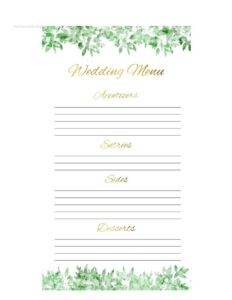
Catering Menu Wedding
Plan your reception courses with this free Wedding Catering Menu template, organizing appetizers, mains, desserts and pricing for free download.
PDF
DOCX
0
likes
Download Files
- DOCX
A Wedding Catering Menu is a structured document that caterers and couples use to lay out every dish, beverage, and service detail for a wedding reception. It is the single most common tool for confirming what food will be served, in what order, and at what price, so there are no surprises on the big day. You can download it free in PDF and DOCX with no signup required.
What Is a Wedding Catering Menu?
A Wedding Catering Menu is the food and beverage plan a caterer prepares and presents to a couple for their wedding event. It is usually issued by the catering company or in-house venue coordinator, and it documents each course, the dishes within it, portion or service style, dietary options, and the price per guest or per platter. The menu functions both as a planning tool during the tasting and proposal stage and as a reference that confirms the agreed selections once the couple signs off. For caterers it standardizes the kitchen’s prep list; for couples it becomes a clear, written record of exactly what their guests will eat and drink.
When Do You Need a Wedding Catering Menu?
Couples and catering professionals reach for this document at several points in the planning process. Common situations include:
- Quoting a new client — when a caterer responds to a couple’s inquiry and needs to present curated package options with prices.
- Tasting appointments — to list the dishes the couple will sample so they can compare and choose favorites.
- Finalizing the reception — locking in the chosen appetizers, entrées, sides, and desserts before the wedding date.
- Accommodating dietary needs — documenting vegetarian, vegan, gluten-free, kosher, or allergy-specific alternatives for named guests.
- Coordinating with the venue — sharing the service timeline and plating style with banquet staff and event managers.
- Budget reconciliation — comparing per-guest pricing against the couple’s overall catering budget and final headcount.
Types of Wedding Catering Service
The menu often reflects the service style chosen, and naming it helps the kitchen and floor staff prepare correctly. A plated (seated) dinner lists a fixed set of courses delivered to each guest. A buffet menu groups dishes by station and quantity. A family-style menu lists shareable platters per table. Cocktail reception menus center on passed hors d’oeuvres and stations. A food station format mixes carving, pasta, or dessert bars. Indicating the style on the menu ensures portions, staffing, and pricing all align.
What a Wedding Catering Menu Should Have
A complete menu reads clearly for both the couple and the kitchen. Strong menus typically include the couple’s names and wedding date, the venue, the service style, and a guest count. Each course should be grouped logically — appetizers or hors d’oeuvres, salads, entrées, sides, and desserts — with concise dish descriptions. Pricing should be transparent, whether per guest, per platter, or as a package total, and any additional charges (service, gratuity, rentals, bar) should be itemized. Dietary and allergen notes, beverage and bar options, and a service timeline round out a professional, decision-ready document.
How to Fill Out a Wedding Catering Menu
- Add event details: Enter the couple’s names, the wedding date, the venue, and the expected guest count at the top so every selection ties to the correct event.
- Choose a service style: Note whether the meal is plated, buffet, family-style, or stations, since this drives portions and staffing.
- List appetizers: Write each hors d’oeuvre or starter with a short description, noting passed versus stationed.
- Add salads and soups: Specify any first course, dressing options, and whether it is pre-set or served.
- Detail entrées: List each main with protein, preparation, and an accompanying side or sauce.
- Include sides and breads: Add vegetables, starches, and rolls offered with the meal.
- Plan desserts and cake: Note the wedding cake, any dessert table items, and coffee service.
- Outline beverages: Record non-alcoholic options and any bar package or signature cocktails.
- Flag dietary alternatives: Mark vegetarian, vegan, gluten-free, and allergy-safe dishes by guest where known.
- Enter pricing: Add per-guest or package prices, then any service charge, gratuity, and taxes for a clear total.
Pricing and Headcount Tips
Per-guest pricing is the most common structure for weddings, so always tie the menu to a confirmed or estimated headcount and update it as RSVPs arrive. Build in a small buffer for vendor meals (photographers, DJ, planner) which are often billed at a reduced rate. Clarify whether children’s meals are priced differently, and confirm the date by which the final guest count must be locked — most caterers require it one to two weeks before the event. Keeping pricing transparent on the menu itself prevents disputes and helps the couple stay inside their budget.
Sharing It With Your Venue and Couple
Once selections are agreed, send a clean copy to the couple for written approval and a working copy to the venue’s banquet captain. The DOCX version is ideal for editing courses and prices during planning, while the PDF makes a polished, locked file for final sign-off and for distribution to kitchen and floor staff on the wedding day.
Common Mistakes to Avoid
- Vague dish names — “chicken” tells the kitchen nothing; specify the preparation and sauce.
- Forgetting dietary options — failing to plan vegetarian or allergy-safe meals leaves guests without food.
- Omitting service charges — leaving gratuity, rentals, or bar costs off the menu creates billing surprises.
- Not tying price to headcount — per-guest totals are meaningless without a confirmed count.
- Skipping the service style — buffet and plated dinners need very different staffing and portions.
- No written approval — relying on verbal agreement instead of a signed, dated menu invites confusion.
Frequently Asked Questions
What is a Wedding Catering Menu? It is a document that lists every course, beverage, and service detail a caterer will provide for a wedding reception, along with pricing. It serves as both a planning proposal and a final, agreed reference for the couple, venue, and kitchen.
How do I fill out a Wedding Catering Menu? Start with the couple’s names, date, venue, and guest count, then list each course — appetizers, salads, entrées, sides, and desserts — with short descriptions. Add beverage and bar options, mark dietary alternatives, and finish with per-guest or package pricing plus any service charges.
Is a Wedding Catering Menu legally binding? The menu itself is primarily a planning and reference document, but once it is incorporated into or attached to a signed catering contract, the agreed dishes and pricing typically become binding. Always confirm terms in the underlying service agreement.
How much does this template cost? The template is completely free to download here in both PDF and DOCX formats, with no signup or payment required. You can customize it as many times as you need.
When should the menu be finalized? Most couples finalize dishes after a tasting, usually one to two months before the wedding, while the final guest count is typically locked one to two weeks out. Confirm exact deadlines with your caterer.
Can I edit the courses and prices? Yes. The DOCX version is fully editable so you can add or remove courses, adjust descriptions, and update per-guest pricing, then export a clean PDF for final approval.
This Wedding Catering Menu template is a general example provided for informational purposes only and is not legal, financial, or tax advice. Catering practices, pricing structures, and contract requirements vary by location and vendor — consult a qualified professional or your caterer before finalizing any agreement.
Related Forms
- Reservation Form
- Cafe Menu
- Ingredient Usage Report
- Reservations List
- Restaurant Sanitation Checklist
- Daily Food Sales Log
Browse more in Restaurant.