
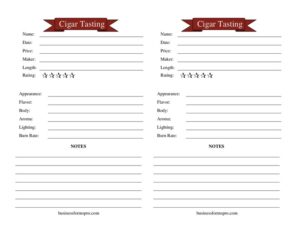
Cigar Tasting Log
Track and review every smoke with a free Cigar Tasting Log template—record flavor, body, burn, and ratings in PDF or DOCX with no signup, free download.
PDF
DOCX
1 downloads
0
likes
Download Files
- DOCX
A Cigar Tasting Log is a simple record sheet aficionados use to capture the details of each cigar they smoke, so they can compare experiences and remember favorites over time. The most common reason people reach for one is to stop relying on memory—logging the maker, flavor notes, and rating turns casual smoking into an organized hobby. This template is free to download in both PDF and DOCX formats, with no signup required.
What Is a Cigar Tasting Log?
A Cigar Tasting Log is a structured journal entry for evaluating a single cigar. It is used by enthusiasts, collectors, retailers, and lounge members to document the sensory and physical characteristics of a smoke—from how it looks before lighting to how it burns to the finish. Each entry pairs identifying information (name, maker, price, length) with subjective impressions (appearance, flavor, body, aroma) and performance notes (lighting, burn rate). Over many entries, the log becomes a personal reference that reveals patterns in your palate, helps justify purchases, and lets you recommend or avoid specific cigars with confidence. It is a low-pressure tool: no rules, just consistent observation.
When Do You Need a Cigar Tasting Log?
This log is useful any time you want to remember and compare what you smoke. Common scenarios include:
- Building a personal palate library — tracking which makers and wrappers you consistently enjoy.
- Comparing a vertical or sampler pack — logging several cigars from one brand side by side to find the standout.
- Evaluating a new purchase — deciding whether a box-worthy cigar lives up to its price.
- Aging experiments — recording the same cigar at different rest times to see how flavor and burn evolve.
- Lounge or club tastings — keeping group notes during a guided session or pairing event.
- Retail and inventory reference — shop staff noting impressions to advise customers accurately.
What a Cigar Tasting Log Should Have
A complete entry balances identification with evaluation. The identifying fields—Name, Maker, Date, Price, and Length—pin down exactly which cigar and session you are describing. The sensory fields—Appearance, Flavor, Aroma, and Body—capture the experience itself. The performance fields—Lighting and Burn Rate—record how well the cigar smoked mechanically. A single Rating ties it all together for quick comparison, and a generous Notes section gives room for pairings, occasion, and anything the structured fields miss. A good log keeps these consistent from entry to entry so your scores actually mean something.
How to Fill Out a Cigar Tasting Log
- Name: Write the cigar’s full name, including the line and vitola (for example, “Padrón 1964 Anniversary Torpedo”).
- Date: Enter the date you smoked it—useful for tracking aging and seasonal palate shifts.
- Price: Note what you paid per stick, which helps judge value against the experience.
- Maker: Record the manufacturer or brand so you can group entries by producer later.
- Length: List the size and ring gauge or measured length to remember the format.
- Appearance: Describe the wrapper color, oils, veins, and construction before lighting.
- Lighting: Note how easily it lit and took the flame.
- Flavor: Capture the dominant and secondary tasting notes—cedar, cocoa, pepper, leather.
- Body: Rate the strength as mild, medium, or full.
- Aroma: Describe the smell of the smoke and the room note.
- Burn Rate: Comment on burn line evenness and how quickly it smoked.
- Rating: Give an overall score on whatever scale you prefer.
- Notes: Add pairings, occasion, draw, ash quality, or whether you’d buy again.
How to Score Consistently
The value of a Cigar Tasting Log comes from comparability, so settle on a scale before you start and stick with it. A 1–10 or 1–100 scale both work; the key is that a “7” means the same thing in January as it does in December. Many smokers break the Rating into mental sub-scores—construction, flavor complexity, and overall enjoyment—then average them. Fill in the Body field using a simple three-tier label (mild, medium, full) rather than vague words, and reserve the Flavor and Aroma fields for descriptive language. Logging in the moment, while the cigar is still in hand, produces far more honest entries than reconstructing impressions from memory hours later.
Getting the Most From Your Log Over Time
Once you have a dozen or more entries, your Cigar Tasting Log becomes a decision tool. Sort or skim by Maker to see which producers consistently earn high marks, or by Price to spot the best value sticks in your collection. Comparing the Burn Rate and Lighting notes across humidity conditions can reveal whether your storage needs adjusting. Keeping the DOCX version lets you build a running digital log on a computer, while the PDF is handy to print and clip beside your humidor for quick handwritten entries. Either way, consistency in how you describe Flavor and Body is what turns scattered notes into a genuinely useful reference.
Common Mistakes to Avoid
- Logging from memory: Waiting until the next day blurs the details that matter most.
- Skipping the maker or length: Without these, you can’t reliably re-find or reorder a cigar you loved.
- Changing your rating scale: Switching between systems makes old scores meaningless.
- Vague flavor notes: “Good” tells you nothing later—name actual tastes and aromas.
- Ignoring burn and lighting: Construction problems are part of the experience and worth recording.
- Leaving Notes blank: The freeform field is often where the most useful reminders live.
Frequently Asked Questions
What is a Cigar Tasting Log used for? It is used to record and compare the cigars you smoke, capturing details like maker, price, flavor, body, aroma, burn, and an overall rating. Over time it helps you remember favorites, judge value, and recommend cigars. It is equally useful for casual hobbyists and serious collectors.
How do I fill out a Cigar Tasting Log? Start with the identifying fields—name, date, price, maker, and length—then work through the cigar from appearance and lighting to flavor, body, aroma, and burn rate. Finish with an overall rating and any extra observations in the notes. Filling it in while you smoke produces the most accurate entries.
What rating scale should I use? Any scale works—1 to 10, 1 to 100, or even simple stars—as long as you use the same one for every entry. Consistency is what makes your ratings comparable across cigars and over time. Some smokers average separate scores for construction, flavor, and enjoyment.
Is this Cigar Tasting Log free to download? Yes. You can download it free in both PDF and DOCX formats with no signup or payment required. Use the PDF to print and write by hand, or the DOCX to keep an editable digital log.
Can I customize the fields in the template? Yes. The DOCX version is fully editable, so you can add columns for wrapper type, draw resistance, pairing, or storage conditions. You can also remove fields you don’t use to keep entries quick.
What’s the difference between body and flavor? Body refers to the cigar’s overall strength and weight on the palate—mild, medium, or full—while flavor describes the specific tasting notes you detect, such as cedar, espresso, or pepper. Both are worth recording separately for a complete picture.
This Cigar Tasting Log template is a general example provided for informational and personal-use purposes only. It is not professional advice, and any references to age, purchase, or use of tobacco products are subject to laws and regulations that vary by jurisdiction—follow your local rules.
Related Forms
- Monthly Outdoor Maintenance Log
- Cleaning Log By Room
- Club Tracking Payments
- Document Tracker
- Wilderness Emergency Checklist
- List of Vehicles
Browse more in Log and Inventory.