
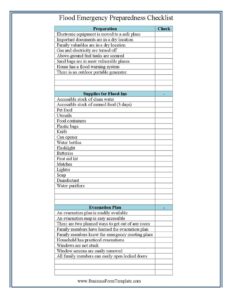
Flood Emergency Checklist
Use this free Flood Emergency Checklist template to prepare your home, supplies, and evacuation plan before flooding strikes — free PDF and DOCX download.
PDF
2 downloads
0
likes
Download Files
A Flood Emergency Checklist is a simple, organized list that helps households confirm they have taken every key step to prepare for rising water — from moving valuables to higher ground to mapping out evacuation routes. People most often use it before a forecasted storm or seasonal flood to make sure nothing critical is overlooked. This template is free to download in PDF and DOCX, with no signup required.
What Is a Flood Emergency Checklist?
A Flood Emergency Checklist is a preparedness document that breaks flood readiness into clear, checkable tasks. It is typically used by homeowners, renters, families, landlords, and community safety coordinators to verify that protective measures, emergency supplies, and evacuation plans are all in place. Rather than relying on memory during a stressful event, the checklist documents the state of your preparations: which items are secured, which supplies are stocked, and whether everyone in the household knows what to do. It serves both as a planning tool ahead of flood season and as a quick verification list when a flood warning is issued, helping reduce panic and prevent dangerous last-minute decisions.
When Do You Need a Flood Emergency Checklist?
- Before flood season begins — when you live in a floodplain or near rivers, coasts, or low-lying areas and want to prepare in advance.
- When a flood watch or warning is issued — to quickly run through protective actions before water arrives.
- After a major storm forecast — to secure fuel tanks, sandbags, and important documents while there is still time.
- When moving into a new home in a flood-prone region and assessing readiness for the first time.
- For family or household drills — to test whether everyone knows the evacuation plan and meeting place.
- For landlords or property managers who want a documented standard for preparing rental units.
What a Flood Emergency Checklist Should Have
A complete flood checklist covers three core areas. First, home preparation: protecting equipment, documents, valuables, utilities, and fuel tanks, plus defenses like sandbags and warning systems. Second, emergency supplies: clean water, non-perishable food for at least three days, tools, sanitation items, and first aid. Third, evacuation planning: accessible maps, multiple exit routes, a meeting place, and confirmation that every family member can open doors and windows. A strong checklist uses clear yes/no items so anyone can complete it, leaves room for notes, and groups related tasks together so nothing is missed under pressure.
How to Fill Out a Flood Emergency Checklist
- Start with the preparation section. Confirm that electronic equipment is moved to a safe, elevated place, and that important documents and family valuables are stored in a dry location.
- Verify utilities and hazards: mark whether gas and electricity are turned off and whether above-ground fuel tanks are secured.
- Check your defenses — sandbags placed in the most vulnerable areas, a working flood warning system, and an outdoor portable generator.
- Move to supplies for flood-ins. Tick off an accessible stock of clean water, canned food for three days, pet food, utensils, food containers, plastic bags, a knife, and a can opener.
- Confirm safety and sanitation items: water bottles, flashlight, batteries, first aid kit, matches or a lighter, soap, disinfectant, and water purifiers.
- Complete the evacuation plan section: an available plan and accessible map, two ways out of every room, family members who have learned the plan and know the meeting place, and practiced drills.
- Finish by checking that windows are not stuck, screens are easily removed, and all family members can open locked doors.
Building a Practical Evacuation Plan
The evacuation portion of this checklist deserves special attention because flooding can cut off routes quickly. Identify two ways out of every room and confirm each exit actually works — windows that are painted shut or screens that won’t pop out can trap people in an emergency. Walk through the route with every household member, including children, and agree on a single emergency meeting place on higher ground away from the home. Practicing the evacuation at least once turns the plan from a list into muscle memory. Keep the evacuation map somewhere everyone can grab it, and make sure even young or elderly members can open locked doors without help.
Stocking and Rotating Your Emergency Supplies
A checked-off supply list is only useful if the items are usable when needed. Store at least three days of clean water and canned food, and rotate them periodically so nothing expires. Keep batteries fresh and test your flashlight, and store matches or a lighter in a waterproof container. Don’t forget pet food, sanitation items like soap and disinfectant, and water purifiers in case the supply becomes contaminated. Treat the checklist as a living document: review it before each flood season and update quantities as your household changes.
Common Mistakes to Avoid
- Leaving documents and valuables at floor level — water rises fast, so move them high and dry well in advance.
- Forgetting to turn off utilities — failing to shut off gas and electricity creates serious fire and electrocution risks.
- Stocking expired supplies — water, food, batteries, and first aid items lose effectiveness if never rotated.
- Skipping evacuation practice — a written plan no one has rehearsed often fails when seconds count.
- Ignoring exit barriers — stuck windows, fixed screens, or locked doors children can’t open can block escape.
- Overlooking pets — leaving out pet food and a plan for animals puts both pets and people at risk.
Frequently Asked Questions
What is a Flood Emergency Checklist used for? It is used to confirm that your home, supplies, and evacuation plan are all ready before or during a flood. The checklist organizes preparation into clear tasks so you don’t overlook critical steps under pressure. It works as both a planning guide and a quick verification tool when a warning is issued.
How do I fill out a Flood Emergency Checklist? Work through it section by section — preparation, supplies, and evacuation — and mark each item as done or still needed. Address any unchecked items as soon as possible, prioritizing utilities and exits. Keep the completed checklist somewhere accessible so the whole household can reference it.
Is this checklist free to download? Yes. The Flood Emergency Checklist template is completely free to download in PDF and DOCX formats with no signup required. You can use the PDF as-is or edit the DOCX to add items specific to your home and region.
When should I review my flood checklist? Review it before flood season begins, whenever a flood watch or warning is issued, and after any major change to your household or property. Regular reviews let you rotate expiring supplies and re-test exits, generators, and warning systems so everything works when it matters.
How much emergency water and food should I store? A common guideline is at least a three-day supply of clean water and non-perishable food per person, plus extra for pets. Store more if you live in an area where help may take longer to arrive, and rotate stock so it stays usable.
Can I customize the checklist for my home? Absolutely. Because the DOCX version is editable, you can add items unique to your property — such as basement pumps, specific medications, or important neighbor contacts — and remove anything that doesn’t apply. Tailoring the list makes your preparation more thorough and relevant.
This Flood Emergency Checklist template is a general example provided for informational purposes only and does not constitute emergency, legal, or professional safety advice. Flood risks and official guidance vary by location — consult your local emergency management authority and qualified professionals for guidance specific to your area.
Related Forms
- Software Inventory
- Semi Annual Safety And Maintenance Update
- Salad Bar Items Inventory Spreadsheet
- Bill Reminder Tracker
- Tips Tracker
- Inventory Report
Browse more in Log and Inventory.