
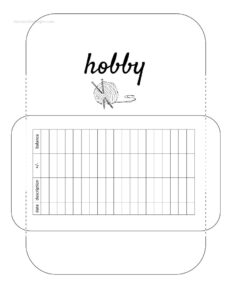
Hobby Cash Envelope
Use our free Hobby Cash Envelope template to budget and track spending on your hobbies in cash, available as a free download in PDF and DOCX.
PDF
DOCX
0
likes
Download Files
- DOCX
A Hobby Cash Envelope is a simple budgeting tool that holds the physical cash you’ve set aside for a specific hobby and tracks what you spend from it. People most often use it to stop hobby costs from quietly draining their bank account by giving each pastime a clear, fixed cash limit. You can download this template free as a PDF or DOCX, with no signup required.
What Is a Hobby Cash Envelope?
A Hobby Cash Envelope is a labeled envelope used in the cash envelope budgeting method, dedicated to the money you plan to spend on a hobby such as gardening, painting, gaming, fishing, crafting, or photography. At the start of a budgeting period you fill it with a set amount of cash, then pay for hobby-related purchases from that envelope only. As you spend, you log each transaction on the envelope so you can see the running balance. When the cash runs out, your hobby spending for that period is done. It’s used by individuals, couples, and families who want hands-on, visual control over discretionary money.
When Do You Need a Hobby Cash Envelope?
This envelope is most useful any time a hobby starts to feel like an open-ended expense. Common situations include:
- You’re following a cash envelope or zero-based budget and want a dedicated category for fun spending.
- Your hobby has unpredictable costs — yarn, model kits, tackle, paint, or supplies that add up fast.
- You share finances with a partner and want a clear, agreed-upon limit for personal hobbies.
- You’re trying to cut back on impulse purchases at craft stores, game shops, or online marketplaces.
- You’re teaching a teen or child to manage money for a pastime of their own.
- You want a tangible reminder of how much you’ve spent versus how much is left before payday.
What a Hobby Cash Envelope Should Have
A complete and useful Hobby Cash Envelope template captures both the plan and the actual spending. At minimum it should include a label for the hobby or category name, the budgeting period it covers, and the starting amount of cash placed inside. It also needs a running log with space for the date, a short description of each purchase, the amount spent, and the remaining balance after each entry. A small notes area is helpful for jotting reminders, like items you want to buy next period. Clear columns and a visible balance line are what make the envelope work as a real-time spending tracker rather than just a place to keep cash.
How to Fill Out a Hobby Cash Envelope
Follow these steps to set up and maintain your envelope:
- Name the hobby: Write the hobby or category on the label line — for example, “Painting” or “Fishing Gear.”
- Set the period: Note the budgeting period, such as the month or pay cycle the envelope covers.
- Record the starting amount: Enter the cash you’re putting in and place that exact amount inside.
- Log each purchase: Every time you spend, write the date, a brief description of the item, and the amount.
- Update the balance: Subtract each purchase from the previous balance and write the new remaining total.
- Use the notes line: Jot reminders, returns, or items to buy next time.
- Reconcile at period end: Compare the cash left to your written balance to confirm they match, then refill or roll over.
How the Cash Envelope Method Works
The cash envelope method turns abstract budget numbers into physical money you can hold. Instead of swiping a card and reviewing the damage later, you decide upfront how much each category gets, withdraw that cash, and spend only what’s in the envelope. For hobbies specifically, this builds a natural spending ceiling: when the envelope is empty, you wait until the next period rather than reaching for credit. Many budgeters keep several envelopes — groceries, dining, entertainment — and a hobby envelope simply carves out room for the things you do for enjoyment. Some people allow leftover cash to roll forward, saving toward a bigger purchase like a new camera lens or power tool.
Tips for Sticking to Your Hobby Budget
A few habits make the envelope far more effective. Choose a realistic starting amount based on past spending rather than wishful thinking, so you aren’t tempted to break the system in week one. Carry only the envelope when you head to a hobby store, leaving cards at home to remove the easy escape hatch. Log purchases immediately at the register or as soon as you get home, because a delayed entry is the one that gets forgotten. If you shop online, withdraw the equivalent cash and physically remove it from the envelope to keep the balance honest. Finally, review the log at the end of each period to spot patterns — you may discover certain supplies eat more of your budget than you realized.
Common Mistakes to Avoid
- Not logging purchases: Cash disappears without a trail unless you write down every transaction.
- Setting an unrealistic limit: Too small a budget leads to abandoning the envelope entirely.
- Mixing categories: Don’t borrow grocery or gas cash for hobby buys, or the system breaks down.
- Forgetting online spending: Card purchases for your hobby must still be deducted from the envelope cash.
- Skipping the reconciliation: If the cash and the written balance don’t match, find out why before the next period.
- Ignoring rollover: Decide in advance whether leftover cash carries forward or returns to savings.
Frequently Asked Questions
What is a Hobby Cash Envelope used for? It’s used to budget and physically track the money you spend on a hobby. You put a set amount of cash inside, spend only from it, and log each purchase so you always know your remaining balance. When the envelope is empty, your hobby spending for that period is finished.
How do I fill out the Hobby Cash Envelope template? Start by writing the hobby name, the budgeting period, and the starting cash amount. Then record the date, description, and amount of each purchase, updating the running balance as you go. Use the notes line for reminders and reconcile the cash against your log at the end of the period.
How much should I put in a hobby envelope? Base the amount on what you’ve realistically spent on the hobby in recent months rather than an arbitrary number. A realistic limit is one you can actually stick to, which keeps the system working. You can always adjust the amount next period as you learn your true spending.
Can I use this for online hobby purchases? Yes. When you buy online with a card, withdraw the same amount in cash and remove it from the envelope, or subtract it on the log so your balance stays accurate. The goal is to keep your written balance honest no matter how you pay.
Is the Hobby Cash Envelope free to download? Yes, this template is completely free to download in both PDF and DOCX formats with no signup required. You can print the PDF to use right away or edit the DOCX version to customize labels, columns, and categories for your specific hobby.
What’s the difference between a cash envelope and a budgeting app? A cash envelope uses physical money, which creates a tangible spending limit and makes overspending harder, while an app tracks digital transactions automatically. Many people prefer cash envelopes for discretionary categories like hobbies because the visible, finite cash discourages impulse buys. You can also use both together if you like.
This Hobby Cash Envelope template is a general example provided for informational purposes only and is not financial advice. Budgeting needs and best practices vary by individual situation — consult a qualified financial professional for guidance tailored to your circumstances.
Official resource: for the rules that apply to your situation, see the Consumer Financial Protection Bureau.
Related Forms
- Utilities Annual Use Tracker
- Weekly Sales Commission Tracker
- Tax Refund Planner
- Coffee Cash Envelope
- Monthly Bill Organizer
- Profit And Loss Statement
Browse more in Money.