
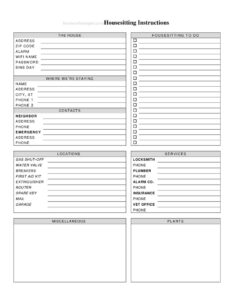
Housesitting Instructions
Download a free Housesitting Instructions template to leave clear notes for your sitter on pets, plants, security, and emergencies — free download in PDF and DOCX.
PDF
DOCX
6 downloads
0
likes
Download Files
- DOCX
A Housesitting Instructions form is a written guide you leave for the person watching your home, pets, and property while you’re away, covering everything from feeding schedules to alarm codes and emergency contacts. Most people use it to make sure their sitter has clear, all-in-one-place directions instead of scattered sticky notes or last-minute text messages. You can download this Housesitting Instructions template free in PDF and DOCX with no signup required.
What Is a Housesitting Instructions Form?
A Housesitting Instructions form is a simple document a homeowner or renter prepares for a housesitter, pet sitter, or trusted friend who will be staying in or checking on their home during a trip. It documents daily routines, contact details, security information, and what to do if something goes wrong. The goal is to remove guesswork: a good sheet lets a sitter run the household smoothly even if they’ve never been to your home before. It isn’t a legal contract — it’s a practical reference. Homeowners typically write it, print a copy to leave on the counter, and text or email a digital version to the sitter as backup before leaving town.
When Do You Need a Housesitting Instructions Form?
Any time someone else is responsible for your home, this form prevents confusion and keeps pets, plants, and property safe. Common situations include:
- Vacations and long trips — you’ll be unreachable for stretches and want the sitter to handle things independently.
- Business travel — frequent short trips where a reusable template saves you rewriting instructions each time.
- Pet sitting — feeding amounts, medication schedules, walk routines, and vet contact details all in one place.
- Plant and garden care — watering days, indoor versus outdoor plants, and which ones are sensitive to over- or under-watering.
- Hospital stays or family emergencies — when you leave suddenly and need a neighbor or relative to step in fast.
- House swaps or guest stays — visitors who need to know how the thermostat, appliances, and security system work.
What a Housesitting Instructions Form Should Have
A complete set of instructions covers both the routine and the unexpected. At minimum it should include your travel dates and how to reach you, daily care tasks for pets and plants, security and entry details, important household contacts (vet, neighbor, plumber), and clear guidance on what counts as an emergency. The strongest sheets also note small details a sitter wouldn’t guess — which door sticks, where the spare key hides, that the cat hates strangers for the first day, or that recycling goes out Thursday. Organize it so the most urgent information (contacts and emergencies) is easy to find at a glance, then fill in the daily routines below.
How to Fill Out a Housesitting Instructions Form
- Your details and dates. Write your name, the address, your cell number, and your departure and return dates so the sitter knows the exact coverage window.
- Emergency contacts. List a backup person, the nearest neighbor, and your vet with phone numbers in case you’re unreachable.
- Pet care. Note each pet’s name, feeding times and portions, medications, walk or litter routines, and any behavior quirks.
- Plant and yard care. Specify which plants to water, how often, and any outdoor tasks like mail, trash, or garden upkeep.
- Security. Record the alarm code, lock instructions, where keys are, and how to arm or disarm any system.
- Household systems. Explain the thermostat, Wi-Fi password, trash days, and any appliances the sitter may use.
- House rules and emergencies. Spell out what’s off-limits, what to do for a leak, power outage, or sick pet, and when to call you versus handle it themselves.
Tips for Writing Instructions Your Sitter Will Actually Use
The best housesitting instructions are specific and scannable. Use short sections with bold labels so a sitter can find the pet feeding info in seconds rather than reading a paragraph. Walk through your own daily routine in your head and write down each step — feeding, locking up, lights, plants — because what feels obvious to you may be invisible to someone new. Include photos if you’re sending a digital copy: a picture of the right food scoop or the correct thermostat setting removes ambiguity. Always provide two ways to reach you and at least one local backup person, since cell service can fail when you travel. Finally, do a quick walkthrough with your sitter in person if possible, and leave the printed sheet somewhere obvious like the kitchen counter.
Pets, Plants, and Property: Covering the Essentials
Group your instructions by category so nothing slips through the cracks. For pets, the non-negotiables are feeding amounts, medication timing, and the vet’s number plus a note about how to pay if treatment is needed. For plants, distinguish between drought-tolerant species and thirsty ones, and mention any that should be moved out of direct sun. For the property itself, the sitter needs to know how to secure the home, what to do about deliveries and mail, where the water shutoff and circuit breaker are, and which neighbors are aware they’ll be around. A few minutes spent on these basics can prevent a flooded basement or a stressed pet while you’re away.
Common Mistakes to Avoid
- Being vague about feeding. “Feed the dog” isn’t enough — state the amount, the times, and where the food is kept.
- Forgetting the security details. An alarm with no code or instructions can lead to a false alarm and a visit from the police or a fee.
- Listing only your own number. If you’re unreachable abroad, the sitter is stranded — always add a local backup contact.
- Skipping the “what if” scenarios. Tell the sitter exactly what to do for a leak, outage, or pet illness so they don’t panic.
- Leaving no return date. The sitter needs to know when their duties end and when you’ll be back.
- Not testing the keys or codes. Confirm everything works before you leave rather than after you’ve gone.
Frequently Asked Questions
What is a Housesitting Instructions form? It’s a written guide a homeowner leaves for a housesitter that explains daily routines, pet and plant care, security details, and emergency contacts. It keeps all the important information in one place so the sitter can run the household confidently. It’s a practical reference, not a legal document.
How do I fill out housesitting instructions? Start with your contact details and travel dates, then list emergency contacts and your vet. Work through pet care, plant care, security and entry, household systems, and house rules, being as specific as possible. Finish by noting what the sitter should do in common emergencies and when to call you.
Is a Housesitting Instructions form legally binding? No — it’s an informational guide, not a contract. If you want to set payment terms, liability, or responsibilities formally, you’d use a separate housesitting agreement. This sheet simply communicates how to care for your home and pets.
What should I include for pet care? Include each pet’s feeding times and portions, any medications with schedules, walk or litter routines, behavioral notes, and your veterinarian’s name and phone number. It’s also wise to explain how the sitter should pay for any urgent vet care and whether you authorize treatment in your absence.
Should I leave a printed copy or a digital one? Both is best. Leave a printed copy somewhere obvious like the kitchen counter, and send a digital version by text or email as backup. A digital copy lets you add photos and is easy for the sitter to reference from their phone.
How much does this template cost? Nothing — this Housesitting Instructions template is completely free to download in PDF and DOCX with no signup required. You can edit the DOCX version to match your home, pets, and routine before printing.
This Housesitting Instructions template is a general example provided for informational purposes only and is not legal, financial, or professional advice. Care arrangements and any related agreements vary by situation and location — for binding contracts or liability questions, consult a qualified professional.
Related Forms
- VIP Pass Small
- Security Shift Activity
- Book Club Ballot
- Job Rejection Letter
- Auction Bid Sheet
- Driving Directions
Browse more in Miscellaneous.