
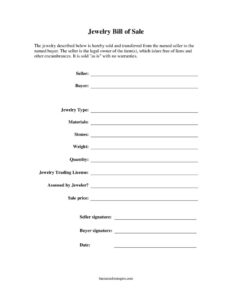
Jewelry Bill of Sale
Download a free Jewelry Bill of Sale template to document the sale of rings, necklaces, and watches — free PDF and DOCX download, no signup needed.
PDF
DOCX
9 downloads
0
likes
Download Files
- DOCX
A Jewelry Bill of Sale is a written record that confirms the sale and transfer of a piece of jewelry from one person to another. People most commonly use it to create proof of purchase when buying or selling rings, necklaces, watches, bracelets, or loose stones privately. You can download this Jewelry Bill of Sale free in both PDF and DOCX formats, with no signup required.
What Is a Jewelry Bill of Sale?
A Jewelry Bill of Sale is a short legal document that records the details of a jewelry transaction and the transfer of ownership from a seller to a buyer. It is typically created by the seller and signed by both parties at the time of the sale. The document identifies the specific item — its type, the metals and stones it contains, its weight, and the agreed price — and confirms that the seller legally owns the piece and is selling it free of liens. It usually states that the jewelry is sold “as is” with no warranties, protecting the seller while giving the buyer a clear paper trail of what was purchased and on what terms.
When Do You Need a Jewelry Bill of Sale?
This form is useful any time jewelry changes hands and both parties want a clear record. Common situations include:
- Selling an engagement ring, wedding band, or heirloom piece to a private buyer rather than a store.
- Buying a watch, necklace, or bracelet from an individual through an online marketplace or classified ad.
- Documenting the sale of loose diamonds, gemstones, or gold for a fair, recorded price.
- Selling inventory between two jewelers, dealers, or estate sellers who hold trading licenses.
- Settling an estate, divorce, or inheritance where valuable jewelry is distributed or sold.
- Providing proof of ownership and value for insurance, resale, or appraisal purposes later on.
What a Jewelry Bill of Sale Should Have
A complete Jewelry Bill of Sale leaves no ambiguity about who sold what, to whom, and for how much. It should clearly name both the seller and buyer, give a detailed description of the jewelry (type, materials, stones, weight, and quantity), state the agreed sale price, and confirm the seller’s clear legal title. Strong versions also note whether the item was assessed by a jeweler and whether the seller holds a jewelry trading license, since these details support the item’s value and the legitimacy of the sale. Finally, the document must include signatures from both parties and the date of sale to make it a binding, dated record.
How to Fill Out a Jewelry Bill of Sale
- Seller: Enter the full legal name and contact details of the person or business selling the jewelry.
- Buyer: Enter the full legal name and contact details of the person receiving the jewelry.
- Jewelry Type: Specify what the item is — for example, a ring, pendant necklace, tennis bracelet, or wristwatch.
- Materials: List the metals and other materials, such as 14k yellow gold, platinum, or sterling silver.
- Stones: Describe any gemstones, including type, color, clarity, or cut where known (for example, a 1-carat round brilliant diamond).
- Weight: Record the total weight in grams or carats, as relevant to the metal or stones.
- Quantity: Note how many pieces are included in this sale.
- Jewelry Trading License: If the seller holds a license to trade jewelry, enter the license number here; leave blank for private individuals.
- Assessed by Jeweler?: Indicate yes or no, and attach or reference any appraisal if one exists.
- Sale price: Write the agreed total amount and note the payment method.
- Signatures and Date: Both the seller and buyer sign, and the date of the transaction is entered.
Describing the Jewelry Accurately
The description fields are the heart of this document, so take care to be precise. For metals, state the karat or fineness rather than just “gold” or “silver,” since value depends heavily on purity. For stones, include carat weight, color, and clarity if you have a grading report, and note whether stones are natural, lab-grown, or simulated. A vague description like “diamond ring” invites disputes later, while “18k white gold solitaire ring with a 1.05-carat natural round diamond” leaves little room for misunderstanding. If the piece has a serial number, hallmark, maker’s mark, or appraisal certificate, reference those details too — they strengthen the record and help with future insurance or resale.
“As Is” Sales and Proof of Title
This template states that the jewelry is sold “as is” with no warranties, meaning the buyer accepts the item in its current condition once the sale is complete. Because of this, buyers should inspect the piece — ideally with an independent jeweler — before signing. The form also confirms the seller is the legal owner and that the item is free of liens and encumbrances, which is the seller’s promise that no one else has a claim to the jewelry. Both parties should keep a signed copy; the buyer’s copy serves as proof of ownership and purchase price, while the seller’s copy documents that the item and any associated risk transferred on the stated date.
Common Mistakes to Avoid
- Writing a vague item description that omits karat, carat weight, or stone details, making the piece hard to identify later.
- Leaving the sale price blank or recording a figure that doesn’t match what was actually paid.
- Forgetting to have both parties sign and date the form, which weakens its value as evidence.
- Skipping an independent appraisal on high-value pieces and relying solely on the seller’s word.
- Not keeping a copy for each party, leaving one side without documentation.
- Selling jewelry you don’t fully own — such as a shared estate piece — without authority to do so.
Frequently Asked Questions
What is a Jewelry Bill of Sale? It is a written document that records the sale of a piece of jewelry and transfers ownership from the seller to the buyer. It describes the item, states the price, and is signed by both parties as proof of the transaction.
How do I fill out a Jewelry Bill of Sale? Enter the seller and buyer details, describe the jewelry’s type, materials, stones, weight, and quantity, record the sale price, and have both parties sign and date it. Note whether the item was appraised and include any trading license number if applicable.
Does a Jewelry Bill of Sale need to be notarized? Notarization is usually not required for a jewelry sale, but it can add an extra layer of authenticity for high-value items. Requirements vary by location, so check your local rules if you want the document notarized or witnessed.
Is a Jewelry Bill of Sale legally binding? Yes, once both the seller and buyer sign and date it, the document generally becomes a binding record of the transaction. It serves as evidence of the agreed terms, the price paid, and the transfer of ownership.
Do I need a jeweler’s appraisal before selling? An appraisal is not required, but it is strongly recommended for valuable pieces so both parties agree on a fair price. The form includes a field to note whether the item was assessed by a jeweler.
How much does this template cost? Nothing — you can download this Jewelry Bill of Sale template for free in both PDF and DOCX formats, with no signup or account required.
This template is a general example provided for informational purposes only and is not legal, financial, or tax advice. Requirements for documenting jewelry sales vary by jurisdiction, so consult a qualified professional or appraiser for guidance on your specific situation.
Official resource: for the rules that apply to your situation, see your state DMV.
Related Forms
- Golf Cart Bill Of Sale
- Canoe Or Kayak Bill Of Sale
- Absolute Bill Of Sale
- Conditional Bill Of Sale
- Sports Memorabilia Bill Of Sale
- Firewood Bill Of Sale
Browse more in Bills of Sale.