
Logic Model
Use this free Logic Model template to map inputs, activities, outputs, and outcomes for any program or grant—free download in PDF and DOCX.
PDF
DOCX
0
likes
Download Files
- DOCX
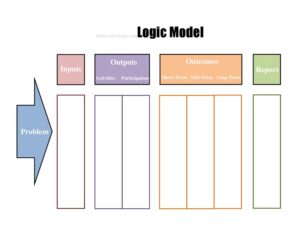
A Logic Model is a one-page visual map that connects the resources you invest in a program to the results you expect to achieve, and it is the tool most people reach for when planning a project or writing a grant proposal. It lays out your inputs, activities, outputs, and outcomes in a clear cause-and-effect sequence. You can download this Logic Model template free in both PDF and DOCX formats, with no signup required.
What Is a Logic Model?
A Logic Model is a structured planning and evaluation framework used by nonprofits, educators, public health teams, researchers, and program managers to show how a program is supposed to work. It documents the underlying logic: if we have these resources and run these activities, then we will produce these outputs, which lead to short-, mid-, and long-term outcomes. By forcing every element onto a single page, a Logic Model exposes gaps in reasoning, aligns stakeholders around a shared theory of change, and gives funders confidence that your plan is coherent. It is both a communication device and an evaluation roadmap, since the outcomes you name become the things you will later measure and report.
When Do You Need a Logic Model?
Logic Models are most valuable at the start of a program and whenever you need to explain or evaluate one. Common situations include:
- Grant applications — most foundations and government funders expect a Logic Model that ties requested dollars to measurable results.
- Launching a new program — to test whether your planned activities can realistically produce the change you intend.
- Program evaluation — to define what success looks like and what data you will collect at each stage.
- Strategic planning — to align staff, board members, and partners around a single, agreed-upon theory of change.
- Reporting to stakeholders — to summarize progress for funders, executives, or community partners in one clear graphic.
- Course or curriculum design — educators use Logic Models to connect teaching activities to learning outcomes.
What a Logic Model Should Have
A complete Logic Model reads left to right as a chain of reasoning. At minimum it should name the problem or need you are addressing, the inputs (resources) you bring, the activities you carry out, the participation (who you reach), the outputs those activities produce, and the outcomes broken into short-term, mid-term, and long-term changes. A strong model also reserves space for assumptions and external factors, and it should be internally consistent so each column logically leads to the next. Finally, it should connect to a report or evaluation plan that explains how each outcome will be measured.
How to Fill Out a Logic Model
- Problem: Begin by stating the need or problem your program addresses in one or two sentences. This anchors everything that follows.
- Inputs: List the resources you invest—staff, funding, volunteers, equipment, partnerships, time, and facilities.
- Activities: Describe what you actually do with those inputs, such as workshops, counseling sessions, distributing materials, or training.
- Participation: Identify who takes part or is reached—clients, students, communities, or specific demographics.
- Outputs: Record the direct, countable products of your activities, like number of sessions held or people served.
- Outcomes — Short-Term: Note immediate changes, typically in knowledge, awareness, skills, or attitudes.
- Mid-Term: Capture changes in behavior, practice, or decision-making that follow.
- Long-Term: Describe the lasting impact on conditions—health, economic status, or community well-being.
- Report: Finally, summarize how you will measure and report each outcome so the model doubles as an evaluation plan.
Understanding the Outcome Stages
The most common mistake in building a Logic Model is treating all results as the same. Splitting outcomes into short-term, mid-term, and long-term keeps your expectations realistic. Short-term outcomes usually appear within the first year and reflect what participants learn or feel—new knowledge, increased awareness, or improved confidence. Mid-term outcomes show up next as people act on what they learned: changed behaviors, adopted practices, or new policies. Long-term outcomes are the deeper, slower-moving changes in conditions that are your ultimate goal, such as reduced disease rates or improved graduation rates. Distinguishing the three helps funders see that you understand change takes time, and it tells your evaluator which indicators to track in which year.
Outputs Versus Outcomes
People frequently confuse outputs with outcomes, yet the distinction is central to a useful Logic Model. Outputs are the things you produce and count—10 workshops, 200 brochures distributed, 50 clients enrolled. They describe activity volume, not change. Outcomes are the differences those outputs create in people or conditions. A program can produce impressive outputs while achieving no outcomes if the activities don’t actually move the needle. When you fill in the template, ask of every output column: “So what? What changes because this happened?” The answer belongs in your outcomes columns. Keeping this line clear makes your model far more persuasive to reviewers.
Common Mistakes to Avoid
- Listing too many activities without showing how each connects to a named outcome.
- Confusing outputs and outcomes—counting deliverables instead of describing change.
- Skipping the problem statement, which leaves the whole model without a clear purpose.
- Writing vague outcomes like “improve the community” that cannot be measured or reported.
- Ignoring participation, so the model never says who is actually being reached.
- Building it once and filing it away rather than revisiting it as the program evolves.
Frequently Asked Questions
What is a Logic Model used for? A Logic Model is used to plan, communicate, and evaluate a program by visually linking resources to results. It shows the logical chain from inputs and activities through outputs to short-, mid-, and long-term outcomes. Nonprofits, schools, and public agencies rely on it for grant writing and program design.
How do I fill out this Logic Model template? Start with the problem, then work left to right through inputs, activities, participation, and outputs, and finish with your three tiers of outcomes and a reporting plan. Keep each cell concise and make sure every column logically leads to the next. The template’s labeled fields guide you through each step.
What is the difference between an output and an outcome? An output is something you produce and can count, such as the number of classes taught or people served. An outcome is the change those outputs create, like improved skills or healthier behavior. Outputs measure effort; outcomes measure impact.
Is a Logic Model the same as a theory of change? They are closely related but not identical. A theory of change explains the broader assumptions and pathways behind why a program should work, often with narrative detail, while a Logic Model presents that reasoning in a compact, columnar table. Many teams build both, using the Logic Model as the at-a-glance summary.
Do funders require a Logic Model? Many foundations and government grant programs request a Logic Model or a similar framework as part of a proposal, because it demonstrates a clear, measurable plan. Even when it is not required, including one strengthens an application by showing thoughtful design. Always check the specific funder’s guidelines.
Is this Logic Model template free to download? Yes. You can download this Logic Model template completely free in both PDF and DOCX formats, with no account or signup required. Edit the DOCX version to fit your program, or print the PDF for planning sessions.
This Logic Model template is provided as a general example for informational purposes only and does not constitute professional planning, evaluation, or grant-writing advice. Program and funder requirements vary, so consult a qualified evaluator or grants professional to ensure your model meets your specific needs.
Related Forms
- Ballot
- Auto Collision Report Form
- Funeral Planning Form
- Decision Tree
- Gantt Chart Eight Weeks
- Basic Entry Form White
Browse more in Miscellaneous.