
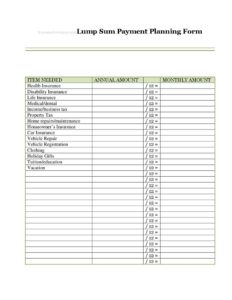
Lump Sum Payment Planning Form
Plan a windfall wisely with our free Lump Sum Payment Planning Form template, helping you allocate, save, and spend a one-time payment, free download.
PDF
DOCX
0
likes
Download Files
- DOCX
A Lump Sum Payment Planning Form is a simple worksheet that helps you decide what to do with a single, one-time payment before you spend it. People most often use it after receiving an inheritance, bonus, settlement, tax refund, or pension payout so the money is allocated on purpose rather than by accident. It’s free to download in both PDF and DOCX, with no signup required.
What Is a Lump Sum Payment Planning Form?
A Lump Sum Payment Planning Form is a personal money-management document that records the source and amount of a one-time payment, then maps out exactly how it will be divided across debts, savings, investments, immediate needs, and discretionary spending. It is typically used by an individual or household — though financial coaches, advisors, and counselors also hand it out as a planning aid. Rather than serving as a legal contract, it functions as a decision-making tool: it forces you to slow down, see the full picture, and commit a percentage or dollar amount to each goal. The completed sheet becomes a reference you can revisit to confirm you stayed on plan.
When Do You Need a Lump Sum Payment Planning Form?
A windfall feels like an opportunity, but without a plan it often disappears into everyday spending. This form is useful in many situations:
- Receiving an inheritance and wanting to honor it by saving or investing rather than spending impulsively.
- Getting a year-end work bonus or commission check that you’d like to split between debt and savings.
- A legal or insurance settlement that must stretch to cover future medical, living, or repair costs.
- A large tax refund you want to put toward an emergency fund or a specific goal.
- A retirement or pension lump-sum payout that needs to last and shouldn’t be drained early.
- Proceeds from selling a home, vehicle, or business that you intend to redeploy thoughtfully.
What a Lump Sum Payment Planning Form Should Have
A useful planning form captures both the money coming in and where every dollar is going. Look for these elements:
- The source and date of the lump sum and the total amount received.
- Any taxes or fees already withheld, so you work with the true net figure.
- A line-by-line allocation table with categories, amounts, and percentages.
- Space for priorities or goals tied to each allocation.
- A running total that confirms allocations don’t exceed the available amount.
- A section for notes, deadlines, and next steps so plans turn into action.
How to Fill Out a Lump Sum Payment Planning Form
- Record the source and amount. Write where the money came from (inheritance, bonus, settlement, refund) and the gross amount received.
- Subtract taxes and fees. Note anything already withheld or owed, then calculate your true net lump sum — the figure you’ll actually allocate.
- List your priorities. Before assigning dollars, jot down your top goals: pay off debt, build an emergency fund, invest, or fund a specific purchase.
- Build the allocation table. For each category, enter a dollar amount and, if helpful, a percentage of the total.
- Assign to debts first if relevant. Note the creditor, balance, and the amount you’ll pay toward each.
- Allocate savings and investments. Specify accounts and target amounts.
- Set aside discretionary spending. Give yourself a defined, guilt-free amount.
- Total and check. Add every allocation and confirm it equals your net lump sum.
- Add deadlines and notes, then sign or date the sheet to mark your commitment.
A Simple Framework for Splitting a Windfall
If you’re unsure how to divide the money, a common starting point is to handle the urgent, the important, and the enjoyable in that order. First, clear high-interest debt such as credit cards, since the guaranteed savings on interest is hard to beat. Second, shore up your safety net — an emergency fund covering several months of expenses brings stability and reduces the chance the next surprise sends you back into debt. Third, direct a portion toward long-term growth, whether that’s retirement accounts, education savings, or other investments aligned with your goals. Finally, set aside a modest, defined amount for something you’ll actually enjoy. Naming a reward up front makes the disciplined choices easier to stick to, and the planning form keeps every category visible at once.
Tips for Making the Plan Stick
The form is only useful if it leads to action. Move money into the right accounts within a few days of receiving the lump sum, before it blends into your checking balance. Automate transfers where you can, and revisit the sheet after a month to confirm each step was completed. If your situation is complex — a large settlement, a tax-sensitive payout, or money you want invested — consider walking through the completed form with a qualified financial professional who can flag tax implications you might not see.
Common Mistakes to Avoid
- Planning with the gross amount instead of the after-tax net, which overstates what you actually have.
- Leaving the money in checking where it quietly gets absorbed by daily spending.
- Skipping debt and missing the guaranteed return that paying off high-interest balances provides.
- Forgetting an emergency fund, so the next surprise expense undoes the whole plan.
- Allocating more than 100%, which happens when categories aren’t totaled and checked.
- Never revisiting the sheet, leaving good intentions unexecuted.
Frequently Asked Questions
What is a Lump Sum Payment Planning Form used for? It’s a worksheet for deciding how to allocate a one-time payment — such as an inheritance, bonus, or settlement — across debts, savings, investments, and spending. It helps you commit to a plan before the money is spent. The goal is intention rather than impulse.
How do I fill out the form? Start by recording the source and net amount of your lump sum, then list your priorities. Assign dollar amounts and percentages to each category in the allocation table, total them, and confirm the figures match your available funds. Finish by noting deadlines and next steps.
Is this form legally binding? No. It is a personal planning tool, not a contract or legal agreement, so it carries no legal obligation. Its value is purely organizational — it helps you make and remember sound decisions about your money.
How much does the template cost? Nothing. You can download the Lump Sum Payment Planning Form for free in PDF or DOCX with no signup required. Use the editable DOCX version if you’d like to customize the categories to your situation.
Should I include taxes in my plan? Yes. Always work from the net amount after any taxes or fees are accounted for, because the gross figure can significantly overstate what you’ll really have. For larger or tax-sensitive payouts, confirm your tax obligations with a professional first.
How should I divide a windfall? A common approach is to clear high-interest debt, build or top up an emergency fund, invest toward long-term goals, and reserve a small amount for something you enjoy. The right split depends on your debts, income, and goals, so adjust the categories to fit your circumstances.
This template is a general example provided for informational purposes only and is not financial, tax, or legal advice. Individual circumstances and applicable rules vary, so consult a qualified financial professional before making decisions about a lump-sum payment.
Official resource: for the rules that apply to your situation, see the Consumer Financial Protection Bureau.
Related Forms
- Check Register Blue
- Tax Records
- Payment Calculator per $100
- Savings Breakdown
- School Cash Envelope
- Petty Cash Out
Browse more in Money.