
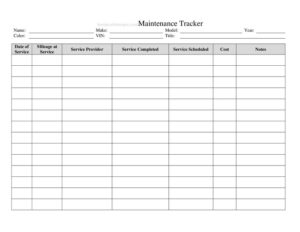
Maintenance Log
Track equipment service, repairs, and upkeep with a free Maintenance Log template—organized records you can download instantly as PDF or DOCX.
PDF
DOCX
5 downloads
0
likes
Download Files
- DOCX
A Maintenance Log is a record-keeping document used to track the servicing, repairs, inspections, and routine upkeep of equipment, vehicles, machinery, or property over time. The most common reason people use one is to keep a clear, dated history of every maintenance task so nothing gets missed and problems can be diagnosed faster. You can download this Maintenance Log free in PDF and DOCX formats, with no signup required.
What Is a Maintenance Log?
A Maintenance Log is a structured sheet—on paper or in a spreadsheet—that documents each maintenance activity performed on an asset. It is used by facility managers, fleet operators, building owners, equipment technicians, landlords, and homeowners to record what was done, when, by whom, and at what cost. Each entry typically captures the date, a description of the work, the person or company who performed it, parts used, and the next service due. By keeping these details in one place, a Maintenance Log turns scattered receipts and memory into a reliable service history. It supports warranty claims, regulatory inspections, resale value, and budgeting, and it helps catch recurring issues before they become expensive failures.
When Do You Need a Maintenance Log?
A Maintenance Log is useful any time an asset requires ongoing care and you want a defensible written record. Common situations include:
- Fleet and vehicle upkeep — logging oil changes, tire rotations, brake service, and mileage for company cars, trucks, or personal vehicles.
- Facility and building maintenance — tracking HVAC servicing, plumbing repairs, elevator inspections, and fire-system checks across a property.
- Manufacturing and machinery — recording preventive maintenance on production equipment to reduce downtime and meet safety requirements.
- Rental property management — documenting repairs and inspections between tenants to protect the property and resolve disputes.
- IT and office equipment — noting servicing for printers, servers, HVAC units, and other shared assets.
- Warranty and compliance — proving that required service intervals were met when filing a claim or passing an audit.
Types of Maintenance to Record
Most logs capture three broad categories of work, and noting which type each entry falls under makes the history far more useful. Preventive maintenance covers scheduled tasks such as lubrication, filter changes, and calibrations performed on a fixed interval. Corrective maintenance covers repairs made after a fault or breakdown is discovered. Inspections cover routine checks that may not involve repair but confirm an asset is operating safely. Labeling entries this way helps you spot whether a particular machine is consuming more corrective repairs than expected.
What a Maintenance Log Should Have
A complete Maintenance Log makes each entry easy to read and trace. The essential elements include:
- An identifier for the asset, vehicle, or location being serviced.
- The date the work was performed.
- A clear description of the maintenance task or repair.
- The name of the technician, vendor, or person responsible.
- Parts replaced or materials used, with any relevant part numbers.
- The cost of labor and parts.
- Meter readings such as mileage or operating hours where applicable.
- The next service date or interval due.
- A notes column for observations, warnings, or follow-up items.
How to Fill Out a Maintenance Log
Follow these steps to record each maintenance event accurately:
- Identify the asset. At the top of the log, write the equipment name, unit number, vehicle, or location so every entry is tied to a specific item.
- Enter the date. Record the exact date the work was performed; consistent dating lets you measure service intervals.
- Describe the task. In the description field, summarize what was done—for example, “replaced air filter” or “inspected and topped off coolant.”
- Note the type. Mark whether it was preventive, corrective, or an inspection if your log includes a category column.
- Record who performed it. Add the technician’s or vendor’s name so the work can be verified later.
- List parts and materials. Enter any parts used, including part numbers and quantities.
- Capture readings. Add mileage or hour-meter values to track usage between services.
- Add the cost. Log labor and parts costs to support budgeting and warranty claims.
- Set the next service date. Note when the asset is due for its next maintenance, then add any observations in the notes column.
Tips for Keeping an Effective Log
The value of a Maintenance Log comes from consistency. Update it immediately after each task rather than relying on memory at the end of the week, when details get fuzzy. Use the same wording for recurring jobs so you can scan the history quickly and search it if you keep a digital copy. Keep receipts and invoices filed alongside the log, referencing them by date, so cost figures can be verified. For shared equipment, store the log near the asset or in a central system everyone can reach, and assign one person to own its accuracy. Reviewing the log monthly helps you spot patterns—like a machine that keeps needing the same part—before they become major failures.
Common Mistakes to Avoid
- Leaving entries undated — without a date, you cannot measure intervals or prove a service happened on time.
- Vague descriptions — “fixed it” tells future readers nothing; describe the actual task and outcome.
- Skipping minor tasks — small jobs add up and reveal patterns, so log them too.
- Omitting meter readings — mileage or hours are essential for usage-based service schedules.
- Not recording who did the work — accountability matters for follow-up questions and warranty disputes.
- Letting the log go stale — an outdated log is unreliable; update it the day work is performed.
Frequently Asked Questions
What is a Maintenance Log used for? A Maintenance Log is used to record every servicing, repair, and inspection performed on an asset such as a vehicle, machine, or building system. It creates a dated history that helps schedule future work, support warranty claims, and diagnose recurring problems. It is valuable for both individuals and organizations that rely on equipment staying in working order.
How do I fill out a Maintenance Log? Start by identifying the asset, then add a row for each maintenance event with the date, a description of the work, who performed it, parts used, cost, and any meter readings. Finish each entry by noting the next service date and any observations. Update the log right after the work is done to keep it accurate.
Is a Maintenance Log legally required? Requirements vary by industry and jurisdiction—some regulated environments, such as commercial fleets or certain machinery, mandate maintenance records, while many uses are voluntary. Even when not required, a well-kept log is often expected by warranty providers, insurers, and auditors. Check the rules that apply to your specific equipment or sector.
What’s the difference between preventive and corrective maintenance? Preventive maintenance is scheduled, routine work done to keep an asset running and prevent failures, such as filter changes or inspections. Corrective maintenance is performed after something breaks or malfunctions to restore the asset. Tracking both in your log helps you see whether preventive care is reducing breakdowns.
Can I use this log for multiple pieces of equipment? Yes. You can keep a separate log for each asset, or use one log with an asset identifier column to track several items together. For larger operations, a dedicated log per machine usually keeps the history cleaner and easier to audit.
Is this Maintenance Log template free to download? Yes, this Maintenance Log template is completely free to download in both PDF and DOCX formats with no signup required. You can print the PDF for on-site use or edit the DOCX version to add your own columns, logos, or asset categories.
This Maintenance Log template is a general example provided for informational purposes only and does not constitute legal, financial, or regulatory advice. Maintenance and record-keeping requirements vary by industry, equipment type, and jurisdiction—consult a qualified professional or your applicable regulations to ensure your records meet all relevant standards.
Related Forms
- Home Food Storage Inventory Card
- Side Hustle Expenses Log
- Credit Card Rewards Tracker
- Nanny Daily Log
- Amateur Radio Station Log
- Donations Tracker Thermometer
Browse more in Log and Inventory.