
Nanny Daily Log
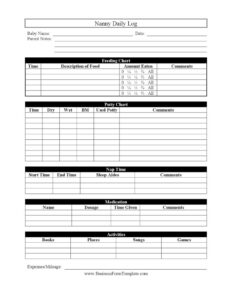
Download a free Nanny Daily Log template to track feedings, naps, diapers, and activities for parents - free download in PDF and DOCX, no signup needed.
PDF
0
likes
Download Files
A Nanny Daily Log is a simple sheet a nanny or caregiver fills out each day to record a child’s feedings, naps, diaper changes, medication, and activities so parents know exactly how the day went. It’s the easiest way to keep families informed and caregivers organized, and you can download it free in PDF and DOCX with no signup required.
What Is a Nanny Daily Log?
A Nanny Daily Log is a structured record kept by an in-home caregiver that documents a child’s routine and care over the course of a single day. It captures the practical details parents want to see when they get home: what the baby ate and how much, when they napped and for how long, every diaper change, any medication administered, and the activities, books, songs, and outings the child enjoyed. Nannies, au pairs, babysitters, and even daycare staff use it to communicate clearly with parents, maintain consistency between caregivers, and create a written history of a child’s habits. It also doubles as a handy reference for tracking expenses and mileage tied to the job.
When Do You Need a Nanny Daily Log?
This log is useful any time a child is cared for by someone other than a parent and details need to be passed along reliably. Common situations include:
- Daily nanny care: a full-time or part-time nanny summarizes feedings, naps, and diapers for working parents.
- Newborn and infant routines: tracking exact feeding times and amounts helps establish a predictable schedule.
- Shared caregiving: when multiple caregivers rotate, the log keeps everyone on the same page about the latest nap or feeding.
- Medication management: documenting dosage and the time medicine was given prevents accidental double-dosing.
- Health or sleep concerns: a written record of wet/dry diapers and nap lengths gives pediatricians useful patterns to review.
- Expense tracking: noting mileage and out-of-pocket purchases makes reimbursement simple and transparent.
What a Nanny Daily Log Should Have
A complete log should identify the child and the date, then break the day into clear, scannable sections. Look for a feeding chart with time, food description, and amount eaten; a potty chart noting dry, wet, and bowel movements; a nap section with start and end times; a medication area capturing name, dosage, and time given; and a space for activities and parent notes. Comment fields beside each section let the caregiver add context — fussiness, appetite changes, or a great mood. Together these elements turn scattered observations into one easy-to-read summary parents can absorb in under a minute.
How to Fill Out a Nanny Daily Log
- Write the baby name and the date at the top so the log is correctly attributed.
- Read and add to parent notes — any instructions the family left for the day.
- In the feeding chart, log each feeding’s time, a description of food, the amount eaten, and any comments on appetite.
- For the potty chart, enter the time and mark whether the diaper was dry, wet, or a bm, plus whether the child used potty, with comments as needed.
- Record each nap time with the start time and end time, list any sleep aides (pacifier, white noise), and add comments.
- If giving medication, write the name, dosage, time given, and comments.
- Note activities — the books, places, songs, and games enjoyed.
- Total any expenses/mileage before handing the log to the parents.
Tips for Getting the Most From the Log
Fill in the log throughout the day rather than reconstructing it from memory at pickup time — details like exact nap lengths and feeding amounts fade quickly. Keep the sheet on a clipboard or in a fixed spot near the kitchen so it’s always within reach. Use consistent units (ounces for bottles, half/full for meals) so parents can compare days at a glance. When something feels noteworthy — a skipped nap, a new food reaction, or an unusually wet day — flag it in the comments rather than burying it. A quick verbal recap at handoff paired with the written log gives parents both the highlights and the full record.
How It Helps Build Trust Between Families and Caregivers
Beyond logistics, a consistent daily log is one of the strongest trust-building tools in a nanny relationship. Parents who can see exactly how their child’s day unfolded feel reassured, especially during the first weeks of a new arrangement. The log also protects the caregiver: a written record showing medication was given on schedule and feedings happened on time removes guesswork and prevents misunderstandings. Over time, the accumulated logs become a useful reference for spotting patterns — a baby who is suddenly eating less, sleeping more, or having fewer wet diapers — that parents may want to mention to a pediatrician.
Common Mistakes to Avoid
- Leaving times blank: a feeding or nap entry without a time loses most of its usefulness for spotting routines.
- Vague amounts: writing “ate breakfast” instead of “ate about half” makes appetite tracking impossible.
- Skipping the medication section: always record dosage and time given, even for routine vitamins, to avoid double-dosing.
- Forgetting to read parent notes: instructions left in the morning can change the day’s schedule or diet.
- Filling it out at the last minute: reconstructing the whole day from memory leads to errors and missed details.
- Ignoring the comments fields: context like a fussy mood or a new food reaction is often more valuable than the raw numbers.
Frequently Asked Questions
What is a Nanny Daily Log used for? It’s a daily record that a nanny or caregiver uses to track a child’s feedings, naps, diaper changes, medication, and activities. The completed log lets parents quickly see how their child’s day went and keeps multiple caregivers consistent. It also helps document medication timing and care details.
How do I fill out the feeding chart? For each feeding, write the time, describe what the child ate, and note how much was consumed using a consistent measure like ounces or fractions of a meal. Add a comment if the child was unusually hungry, refused food, or reacted to anything new. Logging during or right after each feeding keeps the record accurate.
What does the dry, wet, and bm section mean? Those columns track diaper or potty results: “dry” means a clean diaper, “wet” indicates urination, and “bm” stands for a bowel movement. Marking each change with a time helps parents and pediatricians spot hydration and digestion patterns. The “used potty” field is for children who are toilet training.
Is a Nanny Daily Log a legal document? No, it is an informal communication and record-keeping tool, not a legally binding contract. However, it can be helpful documentation if questions ever arise about medication timing or daily care. For employment terms, a separate nanny agreement or contract is the appropriate document.
Can I track expenses and mileage on the same log? Yes, the template includes an expenses/mileage field so caregivers can note out-of-pocket purchases and driving for reimbursement. Keeping these on the daily sheet keeps everything in one place and makes reconciling costs with parents straightforward. Save receipts to back up any listed expenses.
How much does this template cost? Nothing — the Nanny Daily Log is completely free to download in PDF and DOCX with no signup required. You can print copies for daily use or edit the DOCX version to add fields specific to your family’s routine. Use as many copies as you need.
This Nanny Daily Log template is provided as a general example for informational purposes only and is not legal, medical, or professional childcare advice. Always follow a pediatrician’s and parents’ specific instructions for feeding and medication, and consult a qualified professional for any health or care concerns. Requirements and best practices may vary.
Related Forms
- Housekeeping Inspection Checklist
- Side Income Log
- Credit History Record
- Flood Emergency Checklist
- Incoming Mail Log
- Comic Book Inventory
Browse more in Log and Inventory.