
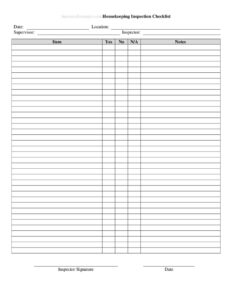
Housekeeping Inspection Checklist
Download a free Housekeeping Inspection Checklist template in PDF and DOCX to standardize room and facility cleaning audits with consistent, documented results.
PDF
DOCX
6 downloads
0
likes
Download Files
- DOCX
A Housekeeping Inspection Checklist is a structured form used to inspect and score the cleanliness, order, and readiness of a room, unit, or facility area against a set of defined standards. People most often use it to perform consistent quality checks after a cleaning shift so nothing gets missed before a guest, tenant, or staff member uses the space. It’s free to download in PDF and DOCX, with no signup required.
What Is a Housekeeping Inspection Checklist?
A Housekeeping Inspection Checklist is a documented audit tool that a supervisor, inspector, or quality lead uses to verify that cleaning tasks have been completed to standard. It lists the specific items to check in each area — surfaces, floors, bathrooms, linens, supplies, and safety details — and provides space to mark each as pass, fail, or needs attention. Hotels, hospitals, offices, schools, and property management companies rely on it to keep cleaning quality consistent across many rooms and many staff members. The completed checklist becomes a record that proves the inspection happened, captures issues that need follow-up, and supports performance reviews and training over time.
When Do You Need a Housekeeping Inspection Checklist?
The checklist is useful any time cleaning quality needs to be verified and recorded rather than assumed. Common situations include:
- Hotel room turnover — a supervisor inspects each guest room after housekeeping before it is marked ready for the next guest.
- Healthcare and clinical settings — verifying that patient rooms, exam rooms, and common areas meet sanitation and infection-control expectations.
- Office and commercial buildings — confirming that a cleaning contractor completed scheduled work in restrooms, kitchens, lobbies, and workstations.
- Property management — inspecting a rental unit during make-ready between tenants to document its condition and cleanliness.
- Schools and childcare facilities — routine audits of classrooms, restrooms, and cafeterias against hygiene standards.
- Vendor or franchise audits — head-office staff scoring multiple locations to ensure brand-wide cleaning consistency.
Types of Housekeeping Inspections
Not every inspection covers the same scope. A routine daily inspection spot-checks high-traffic areas after each shift. A deep-clean inspection verifies periodic tasks such as carpet shampooing, vent cleaning, or window washing. A move-in/move-out inspection documents a unit’s full condition for property records. A compliance or audit inspection measures a site against formal standards, often with scoring. Using one consistent checklist format across these types makes results easy to compare and trend over time.
What a Housekeeping Inspection Checklist Should Have
A complete checklist captures enough detail to be useful as both a quality tool and a record. Key elements include:
- The location, room number, or area being inspected.
- The date and time of the inspection.
- The name of the inspector and, where relevant, the staff member who cleaned the area.
- A list of inspection items grouped by zone — for example bathroom, sleeping area, floors, and supplies.
- A status indicator for each item (pass / fail / N/A or a numeric score).
- A comments or corrective-action column for noting problems.
- An overall score or pass/fail result and a signature line for accountability.
How to Fill Out a Housekeeping Inspection Checklist
Work through the form area by area so nothing is overlooked:
- Enter the header details. Record the property or facility name, the specific room or area number, and the date and time of inspection.
- Identify the people involved. Write the inspector’s name and the assigned cleaner or shift, so results can be tied back for feedback.
- Inspect each listed item. Move through the checklist line by line — dusted surfaces, vacuumed and mopped floors, sanitized bathroom fixtures, fresh linens, stocked supplies, emptied trash, and odor checks.
- Mark a status for every item. Use pass, fail, or N/A — or assign a point value if your form scores numerically. Avoid leaving lines blank.
- Note issues in the comments column. Be specific: “streaks on bathroom mirror” is more actionable than “dirty.”
- Tally the result. Add up the score or mark the overall pass/fail status, and flag any item requiring re-cleaning.
- Sign and date. The inspector signs to confirm the audit, and the form is filed or routed for corrective action.
Turning Results Into Action
An inspection only adds value when its findings drive improvement. After scoring, route any failed items back for immediate re-cleaning and re-inspect before the area is released. Track recurring failures — if the same fixture or task fails across multiple rooms, it usually points to a training gap or a workload problem rather than a single careless shift. Keeping completed checklists in a binder or digital folder lets you spot trends over weeks and months, justify staffing decisions, and demonstrate diligence during a client audit or health inspection. Many teams set a passing threshold (for example, 90%) and use it as a clear, objective standard everyone understands.
Tips for Consistent Inspections
Consistency is what makes a checklist trustworthy. Use the same checklist version across all inspectors so scores mean the same thing. Inspect at the same point in the workflow each time — typically right after cleaning and before the space is occupied. Provide a brief calibration session so two inspectors would score the same room similarly. Take photos of significant issues to attach to the record, and follow up promptly so problems are corrected while the cleaning crew is still on site.
Common Mistakes to Avoid
- Leaving items blank — an unmarked line creates ambiguity about whether it passed or was simply skipped.
- Vague comments — “needs work” gives the cleaner nothing to act on; describe the exact problem and location.
- Inconsistent scoring — different inspectors applying different standards makes results impossible to compare.
- Skipping the signature and date — without them, the record can’t prove who inspected what and when.
- Not re-inspecting failed items — marking a fail without confirming the fix defeats the purpose.
- Inspecting too late — checking after the room is occupied means problems reach the guest or tenant first.
Frequently Asked Questions
What is a Housekeeping Inspection Checklist used for? It is used to verify and document that an area has been cleaned to standard. Supervisors use it to score rooms, catch missed tasks, and create a record that the inspection took place. It supports both quality control and staff training.
How do I fill out a Housekeeping Inspection Checklist? Start by entering the location, date, inspector, and cleaner. Then inspect each listed item, mark it pass, fail, or N/A, add specific comments for any problems, tally the overall result, and sign. Working area by area helps ensure nothing is skipped.
Who should perform the inspection? Inspections are typically done by a housekeeping supervisor, quality-control lead, facility manager, or an auditor from head office. Ideally the inspector is someone other than the person who cleaned the area, so the review stays objective.
How often should housekeeping inspections be done? Frequency depends on the setting. High-traffic hospitality and healthcare spaces are often inspected after every cleaning, while offices may be audited weekly or monthly. Establish a regular schedule so standards are maintained consistently.
Is this checklist legally binding? No. A Housekeeping Inspection Checklist is an internal quality and record-keeping tool, not a contract. However, completed checklists can serve as valuable documentation during client audits, health inspections, or disputes about service delivery.
Is this template free to download? Yes. You can download this Housekeeping Inspection Checklist for free in both PDF and DOCX formats with no signup required. Use the DOCX version to customize the inspection items to match your own facility and standards.
This template is a general example provided for informational purposes only and does not constitute legal, health, safety, or compliance advice. Cleaning standards, sanitation requirements, and inspection rules vary by industry and jurisdiction — consult a qualified professional or your governing authority to ensure your inspections meet applicable requirements.
Related Forms
- Vehicle Repair Log
- Inventory Card Template
- Payment Method Tracker
- Telephone Time Tracker
- Project Action Log
- Maintenance Log
Browse more in Log and Inventory.