
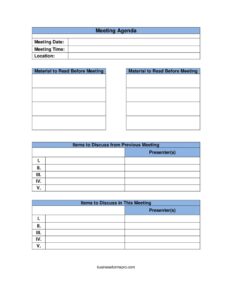
Meeting Agenda
Download a free Meeting Agenda template in PDF and DOCX to organize discussion topics, presenters, and timing for productive, focused meetings.
PDF
DOCX
2 downloads
0
likes
Download Files
- DOCX
A Meeting Agenda is a structured outline that lists what will be discussed, when, and by whom during a scheduled meeting. People most often use it to keep meetings focused, on time, and productive instead of letting conversations drift. You can download this Meeting Agenda template free in both PDF and DOCX formats, with no signup required.
What Is a Meeting Agenda?
A Meeting Agenda is a planning document that organizers distribute before a meeting to tell participants what topics will be covered and what they should prepare. It typically captures the logistics — date, time, and location — along with the specific items up for discussion and who is presenting each one. Team leads, project managers, committee chairs, board secretaries, and even small business owners issue agendas to set clear expectations. Beyond simply listing topics, a good agenda documents pre-reading material, carries over unfinished business from the last session, and assigns presenters so no one is caught off guard. It serves as both a roadmap during the meeting and a reference point afterward.
When Do You Need a Meeting Agenda?
An agenda is useful any time more than two people need to align on a topic within a fixed window of time. Common situations include:
- Weekly team standups where recurring updates and blockers need a consistent structure.
- Board or committee meetings that must address old business, new business, and assigned presenters in order.
- Project kickoffs where stakeholders review scope, timelines, and pre-read material before deciding next steps.
- Client or vendor meetings that benefit from a clear, professional outline of topics to be covered.
- Departmental planning sessions where multiple presenters each own a portion of the discussion.
- Follow-up meetings that need to revisit unresolved items from a previous meeting.
Types of Meeting Agendas
Agendas range from informal bullet lists for quick check-ins to highly formal documents for governance meetings. A formal agenda may follow a fixed order — call to order, approval of minutes, old business, new business, adjournment — while an informal one simply lists discussion topics and owners. This template sits comfortably in the middle: it is structured enough for serious meetings yet flexible enough for everyday team sessions.
What a Meeting Agenda Should Have
A complete agenda gives attendees everything they need to show up prepared. The essential elements include the meeting logistics (date, time, and location), any material participants should read in advance, a clear list of discussion items, the presenter responsible for each topic, and a section that carries forward unfinished items from the previous meeting. Listing presenters alongside topics creates accountability, while pre-reading material ensures the meeting time is spent deciding rather than catching everyone up. Keeping the items concise and ordered by priority helps the group cover the most important matters first, even if time runs short.
How to Fill Out a Meeting Agenda
Work through the template field by field so the finished agenda is clear and complete:
- Meeting date: Enter the calendar date of the meeting. Spell out the month to avoid confusion across regions.
- Meeting time: Note the start time and, ideally, the expected end time so attendees can plan around it.
- Location: Specify the physical room or, for virtual meetings, the video link, dial-in number, or platform.
- Material to read before meeting: List any reports, slide decks, proposals, or links participants should review in advance, with file names or where to find them.
- Items to discuss from previous meeting: Record carried-over topics, open action items, or unresolved decisions so they are not forgotten.
- Presenter(s): Assign a name to each topic so everyone knows who is leading that portion of the discussion.
- Items to discuss in this meeting: List the new topics in priority order. Where helpful, add a rough time estimate next to each so the meeting stays on schedule.
Tips for Running a Better Meeting
An agenda only helps if it is sent in advance — aim to distribute it at least 24 hours before the meeting so people can prepare and review pre-reading material. Order discussion items by importance rather than convenience, putting decisions that need full attendance near the top. Assign a timekeeper for longer meetings, and use the presenter column to confirm each person is ready before the meeting starts. After the meeting, the same agenda can become the skeleton for your minutes: simply record decisions and action items under each item.
Agenda vs. Meeting Minutes
It is easy to confuse the two, but they serve different purposes. The agenda is created before the meeting to plan what will happen, while minutes are written during or after to document what actually happened — decisions made, who said what, and follow-up tasks. Many teams pair them: they build the agenda first, then annotate it live to produce the minutes, which keeps both documents aligned.
Common Mistakes to Avoid
- Sending it too late: An agenda delivered minutes before the meeting defeats its purpose of helping people prepare.
- Vague topics: “Marketing update” tells people little; “Decide Q3 ad budget” tells them exactly what to expect.
- No presenter assigned: Topics without an owner often get skipped or stall because no one leads them.
- Ignoring previous items: Leaving the carry-over section blank lets unresolved issues slip through the cracks indefinitely.
- Overpacking the agenda: Cramming in too many items guarantees the meeting runs long or skips important topics.
- Forgetting the basics: Omitting the time, location, or video link causes avoidable confusion and late arrivals.
Frequently Asked Questions
What is a Meeting Agenda used for? It is used to outline the topics, timing, and presenters for an upcoming meeting so attendees know what to expect and can prepare. It keeps discussions focused and helps the group cover the most important items within the available time. After the meeting, it can also serve as a reference for what was planned.
How do I fill out a Meeting Agenda? Start with the logistics — date, time, and location — then list any pre-reading material. Add carried-over items from the previous meeting, assign a presenter to each topic, and list the new discussion items in priority order. Adding rough time estimates beside each item helps the meeting stay on track.
How far in advance should I send the agenda? A good rule of thumb is to distribute the agenda at least 24 hours before the meeting. This gives participants time to review any pre-reading material and gather information for the topics they are presenting. For larger or more formal meetings, sending it several days ahead is even better.
What is the difference between an agenda and meeting minutes? The agenda is prepared before the meeting to plan what will be discussed, while minutes are written during or after to record what was decided and who is responsible for follow-ups. They work well as a pair, with the agenda forming the outline that the minutes fill in.
Is a Meeting Agenda a legally binding document? No, a standard meeting agenda is an organizational tool, not a binding contract. However, certain formal bodies — such as corporate boards or public government committees — may have rules requiring agendas to be posted or followed, so check your organization’s bylaws or local regulations.
Is this Meeting Agenda template free to download? Yes, this template is completely free to download in both PDF and DOCX formats with no signup required. You can use the DOCX version to customize the fields, headings, and styling to match your team or organization’s needs.
This Meeting Agenda template is a general example provided for informational purposes only and is not legal, financial, or professional advice. Meeting and recordkeeping requirements vary by organization and jurisdiction — consult your bylaws or a qualified professional for guidance specific to your situation.
Official resource: for the rules that apply to your situation, see the U.S. Small Business Administration.
Related Forms
- Notice of Meeting
- Return To Work Form
- Room Reservation Form
- Purple Appointment Reminder Card
- 2024 Postal Holidays
- Appointment Reminder Card
Browse more in Office.