
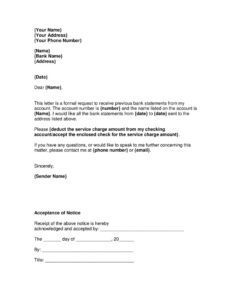
Request For Bank Statement
Use our free Request for Bank Statement letter template to formally ask your bank for past statements. Free download in PDF and DOCX, no signup needed.
PDF
DOCX
6 downloads
0
likes
Download Files
- DOCX
A Request for Bank Statement letter is a formal written request asking your bank to send copies of previous account statements for a specific date range. People most often use it to obtain records for taxes, loan applications, audits, or legal matters when online access is unavailable or incomplete. It’s free to download here in both PDF and DOCX formats — no signup required.
What Is a Request for Bank Statement?
A Request for Bank Statement is a short business letter you send to your financial institution requesting historical account statements. It is typically issued by an account holder (or an authorized representative) and addressed to a bank manager or records department. The letter documents who you are, which account you’re asking about, the exact period of statements you need, where they should be sent, and how any associated service charge should be paid. Banks often archive older statements separately from online portals, so a written request creates a clear paper trail and helps staff locate and mail the correct records. Because it identifies the account number and account name, it also lets the bank verify that the requester is entitled to the documents.
When Do You Need a Request for Bank Statement?
This letter is useful any time you need official copies of past statements that you can’t simply download. Common situations include:
- Tax preparation or an audit — gathering several months or years of statements to support filings or respond to a tax authority.
- Loan or mortgage applications — lenders frequently ask for recent statements to verify income, balances, and spending history.
- Legal proceedings — providing financial records for divorce, probate, bankruptcy, or a dispute where documentation is required.
- Reconstructing lost records — replacing statements lost in a move, fire, or computer failure.
- Closed or inactive accounts — retrieving history from an account no longer accessible online.
- Business bookkeeping — pulling a clean statement set for a specific quarter or fiscal year.
What a Request for Bank Statement Letter Should Have
To help the bank act quickly and accurately, a complete request should contain a few essential elements. Include your full name and contact details so the bank can reach you, and the bank’s name and address so the letter is routed correctly. State the account number and the exact name listed on the account so staff can verify ownership. Specify the precise date range of statements you need rather than a vague “recent” request. Indicate how you’ll cover any service charge — either by authorizing a deduction from your account or by enclosing a check. Finally, provide a phone number and email for follow-up and add a signature line. The acceptance block at the bottom lets the bank acknowledge receipt.
How to Fill Out a Request for Bank Statement
- Enter your name, address, and phone number at the top so the bank knows who is making the request and where to reply.
- Add the recipient’s name, the bank name, and the bank’s address, then the date you’re sending the letter.
- In the greeting, address the contact by name (for example, the branch manager) if you know it.
- Fill in the account number and the name listed on the account so the bank can verify your identity.
- Specify the statement period by completing the from date and to date fields with the exact range you need.
- Confirm the delivery address — the letter requests that statements be sent to the address listed above.
- Choose your payment option: either authorize the bank to deduct the service charge from your checking account or note that you have enclosed a check for the amount.
- Add your phone number and email for any questions, then sign as the sender.
- Leave the Acceptance of Notice block for the bank to sign, date, and add the representative’s title.
Service Charges and Delivery Options
Many banks charge a per-statement or per-page fee to retrieve and print archived records, and the cost can rise for older or paper-only documents. This template gives you two simple ways to handle that charge: authorize a deduction directly from your checking account, or enclose a check with the letter. Choosing one clearly up front prevents delays — banks often hold a request until payment is arranged. It also helps to confirm the bank’s preferred delivery method. Some institutions mail printed statements, while others can provide secure PDFs or make copies available for in-branch pickup. If you need the records by a deadline, mention that in the letter and ask the bank to confirm the expected turnaround time.
How This Differs From an Online Statement Download
Online banking usually lets you download recent statements instantly, but archives are often limited to a rolling window — frequently 12 to 24 months. A formal Request for Bank Statement is the right tool when you need records that fall outside that window, when an account has been closed, or when you need certified or officially issued copies that a recipient won’t accept as self-printed PDFs. The written letter also serves as documentation that you requested the records, which can matter in legal or audit contexts where a clear timeline is important.
Common Mistakes to Avoid
- Omitting the account number — without it, the bank cannot locate the right records and may have to contact you for clarification.
- Giving a vague date range — always list specific start and end dates instead of “the last few months.”
- Forgetting the service charge instruction — choose deduction or enclosed check so the request isn’t held up.
- Using a mismatched name — the name on the letter should match the name on the account exactly.
- Leaving out contact details — provide both a phone number and email so staff can follow up quickly.
- Not keeping a copy — retain a signed copy of the letter for your own records and timeline.
Frequently Asked Questions
What is a Request for Bank Statement letter? It is a formal letter asking your bank to send copies of past account statements for a defined period. It identifies you, your account, and the exact date range you need, and specifies how any service fee will be paid. Banks use it to verify your identity and locate archived records.
How do I fill out a Request for Bank Statement? Add your contact details and the bank’s information, enter your account number and the name on the account, and specify the start and end dates for the statements you want. Then indicate whether the service charge should be deducted from your account or paid by enclosed check, and sign the letter. Leave the acceptance block for the bank to complete.
Does this letter need to be notarized? Most routine statement requests do not require notarization. However, some banks or legal situations may ask for additional identity verification or a notarized signature, so check your bank’s policy if the records are for a court or official matter.
Is there a fee to get old bank statements? Banks commonly charge a retrieval or per-page fee, especially for older or paper records, though amounts vary by institution. The template lets you authorize a deduction or enclose a check to cover the charge. Contact your bank to confirm the exact fee before sending.
How long does it take to receive the statements? Turnaround depends on the bank and how far back the records go — recent statements may arrive quickly, while archived ones can take longer. Mention any deadline in your letter and ask the bank to confirm the expected timeframe.
Is this template free to download? Yes. You can download this Request for Bank Statement template free in PDF and DOCX formats, with no signup required. Edit it to fit your account details and bank before sending.
This template is a general example provided for informational purposes only and is not legal, financial, or tax advice. Bank policies and applicable requirements vary by institution and jurisdiction. Consult your bank or a qualified professional for guidance specific to your situation.
Related Forms
- Specialty Item Form
- Estimate Of Auto Repairs
- FOIA Request
- Request For Divorce Records
- Limited Power of Attorney
- Service Call Book
Browse more in Request and Authorization.