
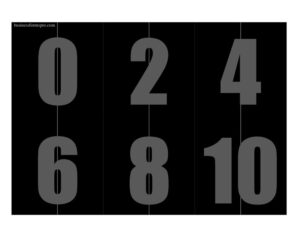
Stage Choreography Numbers Black
Plan and track every musical number with the free Stage Choreography Numbers Black template, a clear stage organization tool for free download in PDF and DOCX.
PDF
DOCX
4 downloads
0
likes
Download Files
- DOCX
The Stage Choreography Numbers Black template is a clean, print-ready worksheet that lets choreographers, directors, and dance captains organize the sequence of numbers in a stage production. The single most common reason people use it is to map out each musical or dance number — who is on stage, where they enter, and how the staging flows from cue to cue. It is free to download in PDF and DOCX with no signup required.
What Is a Stage Choreography Numbers Black Form?
A Stage Choreography Numbers Black form is a structured planning document used in theater and dance productions to list and detail each individual number within a show. It is typically created by a choreographer or dance captain and shared with the director, stage manager, and performers. The form documents the order of numbers, the performers involved, entrance and exit points, formations, and any technical cues tied to the movement. The “Black” designation refers to the clean black-and-white layout designed for clear photocopying and easy reading backstage in low light. In practice, it becomes the shared reference that keeps a complex production aligned during rehearsals and live performance.
When Do You Need a Stage Choreography Numbers Black Form?
This template earns its place in any production where movement, music, and timing have to be coordinated across many people. Common scenarios include:
- Staging a musical: When a show has a dozen or more numbers, you need a master list that fixes the running order and who appears in each.
- Running a dance recital: Studios use it to organize routines by group, level, or song so transitions backstage stay smooth.
- Blocking rehearsals: Directors and choreographers reference it while setting positions, formations, and movement counts on stage.
- Tech and dress rehearsals: Stage managers cross-check the number list against lighting and sound cues to confirm nothing is missed.
- Onboarding understudies or swings: A clear breakdown of each number lets a replacement performer learn placements quickly.
- Touring or restaging a production: The completed form serves as a portable record so the same choreography can be reproduced in a new venue.
What a Stage Choreography Numbers Form Should Have
A useful choreography numbers worksheet captures everything needed to rehearse and run a number without guesswork. Key elements include a clear number title or song name, a sequence number showing where it falls in the running order, the act and scene it belongs to, the performers or groups involved, and the entrances and exits used. It should also note formations or starting positions, the counts or duration of the movement, and any props, set pieces, or costume notes tied to the number. Space for technical cues — lighting, sound, or fly-system moves — and a general notes field round it out so the document works as a single source of truth.
How to Fill Out a Stage Choreography Numbers Black Form
- List the number title: Write the song or routine name exactly as it appears in the script or score so everyone refers to it the same way.
- Assign the sequence number: Enter the position in the running order, for example “1” for the opening number, so the list reads top to bottom in performance order.
- Record act and scene: Note where the number falls in the show’s structure to help align with the stage manager’s prompt book.
- Name the performers: List the cast members, ensemble groups, or dance lines on stage for this number.
- Map entrances and exits: Indicate stage directions — stage left, stage right, upstage, or center — for how performers arrive and leave.
- Sketch formations: Describe or diagram starting positions and key transitions during the number.
- Add counts and timing: Enter the musical counts or approximate run time to lock the pacing.
- Note props and cues: Capture costume changes, set pieces, and any lighting or sound cues tied to the movement.
- Use the notes field: Add reminders, safety notes, or revision dates so updates stay traceable.
Tips for Using the Form During Rehearsals
Treat the completed form as a living document. As blocking changes during rehearsal, update the worksheet the same day and reprint so the cast is never working from an outdated version. Because the Black layout reads clearly in dim wing lighting, print copies for the stage manager, dance captain, and each group leader rather than relying on a single master. Color-coding by act or by group with a highlighter on the printed page can make backstage staging easier to scan at a glance. For larger shows, keep one page per number so there is room for detailed formation notes, then bind the pages in running order to create a complete choreography book.
How It Differs From a Running Order or Cue Sheet
People sometimes confuse this form with a simple running order or a technical cue sheet, but each serves a different role. A running order is a bare list of numbers in sequence; a cue sheet focuses on the stage manager’s lighting, sound, and scenery calls. The Stage Choreography Numbers Black form sits between them, centered on movement: who dances, where they stand, how they enter, and how the staging connects to the music. Used together, these documents give a production team a full picture from artistic intent through technical execution.
Common Mistakes to Avoid
- Skipping the sequence number: Without a clear running order, transitions between numbers get confused during tech.
- Vague entrance directions: “Comes in from the side” invites collisions; always specify stage left or right.
- Forgetting to date revisions: Multiple unmarked versions circulating backstage cause performers to learn outdated blocking.
- Leaving out prop and costume notes: Missing these details leads to missed quick changes and dropped props mid-number.
- Crowding too many numbers on one page: Cramped notes are hard to read in low light and lose important detail.
- Not sharing copies widely: If only the choreographer holds the form, the stage manager and dance captains cannot coordinate.
Frequently Asked Questions
What is a Stage Choreography Numbers Black form used for? It is used to organize and detail every musical or dance number in a stage production, including the running order, performers, entrances, formations, and cues. Choreographers and stage managers rely on it to keep a complex show coordinated through rehearsals and performance.
Is this template really free to download? Yes. The Stage Choreography Numbers Black template is completely free to download in both PDF and DOCX formats, with no signup or account required. You can print it as-is or edit the DOCX version to fit your production.
Can I edit the form to match my show? Absolutely. The DOCX version is fully editable, so you can rename fields, add columns for additional groups, or adjust the layout for larger casts. Many productions create one customized page per number.
Who fills out the choreography numbers form? Usually the choreographer or dance captain completes it, often in collaboration with the director. The finished document is then shared with the stage manager and performers so everyone works from the same staging information.
Why is it called the “Black” version? The “Black” label refers to the clean black-and-white design, which photocopies clearly and stays legible under the dim lighting common in backstage and wing areas during a performance.
How is this different from a stage manager’s prompt book? A prompt book is the stage manager’s master record of the entire production, including all cues and blocking. This form focuses specifically on the choreography and staging of each number, and it often becomes one section within a larger prompt book.
This template is provided as a general example for informational purposes only and does not constitute professional, legal, or production-management advice. Theater practices and production requirements vary by venue, company, and union agreement — consult your director, stage manager, or a qualified professional for guidance specific to your production.
Related Forms
- Theater Wallet Cards
- Contact Sheet Cast
- Instrument Schedule
- Run Sheet
- Prop Pre-Set Checklist
- Line Notes Breakdown
Browse more in Theater.