
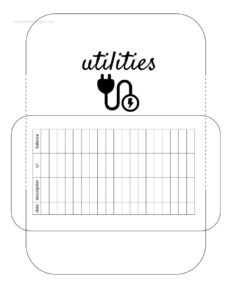
Utilities Cash Envelope
Download a free Utilities Cash Envelope template in PDF and DOCX to budget gas, electric, water, and internet bills using the cash envelope method.
PDF
DOCX
3 downloads
0
likes
Download Files
- DOCX
A Utilities Cash Envelope is a simple budgeting tool you label and fill with the cash set aside for your utility bills each month, helping you track exactly how much you have available for electric, gas, water, internet, and similar payments. Most people use it to keep utility spending separate from other money so they never accidentally dip into it, and you can download this template free in PDF and DOCX with no signup required.
What Is a Utilities Cash Envelope?
A Utilities Cash Envelope is a printable envelope template designed for the cash envelope budgeting system, where you assign physical cash to specific spending categories. This particular envelope is dedicated to utilities — the recurring household bills like power, water, heating, trash, phone, and internet. You write the category name, the budgeted amount, and track deposits and spending directly on the envelope. It’s used by individuals, couples, and families who want a tangible, low-tech way to manage money. By giving every utility dollar a home before the month begins, you avoid overspending and always know how much remains for upcoming bills.
When Do You Need a Utilities Cash Envelope?
- You’re starting a cash-based budget and want a dedicated envelope for monthly utility bills instead of mixing them with groceries or gas.
- Your utility costs swing seasonally — high in summer for cooling or winter for heating — and you want to set aside a steady amount each month.
- You share household expenses with a partner or roommate and need a clear, visible record of who contributed what toward the bills.
- You tend to overspend when bills come from a checking account and prefer the discipline of handling physical cash.
- You’re teaching a teenager or young adult how to budget for recurring living expenses using a hands-on method.
- You want to build a small buffer by rolling unspent utility cash forward to cover a higher bill next month.
What a Utilities Cash Envelope Should Have
An effective utilities envelope keeps things simple but complete. At minimum it should clearly identify the category as Utilities so it’s never confused with another envelope. It should include a space for the budgeted amount you plan to set aside, a running area to log deposits as you add cash, and a line or grid to record withdrawals when you pay a bill. A balance line shows what’s left at a glance. Many people also note the billing period or month, the due dates of each utility, and a short list of which specific services the envelope covers. Together these elements turn a plain envelope into a small ledger you can hold in your hand.
How to Fill Out a Utilities Cash Envelope
Because this is a flexible template, you adapt the fields to your own bills. Follow these steps:
- Label the category: Write “Utilities” on the front so the envelope’s purpose is obvious at a glance.
- Enter the budget period: Add the month or pay-cycle dates this envelope covers, such as “June” or “6/1–6/30.”
- Set the budgeted amount: Total your expected utility bills and write that figure in the planned-amount line.
- List your services: Optionally jot the specific utilities — electric, water, gas, internet, trash — and their due dates.
- Add cash and log deposits: Each time you put money in, record the date and amount in the deposit section.
- Record each payment: When you pay a bill, note the date, which utility, and the amount withdrawn.
- Update the balance: Subtract withdrawals from deposits and write the remaining balance so you always know what’s left.
Tips for the Cash Envelope Method
The cash envelope system works because spending limits become physical. To get the most from your utilities envelope, base your budgeted amount on an average of the last several months of bills rather than a single low month — this builds in a cushion for seasonal spikes. If your utilities are paid online or by autopay, you can still use the envelope as a virtual placeholder: keep the cash set aside in a separate spot and use the envelope purely as your tracking ledger. Consider rolling leftover cash into next month to smooth out the months when heating or cooling costs climb.
Utilities Envelope vs. a Single Budget Sheet
A standalone budget spreadsheet shows all categories at once, which is great for the big picture but easy to ignore day to day. A dedicated Utilities Cash Envelope isolates one category so the limit feels real and immediate — when the cash is gone, you’ve hit your plan. Many budgeters use both: a master budget to allocate income across categories, then individual envelopes like this one to enforce each limit. The envelope is also portable and private, making it ideal for shared households where everyone needs to see the same running total without logging into an app.
Common Mistakes to Avoid
- Underestimating seasonal bills — set your budget on a yearly average, not your cheapest month.
- Forgetting to log a withdrawal, which throws off your balance and makes the envelope untrustworthy.
- Borrowing from the utilities envelope for non-utility spending, defeating the purpose of separating categories.
- Leaving large amounts of cash in an envelope at home instead of keeping only what you need accessible.
- Not noting due dates, so a bill slips past and incurs a late fee even though the cash was available.
- Failing to carry over a leftover balance, then scrambling when a higher bill arrives.
Frequently Asked Questions
What is a Utilities Cash Envelope used for? It’s a budgeting envelope dedicated to your recurring utility bills — electric, gas, water, internet, and similar services. You set aside cash for those bills, track deposits and payments on the envelope, and avoid spending that money on anything else. It keeps utility costs separate and predictable.
How do I fill out the utilities envelope? Label it “Utilities,” write the month it covers, and enter your budgeted amount. As you add money, log each deposit with a date and amount; as you pay bills, record each withdrawal and update the remaining balance. That gives you a simple ledger of everything coming in and going out.
How much should I budget for utilities? A good starting point is the average of your last several months of utility bills, which smooths out seasonal highs and lows. Add a small buffer for unexpected increases. Review the figure every few months and adjust as rates or your usage change.
Does this work if I pay bills online? Yes. Even with autopay or online payments, you can use the envelope as a tracking ledger and keep the matching cash set aside separately, or simply log virtual amounts. The discipline of recording deposits and withdrawals still keeps you within your plan.
Is the Utilities Cash Envelope free? Yes. You can download this template free in both PDF and DOCX formats, with no signup or account required. Print as many copies as you need each month and customize the labels to match your own bills.
Can I use one envelope for all my utilities? You can, and most people do, listing each service and its due date on the same envelope. If your bills are large or you want finer control, you can also create separate envelopes for major categories like electricity and internet using the same template.
This template is a general example provided for informational purposes only and is not financial, tax, or budgeting advice. Your circumstances and local utility billing practices vary, so consider consulting a qualified financial professional for guidance tailored to your situation.
Official resource: for the rules that apply to your situation, see the Consumer Financial Protection Bureau.
Related Forms
- Income Sources
- Monthly Receipts List
- Utilities Tracker
- Savings Passbook
- Fraud Alert Request
- Sinking Funds Tracker
Browse more in Money.