
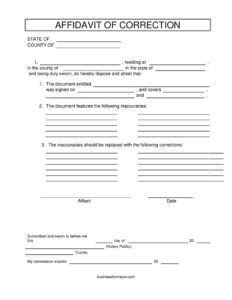
Affidavit Of Correction
Download a free Affidavit of Correction template in PDF and DOCX to fix an error on an official record, with a clear how-to guide and free download.
PDF
DOCX
10 downloads
0
likes
Download Files
- DOCX
An Affidavit of Correction is a sworn written statement used to fix a mistake or inaccuracy on a previously signed document or official record. People most often use it to correct a typo, wrong date, misspelled name, or other clerical error without recreating the entire original document. You can download this template free in PDF and DOCX formats, with no signup required.
What Is an Affidavit of Correction?
An Affidavit of Correction is a notarized legal statement in which a person, called the affiant, identifies an error in an existing document and states the correct information under oath. It is typically prepared by the individual who signed or filed the original record, or by someone with direct knowledge of the facts. The affidavit does not erase the original document; instead, it attaches to it as a sworn explanation of what was wrong and what the accurate detail should be. Because it is sworn before a notary public, it carries legal weight and creates a record that the correction was made honestly and intentionally rather than fraudulently altered after the fact.
When Do You Need an Affidavit of Correction?
This document is useful any time an official or formal record contains an error that needs an authoritative explanation. Common situations include:
- Misspelled names on a deed, title, contract, or certificate.
- Incorrect dates on a signed agreement, invoice, or filing.
- Vehicle title or registration errors, such as a wrong VIN, odometer figure, or owner name.
- Clerical mistakes on recorded real estate documents, such as a transposed address or lot number.
- Data-entry errors on business filings, licenses, or permits submitted to an agency.
- Typographical errors in legal descriptions, account numbers, or reference numbers on previously notarized paperwork.
Types of Corrections an Affidavit Can Address
While the form itself is general purpose, the corrections it handles fall into a few broad categories. The most frequent is the clerical or scrivener’s error—a simple typing or copying mistake that does not change the meaning or intent of the original document. A second type is a factual correction, where a stated fact such as a date of birth, address, or measurement was recorded inaccurately. A third involves identity details, such as a name that appears differently across two documents and needs to be reconciled. The affidavit explains which category applies, what the original document said, and what the truthful, corrected information is.
What an Affidavit of Correction Should Have
To be complete and credible, the affidavit should clearly identify several elements:
- The state and county where the affidavit is sworn.
- The full legal name and residential address of the affiant.
- A reference to the original document being corrected, including its title and date if possible.
- A precise statement of the error and the corrected information.
- The affiant’s signature made under oath.
- The notary block, including the date, notary signature, county, and commission expiration.
How to Fill Out an Affidavit of Correction
Follow these steps using the fields in this template:
- At the top, enter the State and County where you are signing the affidavit before the notary.
- In the line beginning “I, ____,” type your full legal name as the affiant.
- Fill in your residential address on the “residing at” line, then state the county and state in which you reside.
- In the main statement area following “do hereby depose and attest that,” describe the correction in clear, factual sentences. Identify the original document, quote or describe the incorrect entry, and state the accurate information that should replace it.
- Sign on the AFFIANT line—but only in the notary’s presence.
- Leave the Subscribed and sworn section blank; the notary completes the day, month, and year.
- The notary public signs, prints the county, and records when their commission expires.
Notarization and Filing
An Affidavit of Correction generally must be notarized to be effective, because its authority comes from being sworn under oath. Do not sign before you reach the notary—wait until you are in front of the notary public, who will verify your identity, watch you sign, and complete the jurat at the bottom. Bring a valid government-issued photo ID. After notarization, you may need to file or record the affidavit with the same office that holds the original document, such as a county recorder, motor vehicle agency, or the business that issued the record. Ask that office about its specific submission method, required copies, and any recording fee before you file.
How It Differs From an Amendment or Corrected Document
An Affidavit of Correction is a separate sworn statement that sits alongside the original; it does not rewrite the source document. An amendment or corrected version, by contrast, replaces or formally edits the original itself, often requiring all original parties to sign again. Many agencies prefer an affidavit for small clerical fixes because it preserves the original record while documenting the truth, whereas substantive changes to terms may require a full amendment.
Common Mistakes to Avoid
- Signing before notarization. The affidavit is only valid if sworn in the notary’s presence.
- Being vague. Clearly state both the incorrect entry and the corrected information so there is no ambiguity.
- Failing to identify the original document. Reference its title and date so the affidavit can be matched to the right record.
- Using it for substantive changes. Material changes to obligations may require an amendment rather than a correction.
- Leaving fields blank. Incomplete state, county, or address lines can cause an agency to reject the filing.
- Not checking filing rules. Each office has its own requirements; confirm before submitting.
Frequently Asked Questions
What is an Affidavit of Correction used for? It is a sworn statement used to fix an error on a document or official record, such as a misspelled name, wrong date, or clerical mistake. It explains what was incorrect and provides the accurate information without rewriting the entire original document.
Does an Affidavit of Correction need to be notarized? In most cases, yes. The document’s authority comes from being signed under oath before a notary public, who verifies your identity and completes the jurat at the bottom. Always sign in the notary’s presence rather than beforehand.
Is an Affidavit of Correction legally binding? Once properly sworn and notarized, it becomes a formal legal statement that can be relied upon as evidence of the correction. Knowingly providing false information in a sworn affidavit can carry legal penalties, so all statements must be truthful.
Who can sign an Affidavit of Correction? The affiant is usually the person who signed or filed the original document, or someone with direct, firsthand knowledge of the facts being corrected. The affiant must be willing to swear to the accuracy of the corrected information.
How much does this Affidavit of Correction cost? The template is completely free to download here in PDF and DOCX with no signup. You may pay a small notary fee and, in some cases, a recording or filing fee charged by the office that holds the original document.
Can I use this affidavit to correct any document? It works well for clerical and factual errors on many records, but some agencies require their own specific correction forms. Check with the office that issued or holds the original document before relying on this affidavit.
This Affidavit of Correction template is provided as a general example for informational purposes only and is not legal advice. Notarization, filing, and acceptance requirements vary by jurisdiction and by the agency holding the original record. Consult a qualified attorney or the relevant office to confirm what applies to your situation.
Related Forms
- Affidavit Of Survivorship
- Affidavit Of Consent
- Non-Cash Contribution Letter
- Affidavit Of Non-Military Service
- Affidavit Of Non Collusion
- Affidavit Of Gift
Browse more in Affidavits.