
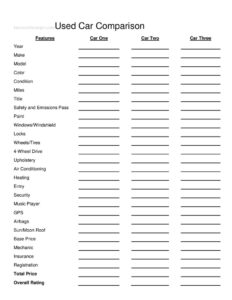
Used Car Comparison
Compare up to three used cars side by side with our free Used Car Comparison template, weighing features, price, and condition before you buy — free download.
PDF
DOCX
9 downloads
0
likes
Download Files
- DOCX
A Used Car Comparison form is a simple side-by-side worksheet that lets you evaluate up to three used vehicles across the same set of features, costs, and condition checks. People most often use it when they are torn between several cars at different dealerships or private sellers and want an organized, apples-to-apples way to decide. It’s free to download here in both PDF and DOCX formats — no signup required.
What Is a Used Car Comparison?
A Used Car Comparison is a structured chart that places three candidate vehicles in columns and lists the same evaluation criteria down the side — year, make, model, mileage, mechanical and cosmetic condition, equipment, and full pricing. Buyers create and fill it out themselves; there’s no official issuer. Its purpose is to turn a confusing shopping process into clear data so you can spot the best overall value rather than being swayed by a single flashy feature or a smooth sales pitch. By scoring each car on identical points, you can compare a clean low-mileage sedan against a cheaper but higher-mileage alternative and see which truly fits your budget and needs.
When Do You Need a Used Car Comparison?
This worksheet is useful any time you’re choosing among multiple used vehicles instead of buying the first one you see. Common situations include:
- Test-driving three cars in one weekend and needing to remember which had the better tires, upholstery, or air conditioning by the end.
- Comparing the same model across different model years, trim levels, or mileage to judge price-per-mile value.
- Weighing a private-party sale against a dealer listing, where insurance, registration, and inspection costs differ.
- Shopping for a first car or a teen driver’s vehicle, where safety equipment like airbags and a clean safety/emissions pass matters most.
- Budgeting realistically by adding base price to mechanic inspection, insurance, and registration to reach a true total price.
- Sharing your findings with a spouse, parent, or co-signer who wasn’t at the lot and needs the full picture to weigh in.
What a Used Car Comparison Should Have
A complete comparison sheet keeps the criteria identical across every candidate so the contest is fair. At minimum it should capture the vehicle’s identity (year, make, model, color), its condition and mileage, title status, and whether it passed safety and emissions testing. It should also list a consistent feature checklist — paint, windows and windshield, locks, wheels and tires, drivetrain, upholstery, climate control, entry and security systems, audio, GPS, airbags, and any sunroof. Finally, it needs a full cost breakdown that goes beyond the sticker: base price plus mechanic inspection, insurance, and registration, totaled per car, with an overall rating to summarize your impression.
How to Fill Out a Used Car Comparison
Work through the sheet one column at a time so each car gets the same treatment:
- Label the Car One, Car Two, and Car Three columns, then record each vehicle’s Year, Make, Model, and Color.
- Note overall Condition and odometer Miles, then confirm Title status (clean, salvage, rebuilt) and whether it has a Safety and Emissions Pass.
- Inspect and rate each feature: Paint, Windows/Windshield, Locks, and Wheels/Tires.
- Check the 4-Wheel Drive, Upholstery, Air Conditioning, and Heating.
- Test the Entry, Security, Music Player, and GPS systems.
- Confirm Airbags and note any Sun/Moon Roof.
- Enter the Base Price, then add estimated Mechanic inspection, Insurance, and Registration costs to reach a Total Price.
- Finish with an Overall Rating for each car to summarize value at a glance.
Reading the True Cost, Not Just the Sticker
The pricing rows on this sheet exist because the advertised number rarely reflects what you’ll actually pay to own a used car. A vehicle with a low base price can become the more expensive choice once you add a higher insurance premium for a sportier model, a costlier registration on a heavier vehicle, or a mechanic’s estimate to fix worn brakes or tires. By forcing yourself to fill in Mechanic, Insurance, and Registration for every candidate, you reach a fair Total Price that makes the smartest buy obvious. Always have an independent mechanic inspect a used car before you commit; the inspection fee is small compared to the repairs it can reveal.
Using Condition and Safety Checks Wisely
The condition and equipment rows are where a careful buyer separates a good deal from a future headache. A clean Title and a current Safety and Emissions Pass protect you from registration surprises, while functioning Airbags, solid Wheels/Tires, and working Locks and Security bear directly on safety. Rate each feature consistently — for example, use a simple Good/Fair/Poor scale or a 1–5 score — so your Overall Rating reflects real data rather than a gut feeling about which car “felt nicer.”
Common Mistakes to Avoid
- Comparing the base price only and ignoring mechanic, insurance, and registration costs that change the real total.
- Filling out columns at different times so the criteria aren’t judged consistently across cars.
- Skipping the title check — a salvage or branded title can mean trouble even when the car looks great.
- Letting one impressive feature like GPS or a sunroof outweigh fundamentals such as mileage, condition, and a clean safety/emissions pass.
- Not test-driving each vehicle before scoring heating, air conditioning, and the audio system.
- Forgetting to budget for an independent mechanic inspection before signing anything.
Frequently Asked Questions
What is a Used Car Comparison form? It’s a side-by-side worksheet that lets you evaluate up to three used vehicles using the same criteria — year, make, model, mileage, condition, features, and full pricing. It helps you make a fair, data-driven decision instead of relying on memory or a sales pitch.
How do I fill out a Used Car Comparison? Label each car’s column, then record its identity, condition, mileage, and title status. Work down the feature list rating each item, then enter the base price plus mechanic, insurance, and registration costs to reach a total price and an overall rating per vehicle.
Is this form legally binding? No. It’s a personal decision-making tool for your own use, not a contract or purchase agreement. The actual sale is governed by the bill of sale and title transfer documents you sign with the seller.
Should I include insurance and registration in my comparison? Yes. These ongoing and one-time costs can vary significantly between vehicles and meaningfully change which car is the better value. Including them gives you a true total cost rather than just the advertised sticker price.
Does it replace a mechanic’s inspection? No. This worksheet organizes what you observe, but you should still have an independent mechanic inspect any used car before buying. The form even includes a row to record that inspection cost in your total.
How much does this template cost? Nothing — it’s a free download here in both PDF and DOCX formats, with no signup required. Print the PDF to fill in by hand at the lot, or edit the DOCX to customize the feature rows for your own priorities.
This template is a general example provided for informational purposes only and does not constitute legal, financial, or automotive purchasing advice. Vehicle title rules, safety and emissions requirements, and registration and insurance costs vary by jurisdiction — consult the appropriate authorities and a qualified professional before making a purchase decision.
Official resource: for the rules that apply to your situation, see your state DMV.
Related Forms
- Bill Of Sale
- Motorcycle Bill of Sale
- Used Car Mechanic Checklist
- Motor Vehicle Bill of Sale
- Auto Estimate Form
- Auto Bill Of Sale
Browse more in Auto Sales.