
Speaker Invitation
Use our free Speaker Invitation letter template to formally invite a guest speaker to your event, with a free download in PDF and DOCX formats.
DOCX
0
likes
Download Files
- DOCX
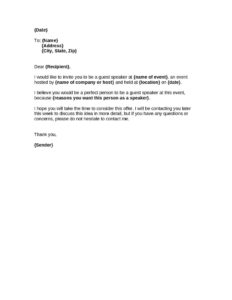
A Speaker Invitation letter is a formal written request asking a person to appear as a guest speaker at an event such as a conference, seminar, workshop, or fundraiser. People most often use it to extend a professional, courteous invitation that clearly states the event details and explains why the recipient is the right speaker for the occasion. This template is free to download in both PDF and DOCX formats — no signup required.
What Is a Speaker Invitation Letter?
A Speaker Invitation letter is a brief, professional business letter sent by an event organizer, company, association, or committee to a prospective guest speaker. It documents who is being invited, the name and host of the event, where and when it will take place, and the reasons the sender believes the recipient is a strong fit. The letter is typically the first formal step in securing a speaker, setting a respectful tone and signaling that the request is serious. It usually promises a follow-up conversation to discuss logistics, fees, topics, and scheduling. While friendly in voice, it remains structured enough to serve as a record of the initial outreach.
When Do You Need a Speaker Invitation Letter?
This letter is useful any time you want to invite someone to address an audience and want the request to look polished and intentional. Common situations include:
- Inviting a keynote speaker for an industry conference or annual summit.
- Asking a subject-matter expert to lead a workshop, panel, or breakout session.
- Requesting a guest lecturer for a university class, training program, or alumni event.
- Inviting a community leader, author, or executive to speak at a fundraiser or gala.
- Securing a motivational or commencement speaker for a graduation or company milestone.
- Reaching out to a local professional to speak at a chamber of commerce or networking meeting.
Formal vs. Casual Outreach
A written invitation carries more weight than a quick email or phone call, especially for high-profile or first-time contacts. It gives the recipient something concrete to review, share with an assistant, or revisit when deciding. For less formal events, you can soften the tone, but the same core information should still be present.
What a Speaker Invitation Letter Should Have
A complete Speaker Invitation includes the date the letter is written, the recipient’s name and full mailing address, and a respectful salutation. The body must clearly identify the event by name, name the hosting organization, and state the venue and date so the recipient can immediately check availability. It should explain specifically why this person was chosen, which flatters the recipient and makes the request feel personal rather than generic. Finally, it should set expectations for next steps — typically a follow-up call — and invite questions, followed by a courteous closing and the sender’s name. Keeping it to a single page reads as professional and respectful of the recipient’s time.
How to Fill Out a Speaker Invitation Letter
- Enter the Date you are sending the letter at the top.
- Complete the recipient block with the speaker’s Name, Address, and City, State, Zip so it can be mailed or attached correctly.
- Open with the salutation, replacing {Recipient} with the speaker’s name or appropriate title (e.g., “Dr. Lee”).
- Fill in the {name of event} with the official title of your conference, seminar, or gathering.
- Add the {name of company or host} so the speaker knows who is organizing it.
- State the {location} — the venue, city, or virtual platform — and the {date} of the event.
- In the {reasons you want this person as a speaker} field, be specific: cite their expertise, recent work, reputation, or connection to your audience.
- Confirm you will follow up later that week, then sign off and replace {Sender} with your name and, ideally, your title and contact information.
Tips for Getting a Yes
Personalization matters more than anything in the reasons section — referencing a specific book, talk, or project the speaker is known for shows you did your homework and aren’t sending a form letter. Send the invitation well in advance; busy speakers often book months ahead, so a generous lead time improves your odds. Although this template keeps logistics for the follow-up call, you may briefly hint at the audience size, topic, or format if it helps the recipient picture the opportunity. Be sure your contact details are easy to find so an interested speaker can respond without friction.
What to Cover in the Follow-Up
The letter intentionally promises a later conversation. In that call or email, discuss the speaking topic and length, any honorarium or travel reimbursement, audiovisual needs, and the deadline for confirming. Putting agreed terms in a short follow-up message — or a separate speaker agreement — protects both parties.
Common Mistakes to Avoid
- Leaving the reasons section generic; vague flattery makes the invitation feel mass-produced.
- Omitting the event date or location, forcing the speaker to ask before they can even consider.
- Sending the request too late, when the speaker’s calendar is already full.
- Misspelling the recipient’s name or using the wrong title, which undermines the professional tone.
- Forgetting to include your own contact details or a clear next step.
- Overloading the letter with logistics that belong in the follow-up conversation instead.
Frequently Asked Questions
What is a Speaker Invitation letter used for? It is used to formally invite someone to be a guest speaker at an event such as a conference, workshop, lecture, or fundraiser. The letter states the event details and explains why the recipient was chosen. It typically serves as the first step before discussing logistics in a follow-up conversation.
How do I fill out the Speaker Invitation template? Add the date and the recipient’s name and address, then complete the event name, host, location, and date in the body. Write a specific, personalized reason you want this person to speak, and sign with your name and contact information. Replace every bracketed placeholder before sending.
Should I send the invitation by mail or email? Either works depending on your relationship and the formality of the event. A printed letter on letterhead feels more prestigious for high-profile speakers, while email is faster and easier for the recipient to forward. You can use the same wording in both formats.
Do I need to mention payment in the invitation? Not necessarily; this template leaves fees and logistics for the follow-up conversation it promises. However, if an honorarium or travel coverage is a strong selling point, a brief mention can encourage a positive response. Detailed terms are best confirmed later in writing.
Is a Speaker Invitation letter legally binding? No, the invitation itself is simply a request and does not create a binding obligation for either party. A speaking commitment becomes binding only when both sides agree to terms, often through a separate speaker agreement or confirmation. Treat this letter as the opening of a conversation.
Is this Speaker Invitation template free to download? Yes. You can download it for free in PDF and DOCX formats with no signup required. Edit it in your word processor to match your event, organization, and chosen speaker.
This Speaker Invitation template is a general example provided for informational purposes only and is not legal, financial, or professional advice. Requirements and best practices vary by organization and jurisdiction, so consult a qualified professional if you need guidance on contracts or speaker agreements.
Related Forms
- Employee Termination For Gross Misconduct
- Internal Promotion Announcement
- Pandemic Attendee Event Letter
- Disputed Invoice
- Prospective Lead
- Final Demand For Payment
Browse more in Business Letters.