
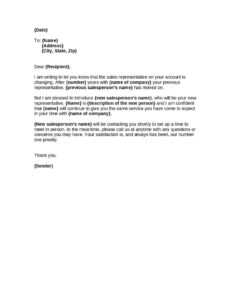
Introducing New Salesperson
Download a free Introducing New Salesperson letter template to smoothly hand off accounts and reassure clients, available as a free PDF and DOCX download.
DOCX
3 downloads
1
likes
Download Files
- DOCX
An Introducing New Salesperson letter is a short business letter that tells a customer their account representative is changing and warmly introduces the person who will now serve them. People most often use it to keep clients confident and reassured during a sales handoff. You can download this template free in PDF and DOCX formats — no signup required.
What Is an Introducing New Salesperson Letter?
An Introducing New Salesperson letter is a formal communication sent by a company — usually a sales manager, account director, or business owner — to a current customer. It documents that the previous sales representative on the account has departed or been reassigned and names the new representative who will take over the relationship. The letter explains the new person’s background, reassures the client that service levels will not slip, and sets the expectation that the new representative will reach out soon. In practice, it functions as both a courtesy notice and a relationship-preservation tool, making sure the customer never feels abandoned or surprised when an unfamiliar name appears on their next call or invoice.
When Do You Need an Introducing New Salesperson Letter?
This letter is useful any time the human face of an account changes. Common situations include:
- A veteran sales representative retires, resigns, or leaves the company after years of building client relationships.
- A salesperson is promoted into a new role, requiring their existing accounts to be reassigned to colleagues.
- Your company reorganizes territories or restructures the sales team, shifting clients to different reps.
- A representative goes on extended leave and a temporary or permanent replacement needs to be introduced.
- You hire a new salesperson and want to formally hand over a list of established customers to them.
- A high-value or long-standing client deserves a personal, written introduction rather than learning about the change through a cold call.
In each case, the letter softens the transition. Customers who have spent years working with one person can feel uneasy about change, so a thoughtful introduction protects the relationship and the revenue tied to it.
What an Introducing New Salesperson Letter Should Have
A complete and effective letter includes a clear date, the recipient’s full name and mailing address, and a personal salutation. The body should plainly state that the representative is changing, acknowledge the outgoing person and their tenure, and introduce the new representative by name with a brief, genuine description of their experience or strengths. It should reassure the client that service quality will continue, signal that the new representative will make contact soon, and invite questions in the meantime. Finally, it needs a courteous closing and the sender’s name and title. Warmth and confidence matter as much as the facts — the goal is to reduce uncertainty and strengthen trust.
How to Fill Out an Introducing New Salesperson Letter
- Enter the Date you are sending the letter at the top.
- Complete the recipient block: the customer’s Name, Address, and City, State, Zip.
- Add a personal greeting using the Recipient field, such as “Dear Ms. Carter.”
- State the change of representative, then fill in the number of years the outgoing rep served and your name of company.
- Name the departing representative in the previous salesperson’s name field and note that they have moved on.
- Introduce the replacement using the new salesperson’s name field.
- Write a brief, sincere description of the new person — their experience, expertise, or qualities that benefit the client.
- Reassure the customer using the name and name of company fields, confirming the same level of service.
- Note that the new representative will be contacting them shortly, then sign off with your Sender name and title.
Review the finished letter to make sure every placeholder is replaced and the tone reads naturally and confident.
Tips for a Smooth Account Handoff
The letter is only one part of a successful transition. Before sending it, brief the new representative thoroughly on the account history, past orders, open issues, and the client’s preferences so the first conversation feels informed rather than introductory. Time the letter to arrive a few days before the new representative actually calls, so the customer is expecting them. Keep the description of the new person honest and specific — “twelve years in industrial supply” lands better than vague praise. If the outgoing representative left on good terms, a warm acknowledgment of their service signals stability and respect, which reassures the client about the kind of company you run.
How It Differs From a New Hire Announcement
It is easy to confuse this letter with a general staff announcement, but the audience and purpose are different. A new hire announcement is broadcast internally or to a wide audience to celebrate a hire. An Introducing New Salesperson letter is targeted and personal, sent directly to the specific customer whose account is changing hands. Its job is not publicity — it is continuity. Every sentence should center on the client’s experience, their account, and the assurance that nothing they value about working with your company is going away.
Common Mistakes to Avoid
- Leaving placeholder text like {name} or {number} in the final version because you sent it without proofreading.
- Sounding cold or transactional — the letter should reassure, not just inform.
- Speaking negatively about the departing representative or hinting at a problem behind their exit.
- Forgetting to mention that the new representative will follow up, leaving the client unsure what happens next.
- Giving a generic, empty description of the new person instead of real, relevant strengths.
- Sending the letter long after the change has already happened, so the customer hears the news from someone else first.
Frequently Asked Questions
What is an Introducing New Salesperson letter? It is a business letter sent to a customer announcing that the sales representative on their account is changing and introducing the new person who will serve them. It documents the transition, reassures the client, and signals that the new representative will be in touch soon. The goal is to preserve the relationship during a change.
How do I fill out this letter? Start with the date and the recipient’s name and address, then add a personal greeting. In the body, state the change, name the outgoing and incoming representatives, fill in the years of service and company name, and add a genuine description of the new person. Close with your name and title as the sender.
Who should send the letter? Typically a sales manager, account director, or business owner sends it, since it carries more weight coming from someone above the representatives involved. This reassures the client that the company as a whole is committed to their account. The new representative may also co-sign or follow up personally.
Does this letter need to be notarized or witnessed? No. An Introducing New Salesperson letter is an informal business courtesy, not a legal contract, so it requires no notarization or witnesses. A clear date and the sender’s signature or printed name are all you need.
When should I send it? Send it as soon as the change is decided, ideally a few days before the new representative reaches out to the client. Early, proactive communication prevents the customer from being caught off guard by an unfamiliar name. Timing the letter ahead of the first call makes the handoff feel seamless.
Is this template free to download? Yes. You can download this Introducing New Salesperson letter template completely free from Business Forms Pro in both PDF and DOCX formats, with no signup required. Customize the fields, save your version, and reuse it whenever your sales team changes.
This template is provided as a general example for informational purposes only and does not constitute legal, financial, or business advice. Communication norms and any contractual notice requirements may vary by industry and jurisdiction, so consult a qualified professional if you have specific concerns about your client agreements.
Related Forms
- Customer Complaint Explanation
- Speaker Invitation
- Congratulations on Promotion
- Notice of a Bulk Sale
- Internal Promotion Announcement
- Request For Goods On Approval
Browse more in Business Letters.