
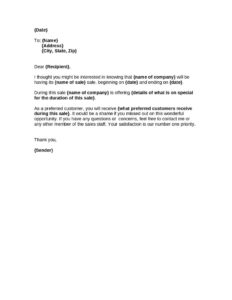
New Sale for a Preferred Customer
Announce an exclusive sale to your best customers with this free New Sale for a Preferred Customer letter template — free download in PDF and DOCX.
DOCX
1 downloads
0
likes
Download Files
- DOCX
A New Sale for a Preferred Customer letter is a short, personalized announcement that tells a valued client about an upcoming sale and the special perks reserved for loyal buyers. Businesses most often use it to reward repeat customers, drive early traffic to a promotion, and make their best clients feel appreciated. You can download this template free in PDF and DOCX, with no signup required.
What Is a New Sale for a Preferred Customer Letter?
A New Sale for a Preferred Customer letter is a marketing communication sent by a company’s sales or customer-relations team to an established client ahead of a scheduled sale. It documents the name of the sale, the start and end dates, the goods or services being discounted, and the exclusive benefit the preferred customer will receive. Unlike a mass advertisement, this letter is addressed by name and framed around an existing relationship, so it reads as a courtesy rather than a cold pitch. Its purpose is twofold: to give loyal customers early or extra access to a promotion, and to strengthen the long-term relationship by signaling that their continued business is recognized and valued.
When Do You Need a New Sale for a Preferred Customer Letter?
This letter fits any moment when you want to give your best customers a head start or an exclusive advantage. Common scenarios include:
- Seasonal or clearance events — alerting top clients to a spring, holiday, or end-of-line sale before it opens to the general public.
- Loyalty rewards — offering an extra percentage off, free shipping, or a gift exclusively to repeat buyers.
- Inventory pushes — moving overstock quickly by inviting your most reliable customers first.
- New location or anniversary sales — celebrating a milestone while thanking the customers who helped you reach it.
- VIP preview windows — granting early access a day or two before a public promotion begins.
- Re-engaging quiet accounts — reminding a customer who hasn’t ordered recently that they still hold preferred status.
What This Letter Should Have
A complete preferred-customer sale letter is brief but specific. It should clearly state who is sending it and which company is running the sale, name the customer personally, and identify the sale by name. Crucially, it must include exact start and end dates so the reader knows the window, a clear description of what is on special, and a distinct statement of the exclusive benefit that preferred customers receive. A warm closing, an invitation to ask questions, and contact details for the sales staff round out the letter and keep the tone personal rather than promotional.
How to Fill Out a New Sale for a Preferred Customer Letter
- Date: Enter the date you are sending the letter so the timing of the offer is on record.
- Recipient block: Fill in the customer’s Name, Address, and City, State, Zip exactly as they appear in your records.
- Greeting: Replace {Recipient} with the customer’s name to open warmly — “Dear Ms. Alvarez,” reads far better than a generic salutation.
- Company and sale name: Insert your {name of company} and the {name of sale}, such as “Summer Clearance” or “Anniversary Event.”
- Dates: Add the beginning and ending dates so the customer knows precisely how long they have to act.
- Sale details: In {details of what is on special}, describe the discounted items, categories, or services and the savings involved.
- Preferred-customer benefit: Spell out in {what preferred customers receive} exactly what makes this offer exclusive — early access, an extra discount, or a free add-on.
- Sign-off: Replace {Sender} with your name and title, and confirm contact details for yourself or the sales team.
Tips for Making the Letter Convert
The difference between a letter that gets ignored and one that drives a visit usually comes down to specificity and tone. Quantify the benefit wherever possible — “an additional 15% off already-reduced prices” is more persuasive than “a great discount.” Emphasize the exclusivity: the phrase as a preferred customer is the heart of this letter, so make sure the perk you describe genuinely isn’t available to everyone. Keep the dates visually clear, and avoid burying them in a long paragraph. Finally, sign with a real person’s name rather than “The Sales Team,” because a named sender reinforces the personal relationship the letter is meant to celebrate.
How This Differs From a General Sale Announcement
A standard sale flyer or email blast is sent to everyone on a list and emphasizes the promotion itself. A preferred-customer letter, by contrast, leads with the relationship. It is personalized, addressed by name, and built around a benefit reserved for loyal buyers. Because it implies a special status, it should not be sent to your entire database — doing so dilutes the meaning of “preferred” and can frustrate customers who later discover the perk was universal. Reserve this letter for the clients who truly earn it, and the goodwill it generates will outlast the sale.
Common Mistakes to Avoid
- Forgetting the end date — without a clear deadline, the offer loses urgency and customers delay until it expires.
- Leaving placeholders unfilled — sending a letter that still reads “{name of sale}” instantly destroys credibility.
- Vague benefits — “special savings” tells the reader nothing; name the exact perk and amount.
- Treating it like spam — sending the same “preferred” letter to your whole list makes the status meaningless.
- No contact path — omitting a name or phone number leaves interested customers with no easy way to follow up.
- Overselling the tone — heavy-handed sales language undercuts the friendly, relationship-first purpose of the letter.
Frequently Asked Questions
What is a New Sale for a Preferred Customer letter? It is a personalized announcement sent to a loyal client telling them about an upcoming sale and the exclusive benefit they will receive as a preferred customer. It documents the sale name, dates, discounted items, and the special perk. The goal is to reward repeat business while encouraging an early purchase.
How do I fill out this letter? Enter the date, the customer’s name and address, and a personal greeting, then add your company name, the sale name, and the start and end dates. Describe what is on special and clearly state the exclusive benefit for preferred customers. Finish by signing with your name and including contact details for the sales team.
Is this letter legally binding? It is a marketing communication, not a contract, so it does not create a binding legal obligation in the way a sales agreement would. That said, you should honor exactly what you promise, since misleading offers can raise consumer-protection concerns. Keep your stated discounts and dates accurate and deliverable.
Does it need to be signed or notarized? No notarization or witnesses are required — this is a courtesy business letter, not a legal instrument. A simple signature or a typed name and title at the bottom is sufficient. A genuine signature does, however, add a personal touch that reinforces the relationship.
Should I send it by mail or email? Either works, and the choice depends on how you usually reach the customer. A printed letter feels more exclusive and personal, while email is faster and easier to track. Many businesses send both, leading with the channel the customer prefers.
How much does this template cost? Nothing — it is completely free to download here in both PDF and DOCX formats, with no signup or account required. You can edit the DOCX in any word processor to match your branding and tone. Reuse it for future sales by simply updating the dates and details.
This template is a general example provided for informational purposes only and does not constitute legal, financial, or marketing advice. Advertising and consumer-protection requirements vary by jurisdiction, so consult a qualified professional before relying on it for your specific situation.
Related Forms
- Employee Termination For Theft
- Authorization to Return Items
- Employee Termination For Job Abandonment
- Request to Cancel Delayed Shipment
- Cease and Desist Libel
- Pandemic Employee Letter
Browse more in Business Letters.