
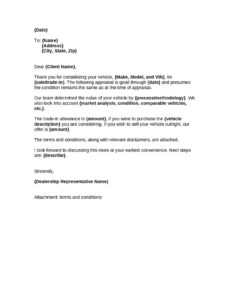
Vehicle Appraisal Verification Letter
Download a free Vehicle Appraisal Verification Letter template in PDF and DOCX to confirm a car's appraised value for insurance, sales, or financing.
DOCX
2 downloads
0
likes
Download Files
- DOCX
A Vehicle Appraisal Verification Letter is a written statement that confirms the appraised value of a specific vehicle, usually prepared by a licensed appraiser, dealership, or qualified evaluator. People most often request one to document a car’s worth for insurance coverage, a private sale, a loan application, or a tax or estate matter. You can download this template for free in PDF and DOCX formats, with no signup required.
What Is a Vehicle Appraisal Verification Letter?
A Vehicle Appraisal Verification Letter is a formal business letter in which an appraiser or authorized party verifies that they inspected a vehicle and determined its fair market or replacement value as of a certain date. It identifies the vehicle by make, model, year, and VIN, states the appraised amount, and explains the basis for that valuation. Insurance companies, lenders, buyers, and courts rely on the letter as independent evidence of value rather than taking an owner’s word for it. Because the letter carries the appraiser’s name and signature, it functions as a credible, on-record confirmation that can be attached to claims, contracts, or financial paperwork.
When Do You Need a Vehicle Appraisal Verification Letter?
This letter comes up any time a vehicle’s value needs to be confirmed by a third party rather than simply asserted. Common scenarios include:
- Agreed-value insurance: Insuring a classic, collector, modified, or high-value vehicle where standard book values fall short.
- Total-loss or theft claims: Supporting or disputing an insurer’s payout after an accident, fire, or theft.
- Private vehicle sales: Giving a buyer documented assurance of a car’s worth, or justifying an asking price.
- Loan and financing applications: Showing a lender the collateral value of a vehicle being financed or used to secure credit.
- Estate, divorce, or probate matters: Establishing a vehicle’s value for asset division, settlement, or inheritance purposes.
- Donations and tax reporting: Substantiating the claimed value of a vehicle donated to a charity or transferred between parties.
What a Vehicle Appraisal Verification Letter Should Have
To be useful and credible, the letter should clearly identify everyone involved and leave no ambiguity about the vehicle or its value. A complete letter generally includes the date, the appraiser’s name and credentials, the vehicle owner’s name, and full vehicle identification including year, make, model, trim, and VIN. It should state the mileage and overall condition observed, the appraised value in clear figures, the valuation method or comparable data used, and the effective date of the appraisal. Finally, it needs the appraiser’s signature, contact details, and any license or business information that establishes their authority to perform the valuation.
How to Fill Out a Vehicle Appraisal Verification Letter
Work through the template top to bottom, filling each part with accurate, verifiable detail:
- Date and header: Enter the date the letter is written and the name and address of the appraiser or appraisal business.
- Recipient: Address it to the party requesting verification — an insurer, lender, buyer, or “To Whom It May Concern” if unknown.
- Owner information: State the vehicle owner’s full legal name and, if relevant, their address.
- Vehicle identification: Record the year, make, model, trim, mileage, and the full 17-character VIN exactly as shown on the vehicle.
- Condition and inspection: Briefly describe the vehicle’s condition and note that it was physically inspected on a specific date.
- Appraised value: Write the verified value in both numerals and words, and specify whether it reflects market, replacement, or agreed value.
- Basis of valuation: Note the method used, such as comparable sales, guide values, or condition-adjusted analysis.
- Signature block: Sign and print the appraiser’s name, title, credentials, and contact information.
Who Should Sign the Letter
The credibility of a Vehicle Appraisal Verification Letter rests largely on who signs it. For high-value or collector vehicles, insurers and courts typically expect a letter from a certified or licensed appraiser with relevant experience. For routine sales or financing, a dealership representative or an evaluator with documented expertise may be sufficient. The signer should be an independent party with no financial stake in inflating or deflating the value, since a perceived conflict of interest can undermine the letter’s weight. Always include the signer’s professional title and any certification numbers so the recipient can confirm their qualifications.
Tips for a Stronger Appraisal Letter
Attach supporting evidence whenever possible — dated photographs, comparable listings, service records, or modification receipts strengthen the stated value considerably. Keep the language factual and neutral; avoid promotional or persuasive phrasing that could make the appraisal look biased. Make sure the VIN, mileage, and owner name match the title and registration exactly, because a single mismatched character can cause an insurer or lender to reject the document. Finally, note the effective date clearly, since vehicle values change over time and a letter is only as current as the inspection behind it.
Common Mistakes to Avoid
- Omitting or mistyping the VIN: The vehicle must be identifiable beyond doubt; errors here invalidate the letter.
- Vague value statements: Failing to specify whether the figure is market, replacement, or agreed value creates confusion.
- No basis given: Stating a number without explaining how it was reached weakens credibility.
- Missing inspection date: Without an effective date, the recipient cannot judge how current the valuation is.
- Unqualified signer: An appraisal from someone with no demonstrable expertise may be disregarded.
- Inflated or biased figures: Overstating value to win a claim or higher sale price can constitute fraud and void the document.
Frequently Asked Questions
What is a Vehicle Appraisal Verification Letter used for? It is used to confirm a vehicle’s appraised value to a third party such as an insurer, lender, buyer, or court. The letter documents the vehicle’s details, condition, and verified worth so the value does not have to be taken on the owner’s word alone. It is especially common for insuring collector cars and supporting total-loss claims.
Who can write and sign the letter? Ideally a licensed or certified vehicle appraiser, but a qualified dealership representative or experienced evaluator may also sign depending on the purpose. The signer should be independent and able to demonstrate their qualifications, since the recipient may verify their credentials before accepting the stated value.
Does the letter need to be notarized? Notarization is not always required, but some insurers, lenders, or courts may request it for added authenticity. Check the requirements of the party receiving the letter, and if notarization is needed, have the appraiser sign it in front of a notary public.
Is a Vehicle Appraisal Verification Letter legally binding? The letter itself is a statement of opinion about value rather than a contract, so it is generally not binding on its own. However, it can carry significant legal and financial weight as supporting evidence, and providing knowingly false information in it can have serious consequences.
How current does the appraisal need to be? Because vehicle values change with the market, mileage, and condition, most recipients prefer a recent appraisal — often within the past few months to a year. Always include the inspection and effective dates so the reader can judge whether the valuation is still relevant.
How much does this template cost? This Vehicle Appraisal Verification Letter template is completely free to download from Business Forms Pro in both PDF and DOCX formats, with no signup or payment required. You can edit the DOCX version to fit your specific vehicle and appraisal details.
This template is provided as a general example for informational purposes only and does not constitute legal, financial, tax, or appraisal advice. Appraisal standards and documentation requirements vary by jurisdiction and by the party requesting the letter. Consult a qualified professional appraiser or advisor for guidance specific to your situation.
Related Forms
- Reference Request
- Sales Follow Up
- Billing Error Apology Letter
- Follow Up
- Final Demand For Payment
- Customer Complaint Explanation
Browse more in Business Letters.