
Pandemic Employee Letter
Download a free Pandemic Employee Letter template in PDF and DOCX to communicate health policies, safety measures, and changes clearly to staff.
PDF
DOCX
0
likes
Download Files
- DOCX
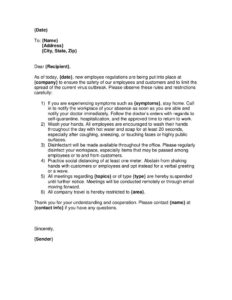
A Pandemic Employee Letter is a formal written communication from an employer to staff that explains how the organization is responding to a public health crisis, what is changing at work, and what employees should do to stay safe. The most common reason people use it is to deliver clear, consistent guidance during a fast-moving situation when verbal updates and scattered emails are not enough. You can download this template free in both PDF and DOCX formats, with no signup required.
What Is a Pandemic Employee Letter?
A Pandemic Employee Letter is an official message, usually issued by management, human resources, or business ownership, that documents an employer’s stance and instructions during a widespread health event such as a flu outbreak, COVID-19, or another infectious illness. It typically explains updated workplace policies, health and safety protocols, remote-work arrangements, sick-leave provisions, and expectations for reporting symptoms. The letter serves both a practical purpose — telling people exactly what to do — and a reassurance purpose, showing employees that leadership is acting responsibly. Because it is written and dated, it also creates a record that the company communicated specific guidance at a specific time, which can matter for consistency, accountability, and compliance with applicable public health directives.
When Do You Need a Pandemic Employee Letter?
Employers reach for this letter whenever a health situation requires coordinated action and uniform messaging across the workforce. Common scenarios include:
- Announcing new safety protocols such as masking, distancing, sanitizing stations, or capacity limits in shared spaces.
- Communicating a shift to remote or hybrid work, including who is affected, effective dates, and how productivity will be measured.
- Explaining revised sick-leave or paid-time-off policies so employees understand their options if they fall ill or must quarantine.
- Notifying staff of a confirmed exposure or case at the workplace and the steps being taken in response.
- Outlining a phased return-to-office plan as conditions improve, including screening, schedules, and expectations.
- Reassuring employees during uncertainty by summarizing the company’s commitment to their wellbeing and where to direct questions.
Each of these situations benefits from a single, well-organized letter rather than fragmented messages that can create confusion or contradict one another.
What a Pandemic Employee Letter Should Have
A complete and effective letter includes several core elements. Start with the company name, logo, and the date so the communication is properly attributed and time-stamped. Add a clear subject line or heading that signals the topic immediately. The body should open with an acknowledgment of the situation, then move into specific policies and instructions written in plain language. Include effective dates, the scope of who is affected, and any actions employees must take. Provide a point of contact — a name, email, or phone number — for questions, and close with a supportive, professional tone and a signature from a senior leader or HR representative. Where relevant, reference official public health guidance the company is following.
How to Fill Out a Pandemic Employee Letter
Because this template is a flexible business letter, you customize it section by section to match your organization’s situation. Follow these steps:
- Insert your company header. Add the business name, address, and logo at the top so employees recognize the source instantly.
- Add the date. Date the letter clearly, since pandemic guidance changes and recipients need to know how current the information is.
- Write the salutation. Address staff broadly, for example “Dear Team” or “Dear Valued Employees,” or personalize it for a department.
- Open with context. In the first paragraph, briefly acknowledge the health situation and the company’s commitment to safety.
- State the key policies. Use the body to list specific measures: safety protocols, remote-work rules, leave policies, screening, or exposure procedures.
- Specify dates and scope. Note when changes take effect and which employees, locations, or roles they apply to.
- Provide a contact. Direct questions to a named person or HR with an email and phone number.
- Close and sign. End with a reassuring statement, then add the signer’s name, title, and signature.
Tips for Communicating Effectively During a Crisis
Clarity and tone carry as much weight as content during a health emergency. Keep sentences short and avoid technical jargon so every employee, regardless of role, can act on the instructions. Lead with the most important information — what employees must do and by when — rather than burying it beneath background. Be honest about what you know and what is still uncertain; overpromising erodes trust if guidance later changes. Where possible, link your instructions to recognized authorities such as national or local public health agencies, which lends credibility and shows the policies are not arbitrary. Finally, plan to follow up: a single letter rarely covers an entire crisis, so let employees know how and when they can expect future updates.
How This Differs From a General Company Memo
While a Pandemic Employee Letter shares the structure of an internal memo, it carries a higher stakes and a more personal tone. A routine memo might announce a meeting or a policy tweak, but a pandemic letter addresses health, safety, and sometimes employment status — topics that affect people’s lives directly. It therefore tends to be more empathetic, more detailed about actions and consequences, and more careful to reference outside guidance. It also functions as a documented record during an unusual period, which is why dating and signing it matter more than in everyday correspondence.
Common Mistakes to Avoid
- Being vague about actions. Employees need specific instructions, not general reassurances, so spell out exactly what to do.
- Omitting effective dates. Without clear timing, staff cannot tell when new rules begin or end.
- Using fear-based or alarming language that creates panic instead of calm, coordinated action.
- Forgetting a contact point. If there is no one to answer questions, confusion and rumors fill the gap.
- Contradicting official guidance. Make sure your instructions align with current public health recommendations for your area.
- Failing to follow up. Sending one letter and going silent leaves employees uncertain as conditions evolve.
Frequently Asked Questions
What is a Pandemic Employee Letter? It is a formal communication from an employer to staff explaining how the company is responding to a public health crisis, including new policies, safety measures, and required actions. It serves both to instruct and to reassure employees during uncertain times.
How do I fill out a Pandemic Employee Letter? Add your company header and the date, write a brief opening that acknowledges the situation, list your specific policies and instructions, include effective dates and a contact for questions, and close with a signature from a leader or HR representative. The template is fully editable so you can tailor each section to your organization.
Is a Pandemic Employee Letter legally binding? The letter itself is primarily a communication tool rather than a contract, but it may set expectations that intersect with employment law and company policy. Because labor and leave rules vary by jurisdiction, review your content against applicable regulations and consult a professional if you are unsure.
Does the letter need to be signed? Yes, a signature from a senior leader, manager, or HR representative adds authority and shows employees that the message comes from leadership. It also helps document who issued the guidance and when.
How much does this template cost? Nothing — you can download the Pandemic Employee Letter free from Business Forms Pro in both PDF and DOCX formats, with no signup required. You are free to edit it to fit your business.
How often should I send pandemic updates to employees? Send a new letter whenever policies, dates, or circumstances change significantly, and provide periodic updates even when little has changed so employees stay informed. Consistent communication reduces rumors and builds trust during a prolonged situation.
This template is a general example provided for informational purposes only and does not constitute legal, medical, or human resources advice. Employment, leave, and public health requirements vary by jurisdiction and change over time, so consult a qualified professional and current official guidance before relying on this letter.
Related Forms
- Offer To Settle Disputed Account
- Withheld Delivery Notice
- Stop Delivery
- Cease and Desist Harassment
- Wrongful Delivery Refusal
- Construction Delay Letter
Browse more in Business Letters.