
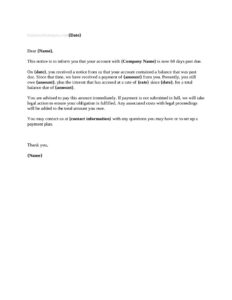
60 Days Past Due Letter
Use this free 60 days past due letter template to firmly remind overdue customers, request payment, and protect your business. Free download in PDF and DOCX.
DOCX
2 downloads
0
likes
Download Files
- DOCX
A 60 days past due letter is a written notice you send to a customer whose invoice remains unpaid two months after its due date, firmly reminding them of the outstanding balance and requesting immediate payment. It’s the most common tool businesses use to escalate collection efforts before turning an account over to a collection agency or pursuing legal action. You can download this 60 days past due letter free in both PDF and DOCX formats, with no signup required.
What Is a 60 Days Past Due Letter?
A 60 days past due letter is a formal collection notice issued by a creditor, vendor, or service provider to a customer who has failed to pay an invoice within 60 days of the original due date. It documents the unpaid amount, references the original invoice, and clearly states the consequences of continued non-payment. Unlike a gentle 30-day reminder, this letter strikes a firmer tone because the debt is now seriously overdue. It serves two purposes: it prompts the customer to act, and it creates a paper trail showing you made reasonable, documented attempts to collect the debt — useful if the matter later escalates.
When Do You Need a 60 Days Past Due Letter?
This letter is the second or third step in a typical collections sequence. Common situations include:
- A customer ignored your initial invoice and a friendly 30-day reminder, and the balance is now two months overdue.
- A freelancer or contractor completed work but the client has stopped responding to payment requests.
- A retailer or wholesaler extended net-30 credit terms that have now lapsed by an additional month.
- A service business — such as a clinic, agency, or repair shop — needs to escalate before referring the account to collections.
- You want a documented, dated record of demand before charging late fees or suspending service.
- A previously reliable account has gone silent and you need to formally signal that the situation is now serious.
Where the 60-Day Letter Fits in the Collections Sequence
Most businesses follow a tiered approach: an initial invoice, a 30 days past due reminder, this 60 days past due letter, and finally a 90-day final notice or referral to a collection agency. The 60-day letter is the pivotal step — polite enough to preserve the relationship if the customer simply forgot, but firm enough to communicate that the matter will not be dropped. By this stage you should reference all prior communications and make the payment deadline explicit. Sending a clearly worded letter now often prevents the costlier, more adversarial steps that follow.
What a 60 Days Past Due Letter Should Have
A complete and effective letter includes several core elements:
- Your business name, address, and contact details (the creditor).
- The customer’s name and billing address.
- The date the letter is sent.
- The original invoice number and invoice date.
- The exact outstanding balance, including any accrued late fees.
- A clear statement that the account is now 60 days past due.
- A firm payment deadline and accepted payment methods.
- A description of the consequences of continued non-payment.
- A signature line with the sender’s name and title.
How to Fill Out a 60 Days Past Due Letter
Work through the template field by field so nothing is missed:
- Date: Enter the date you are sending the letter. This anchors your documented timeline.
- Your business details: Add your company name, address, phone number, and email at the top so the customer can reach you to resolve the balance.
- Recipient details: Fill in the customer’s full name (or company name), contact person, and billing address.
- Salutation: Address the recipient by name to keep the letter personal and direct.
- Account and invoice reference: State the invoice number, the original invoice date, and confirm the account is now 60 days past due.
- Amount owed: Specify the exact outstanding balance, itemizing any late fees or interest if applicable.
- Prior contact: Briefly note earlier reminders you sent so the record is complete.
- Payment request and deadline: Request payment by a specific date and list accepted payment methods.
- Consequences: Explain what happens if payment isn’t received — late fees, suspended service, or referral to collections.
- Closing and signature: Sign off with your name, title, and direct contact information.
Setting the Right Tone
At 60 days, the tone should shift from reminder to demand — but professionalism still matters. Avoid threatening or abusive language, which in many jurisdictions can violate fair debt collection rules. Instead, be factual and direct: state the facts of the debt, the deadline, and the consequences without emotion. Many customers respond to a firm, clearly written letter precisely because it signals you are organized and serious. Keep a copy of every letter you send, along with proof of delivery such as certified mail or email read receipts, so you have a defensible record if the dispute escalates.
Common Mistakes to Avoid
- Vague amounts: Stating “the balance you owe” instead of the exact figure invites disputes and delay.
- No deadline: Failing to give a specific payment date leaves the customer with no urgency to act.
- Forgetting the invoice reference: Omitting the invoice number makes it harder for the customer to locate and pay.
- Aggressive or threatening wording: Harassing language can backfire legally and damage the relationship.
- Not keeping records: Sending the letter without saving a dated copy weakens your documentation.
- Skipping accrued fees: If your terms allow late fees or interest, include and itemize them clearly.
Frequently Asked Questions
What is a 60 days past due letter? It is a formal written notice sent to a customer whose invoice has been unpaid for 60 days. It states the overdue amount, references the original invoice, and requests immediate payment while documenting your collection efforts.
How do I write a 60 days past due letter? Start with the date and both parties’ contact details, reference the specific invoice and exact balance owed, note that the account is now 60 days overdue, set a firm payment deadline, and explain the consequences of non-payment. Our free template walks you through each field.
Is a 60 days past due letter legally binding? The letter itself is a demand for payment, not a contract, but it serves as important documentation of your attempt to collect a legitimate debt. The underlying obligation comes from your original agreement or invoice, and this letter reinforces it.
Should the tone be aggressive? No. Keep the tone firm, factual, and professional. Avoid threats or harassing language, which can violate fair debt collection rules in many jurisdictions, and instead rely on clear statements of the facts and consequences.
What should I do after sending it? Keep a dated copy and proof of delivery, then wait until your stated deadline passes. If payment still isn’t received, you can escalate to a final 90-day notice, refer the account to a collection agency, or consult a professional about further options.
How much does this template cost? Nothing — this 60 days past due letter template is completely free to download in PDF and DOCX formats, with no signup or account required. You can edit it to match your business and the specific overdue account.
This template is a general example provided for informational purposes only and is not legal, financial, or tax advice. Debt collection requirements vary by jurisdiction, and rules governing how and when you may contact customers about unpaid debts differ by location. Consult a qualified attorney or professional before relying on this letter in any collection or legal matter.
Related Forms
- Unpaid Invoice
- Auto Insurance Verification Letter
- Landlord Eviction For Cause
- Authorization to Return Items
- Landlord Unauthorized Subletting Warning
- Information Request
Browse more in Business Letters.