
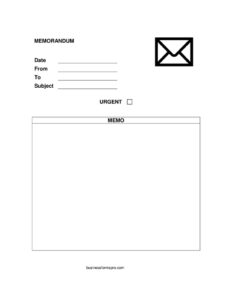
Memo Template
Free memo template in PDF & DOCX. Learn the parts of a memo, how to write one, and proper memo format — download a printable business memorandum today.
PDF
DOCX
2 downloads
0
likes
Download Files
- DOCX
A memo (short for memorandum) is a brief, formal message used to share information, decisions, or instructions across a team or organization. This clean template gives you a ready-made structure so your message looks professional and is easy to read. Download it free in PDF or DOCX. No signup or email required.
What Is a Memo?
A memo is an internal communication tool designed to convey one clear message to a group of people quickly and on the record. Unlike a casual chat or a one-to-one email, a memo follows a recognizable format and is usually distributed to a whole team, department, or company. Its job is to be skimmable: a reader should be able to glance at the heading, understand who it’s for and what it’s about, and absorb the key point in the first sentence or two. Memos are used for policy updates, announcements, meeting summaries, procedural changes, and reminders — anything where you need everyone to have the same information at the same time.
When to Use a Memo
Choosing the right format matters. Use a memo for internal, official communication to several people — a policy change, an announcement, or a directive that should be documented. Use an email for quick, conversational, or one-to-one messages, although a memo is often *sent* as an email attachment or in the body of one. Use a business letter for formal communication with people *outside* the organization, such as clients or vendors. In short: a memo is the format of choice when the audience is internal, the tone is professional, and the message needs to be clear and on the record.
The Parts of a Memo
Every standard memo has two sections: the heading and the body. The heading identifies the message at a glance and contains four lines:
- To: the recipients (a person, team, or “All Staff”)
- From: your name and title
- Date: the date sent
- Subject: a short, specific line that tells readers exactly what the memo is about
The body then delivers the message, usually in three short movements: an opening that states the purpose in the first sentence, a middle that gives the necessary detail or context, and a closing that spells out any action the reader needs to take.
How to Write a Memo
- Fill in the heading — To, From, Date, and a specific Subject line. A vague subject like “Update” gets ignored; “New Remote-Work Policy Effective March 1” gets read.
- State the purpose immediately. Put the main point in the first sentence so busy readers get it right away.
- Provide the details. Use short paragraphs or bullet points for any background, data, or steps. Keep it focused on a single topic.
- Spell out the action. Tell readers exactly what to do, by when, and who to contact with questions.
- Keep it brief. A memo should usually fit on one page; if it’s longer, you probably need a report instead.
- Proofread and distribute to the right list, whether printed, posted, or sent by email.
Memo Formatting Tips
A memo earns its keep by being easy to scan. Lead with your conclusion rather than building up to it, use headings or bullets to break up the body, and keep sentences short. Stick to one subject per memo — if you have two unrelated announcements, send two memos so neither gets lost. Maintain a professional but plain tone; memos are about clarity, not flourish. And resist the urge to over-explain: anything that doesn’t help the reader act on the message can usually be cut.
Types of Memos
Although the format is consistent, memos serve different purposes. An informational memo shares news or updates. A request memo asks readers to take a specific action. A confirmation memo puts a verbal agreement or decision in writing. A directive memo issues instructions or new procedures. And a meeting memo summarizes what was decided and who is responsible for follow-up. The same template handles all of them — only the subject line and body change.
Common Mistakes to Avoid
- A vague subject line that doesn’t tell readers what the memo is about
- Burying the main point instead of stating it in the first sentence
- Covering several unrelated topics in one memo
- Writing pages of detail when a short report would serve better
- Forgetting to say what action, if any, the reader needs to take
- An unprofessional or overly casual tone for an official message
Frequently Asked Questions
What is a memo? A memo, or memorandum, is a short, formal internal message that shares information, decisions, or instructions with a team or organization, using a standard To/From/Date/Subject heading.
How do I write a memo? Complete the heading, state your purpose in the first sentence, provide brief supporting detail, and end with the action readers should take. The template above gives you the full structure.
What are the parts of a memo? A heading (To, From, Date, Subject) and a body (an opening that states the purpose, a middle with the details, and a closing that spells out any action).
How long should a memo be? As short as possible — ideally one page. If your message needs more space than that, a formal report is usually the better format.
What’s the difference between a memo and an email? A memo is a formatted, official message often sent to a group and kept on the record; an email is more flexible and conversational. Memos are frequently delivered *as* emails, keeping the memo structure inside the message.
Should a memo be signed? Memos usually aren’t signed like letters. It’s common to add your initials next to your name in the “From” line, or to sign at the bottom for an especially formal or official memo.
Can a memo be sent by email? Yes — memos are very often sent as an email, either in the body or as an attached document. Keeping the To/From/Date/Subject structure preserves the clarity that makes a memo useful.
Is this memo template free? Yes — download and edit it in PDF or DOCX with no signup required.
Related Forms
Meeting Minutes · Meeting Agenda · Business Letter · Company Policy Explanation · Notice of Meeting
This template is provided for general use. Adapt the format and tone to your organization’s communication standards.
Related Forms
- Address Book Large Print Tabs
- Phone List
- Home Service Contact Sheet
- Class Reunion Student Update Form
- Supplier Contact Info
- Address Book with Tabs
Browse more in Contact.