
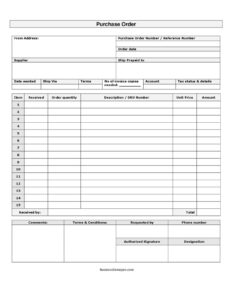
Numbered Purchase Order
Download a free Numbered Purchase Order template in PDF and DOCX to track orders, authorize purchases, and control buying with a clear reference number.
PDF
DOC
0
likes
Download Files
- DOC
A Numbered Purchase Order is a commercial document a buyer issues to a supplier that carries a unique tracking number and lists exactly what is being ordered, at what price, and on what terms. People most often use it to formally authorize a purchase and create an auditable paper trail between requisition and invoice. You can download this template free in both PDF and DOCX formats — no signup required.
What Is a Numbered Purchase Order?
A Numbered Purchase Order (PO) is a buyer-generated request that becomes a binding commitment once a supplier accepts it. The defining feature is the assigned purchase order number, a reference code that links the order to its eventual delivery, invoice, and payment. It is issued by a company’s purchasing or accounts department and sent to a vendor, documenting the items requested, quantities, unit prices, shipping method, and payment terms. Because every order has its own number, finance teams can match invoices to orders, prevent duplicate billing, and resolve disputes quickly. In short, the form turns a verbal or informal request into a controlled, traceable transaction that both parties can rely on.
When Do You Need a Numbered Purchase Order?
A numbered PO is useful any time a purchase needs authorization, tracking, or a clean audit trail. Common situations include:
- Ordering inventory, raw materials, or supplies from a regular vendor and needing to reconcile the later invoice against the order.
- Authorizing a department’s spending so that purchases stay within budget and require an approved signature.
- Placing a large or recurring order where price, quantity, and delivery terms must be agreed in writing before goods ship.
- Managing multiple suppliers where unique reference numbers prevent confusion between overlapping shipments.
- Satisfying internal controls or external auditors who require documented approval for every committed expense.
- Setting expected delivery dates and shipping methods so operations can plan around incoming stock.
What a Numbered Purchase Order Should Have
A complete PO leaves no ambiguity about who is buying what, from whom, and on what terms. The essentials include the buyer’s from address, a unique purchase order/reference number, the order date, and full supplier details. It should specify the shipping destination, requested delivery date, shipping method, and payment terms. The body needs an itemized table with descriptions, SKU numbers, order quantities, and unit prices, plus space for tax status and details. Finally, it must carry the name of the person who requested the order and an authorized signature with the signer’s designation to confirm approval.
How to Fill Out a Numbered Purchase Order
- Enter your from address — your company name and full billing address as the buyer.
- Assign a purchase order number / reference number from your sequence so the order can be tracked.
- Record the order date the PO is issued.
- Fill in the supplier name and contact details.
- Complete ship prepaid to with the delivery address, and set the date wanted for the goods.
- Specify ship via (carrier or shipping method) and the payment terms (e.g., Net 30).
- Note the no. of invoice copies needed and the account the purchase should be charged to.
- Indicate the tax status & details, such as exemption or applicable tax.
- In the line-item table, list each item, mark received on delivery, and enter the order quantity, description/SKU number, and unit price.
- Add any comments and review the terms & conditions.
- Enter requested by, then add the authorized signature and designation.
Why the Order Number Matters
The purchase order number is the backbone of three-way matching, a control finance teams use to verify that the PO, the goods received note, and the supplier’s invoice all agree before payment is released. When the supplier references your number on their invoice and packing slip, your accounts team can confirm at a glance that the right items arrived at the right price. A consistent numbering scheme — sequential, or prefixed by department or year — also makes records searchable and protects against duplicate or fraudulent invoices. The received column on this template supports that process, letting receiving staff check off items as they arrive and flag any shortfalls or back orders directly on the document.
Purchase Order vs. Invoice
These two documents are easy to confuse but serve opposite roles. A purchase order is created by the buyer at the start of a transaction to request goods and authorize the spend. An invoice is created by the seller after fulfillment to request payment. The PO sets the agreed quantities, prices, and terms; the invoice should then mirror those details so the two can be matched. Keeping the same reference number across both makes reconciliation straightforward and reduces billing disputes. Issuing the PO first establishes the commitment in writing before any money changes hands.
Common Mistakes to Avoid
- Reusing or skipping purchase order numbers, which breaks the audit trail and causes matching errors.
- Leaving the unit price or order quantity blank, so totals and invoices cannot be verified.
- Omitting the date wanted or ship via details, leaving delivery expectations unclear.
- Forgetting the authorized signature and designation, leaving the order without proper approval.
- Ignoring the tax status & details field, which can create discrepancies when the invoice arrives.
- Not reviewing the terms & conditions before sending, exposing the buyer to unexpected obligations.
Frequently Asked Questions
What is a Numbered Purchase Order used for? It is used to formally request and authorize the purchase of goods or services from a supplier while assigning a unique reference number for tracking. That number lets you match the order to the delivery and the eventual invoice, supporting clean accounting and internal controls. It is one of the most common documents in business procurement.
Is a purchase order legally binding? A purchase order generally becomes a binding contract once the supplier accepts it, either explicitly or by fulfilling the order. The accompanying terms and conditions define the obligations of both parties. Because contract law varies by jurisdiction, it is wise to confirm how acceptance and enforceability apply to your situation.
How do I number a purchase order? Most businesses use a sequential numbering system, sometimes prefixed by the year, department, or supplier code. The key is that each number is unique and follows a consistent pattern so orders can be located and reconciled easily. Whatever scheme you choose, never reuse a number on a different order.
What is the difference between a purchase order and an invoice? The buyer issues the purchase order to request goods and authorize spending, while the seller issues the invoice afterward to request payment. The invoice should reference the PO number so the two documents can be matched. Together they document the full lifecycle of a purchase.
Does a purchase order need to be signed? This template includes an authorized signature and designation field because most internal control policies require sign-off before an order is committed. The signature confirms that an authorized person has approved the spend. Signing requirements depend on your company’s procurement policy rather than a universal legal rule.
Is this Numbered Purchase Order template free to download? Yes. You can download it free in both PDF and DOCX formats with no signup required. The DOCX version is fully editable, so you can add your logo, adjust the line-item table, and tailor the terms and conditions to your business.
This Numbered Purchase Order template is a general example provided for informational purposes only and is not legal, financial, or tax advice. Procurement rules, contract enforceability, and tax requirements vary by jurisdiction and industry — consult a qualified professional before relying on this document for important transactions.
Need to work out sales tax? Use our free Sales Tax Calculator to add or remove sales tax from any amount in seconds.
Official resource: for the rules that apply to your situation, see the U.S. Small Business Administration.
Related Forms
- Project Change Form
- Rain Check Long
- Construction Invoice
- Business Quote Form
- Tax Invoice Statement Book
- Packing Slips Multiple
Browse more in Invoices and Order Forms.