
Security Deposit Return Letter
Download a free Security Deposit Return Letter template to itemize deductions and refund tenant deposits clearly — free PDF and DOCX download, no signup.
PDF
DOCX
0
likes
Download Files
- DOCX
A Security Deposit Return Letter is a written notice a landlord sends to a former tenant explaining how their security deposit is being handled at move-out, including any itemized deductions and the amount being refunded. It is most commonly used at the end of a lease to document repairs and cleaning charges and to return the remaining balance. You can download this template free in PDF and DOCX, with no signup required.
What Is a Security Deposit Return Letter?
A Security Deposit Return Letter is a formal communication from a landlord or property manager to a tenant after a tenancy ends. It documents the original deposit amount, the lease start and termination dates, and any deductions taken for repairs, cleaning, or unpaid charges. The letter then states the net amount being returned to the tenant. Landlords issue this letter to create a clear paper trail, comply with state notice deadlines, and reduce disputes over withheld funds. For tenants, it provides a transparent breakdown of where their money went. Because deposit handling is heavily regulated, a written, itemized letter protects both parties if a disagreement later arises.
When Do You Need a Security Deposit Return Letter?
This letter comes into play any time a tenancy ends and a deposit needs to be reconciled. Common scenarios include:
- A tenant has moved out at the end of a fixed-term lease and you need to return the deposit balance.
- You inspected the unit and found damage beyond normal wear and tear that requires deductions.
- The unit needed professional cleaning, carpet replacement, or repainting after the tenant vacated.
- A tenant left owing unpaid rent or utility charges that you are applying against the deposit.
- You are returning the full deposit because the unit was left in good condition and want a written record.
- A tenant has formally requested an accounting of their deposit and you must respond within your state’s deadline.
What a Security Deposit Return Letter Should Have
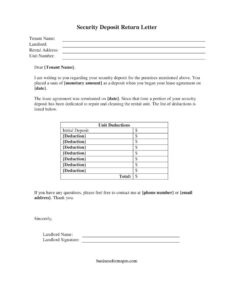
A complete and credible letter includes a few essential elements. It should clearly identify the tenant, the landlord, and the rental property, including the unit number where applicable. It must state the original deposit amount and reference the lease start and end dates. The heart of the letter is the itemized deduction list, showing each charge with a dollar figure, followed by a clearly calculated total and net refund. Finally, it should provide contact information for follow-up questions and be signed and dated by the landlord. Keeping deductions specific and reasonable makes the letter defensible if the tenant challenges it.
How to Fill Out a Security Deposit Return Letter
- Enter the Tenant Name at the top so the letter is clearly addressed to the correct former occupant.
- Fill in the Landlord name as the party issuing the letter.
- Write the full Rental Address and the Unit Number to identify the exact premises.
- In the greeting, restate the tenant’s name and record the monetary amount originally placed as the deposit.
- Enter the lease start date and the termination date to establish the tenancy period.
- Under Unit Deductions, list the Initial Deposit dollar figure.
- For each Deduction line, describe the charge (for example, carpet cleaning or wall repair) and enter its dollar amount.
- Add the deductions and subtract them from the initial deposit to calculate the Total being returned.
- Provide your phone number and email address so the tenant can ask questions.
- Print your Landlord Name, sign the Landlord Signature line, and date the letter before sending.
Itemizing Deductions Fairly
The deduction section is where most disputes originate, so handle it carefully. Charge only for damage that goes beyond normal wear and tear — faded paint and minor scuffs are typically considered ordinary use, while broken fixtures, large stains, or holes in walls are not. Tie each deduction to a real cost, and keep receipts, invoices, and before-and-after photos on file even though they are not part of the letter itself. When the math is transparent and the charges are reasonable, tenants are far more likely to accept the outcome without escalation. If you are returning the full deposit, you can still use the letter with a single line confirming no deductions were taken.
Deadlines, Delivery, and Recordkeeping
Most jurisdictions require landlords to return deposits and provide an itemized statement within a specific number of days after the tenant moves out, and some require interest on held deposits. Because these rules vary widely, confirm your local deadline before sending. Deliver the letter together with any refund check using a method that proves delivery, such as certified mail or a trackable service, and send it to the tenant’s forwarding address. Keep a dated copy of the signed letter and supporting documentation for your records. A clean, well-documented return process protects you if the tenant later files a claim in small claims court.
Common Mistakes to Avoid
- Missing your state’s return deadline, which in some places can forfeit your right to keep any deductions.
- Listing vague deductions like “general damage” instead of specific, itemized charges with amounts.
- Charging for normal wear and tear, which is the landlord’s responsibility rather than the tenant’s.
- Forgetting to subtract deductions correctly, leaving the tenant with the wrong refund total.
- Failing to include contact information or sending the letter without a forwarding address.
- Not keeping a signed copy or supporting receipts and photos in case the tenant disputes the charges.
Frequently Asked Questions
What is a Security Deposit Return Letter used for? It is used to formally notify a tenant of how their security deposit is being handled after they move out. The letter documents the original deposit, lists any deductions for repairs or cleaning, and states the net refund amount. It creates a clear record that protects both the landlord and the tenant.
How do I fill out a Security Deposit Return Letter? Enter the tenant and landlord names, the rental address and unit number, and the original deposit amount and lease dates. Then list each deduction with its dollar figure, calculate the total being returned, add your contact details, and sign and date the letter. Keep supporting receipts and photos with your file copy.
Does a Security Deposit Return Letter need to be notarized? No, a notary is generally not required for this type of letter. A landlord’s signature and date are usually sufficient to document the deposit accounting. Always check your local rental laws, since requirements for delivery and content can vary.
How long do I have to return a security deposit? Deadlines vary significantly by state, often ranging from about two weeks to roughly a month after move-out. Some jurisdictions also require interest on the deposit or impose penalties for late returns. Confirm your specific local deadline before sending the letter and refund.
Is this letter legally binding? The letter itself is a notice and accounting rather than a contract, but it can carry legal weight as evidence of how the deposit was handled. If the deductions are reasonable and documented, the letter supports your position in any dispute. Keeping receipts and photos strengthens its reliability.
How much does this template cost? This Security Deposit Return Letter template is completely free to download from Business Forms Pro. It is available in both PDF and DOCX formats with no signup required, so you can edit it to match your specific deductions and tenancy details.
This template is provided as a general example for informational purposes only and does not constitute legal, financial, or tax advice. Security deposit rules, deadlines, and notice requirements vary by jurisdiction. Consult a qualified attorney or professional to ensure your letter complies with the laws that apply to your rental property.
Official resource: for the rules that apply to your situation, see HUD.
Related Forms
- Rental Unit Smoke Detector CO2 Log
- Unauthorized Pet Notice
- Tenant Repair Deductible
- Move In Letter
- Eviction Notice Letter
- Landlord Rent Increase
Browse more in Landlord Documents.