
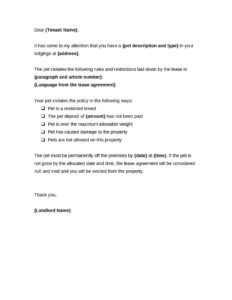
Unauthorized Pet Notice
Notify a tenant of a lease pet violation with this free Unauthorized Pet Notice template, available as a free download in PDF and DOCX.
DOCX
0
likes
Download Files
- DOCX
An Unauthorized Pet Notice is a written letter a landlord sends to a tenant who is keeping a pet in violation of their lease agreement, formally documenting the breach and giving a deadline to remove the animal. It is most commonly used when a landlord discovers a dog, cat, or other animal on a property where pets are prohibited or restricted. You can download this Unauthorized Pet Notice free in both PDF and DOCX formats, with no signup required.
What Is an Unauthorized Pet Notice?
An Unauthorized Pet Notice is a formal communication issued by a landlord or property manager to a tenant who has brought a pet onto a rental property in breach of the lease terms. It identifies the animal, cites the specific lease provision being violated, explains how the policy is being broken, and sets a firm deadline by which the pet must be permanently removed. The notice serves two purposes: it gives the tenant a clear chance to correct the violation, and it creates a written record that the landlord raised the issue and provided reasonable notice. That paper trail can be important if the situation later escalates toward formal lease enforcement or eviction.
When Do You Need an Unauthorized Pet Notice?
Landlords typically reach for this notice when a tenant breaches a no-pet or restricted-pet clause. Common scenarios include:
- A tenant moves in a dog or cat in a building with a strict no-pets policy stated in the lease.
- An inspection, neighbor complaint, or maintenance visit reveals an animal the landlord never approved.
- A tenant keeps a pet that exceeds the lease’s size, breed, or quantity limits (for example, three cats where one is allowed).
- A guest’s animal has effectively become a permanent resident without the landlord’s consent.
- A tenant fails to pay a required pet deposit or sign a pet addendum before bringing in an animal.
- A pet is causing damage, noise complaints, or safety concerns that breach the lease’s pet conditions.
In each case, the notice formalizes what might otherwise be an informal conversation and starts the clock on resolving the violation.
What an Unauthorized Pet Notice Should Have
A complete and effective notice should clearly include the tenant’s name and the rental address, a specific description of the pet at issue, and a direct reference to the lease paragraph or article being violated. It should quote or summarize the actual lease language so there is no ambiguity, explain how the pet violates that policy, and state a precise removal deadline including both a date and time. Finally, it should describe the consequence of non-compliance and be signed by the landlord. Specificity is what gives the document its weight—vague accusations are easy to dispute.
How to Fill Out an Unauthorized Pet Notice
- Address the letter using the Tenant Name exactly as it appears on the signed lease.
- In the pet description and type field, describe the animal precisely—for example, “a medium-sized brown Labrador dog” or “two adult domestic cats.”
- Enter the full rental address, including unit number, so the notice clearly identifies the property in question.
- Cite the exact paragraph and article number of the lease that the pet violates, so the tenant can locate the rule.
- Paste or paraphrase the language from the lease agreement that prohibits or restricts pets, quoting it word-for-word where possible.
- Explain the specific ways the pet violates the policy—no prior approval, prohibited breed, unpaid pet deposit, or similar.
- Set the removal deadline by filling in the date and time by which the pet must be permanently off the premises.
- Confirm the stated consequence of non-compliance, then sign with your Landlord Name and keep a dated copy for your records.
Delivering the Notice and Keeping Records
How you deliver an Unauthorized Pet Notice matters as much as what it says. Many leases and local rules specify acceptable delivery methods, which may include personal delivery, posting on the door, or mailing by certified mail with a return receipt. Whichever method you use, keep proof: a photo of the posted notice, a mailing receipt, or a signed acknowledgment from the tenant. Retain a copy of the completed letter alongside the original lease and any pet addendum. If the tenant removes the pet by the deadline, note the resolution in writing as well, since documenting compliance protects both parties and closes the matter cleanly.
Notice vs. Eviction
It is important to understand that an Unauthorized Pet Notice is not the same as an eviction. The notice is a warning and an opportunity to cure the violation; eviction is a separate legal process that, in most jurisdictions, must go through the courts. While this template references the lease being considered void and possible eviction, a landlord generally cannot simply remove a tenant without following the formal legal steps required where the property is located. The notice is best viewed as the first, reasonable step that gives the tenant a chance to fix the problem before any further action is considered.
Common Mistakes to Avoid
- Failing to cite the actual lease clause, which makes the violation easy for the tenant to dispute.
- Setting an unreasonably short deadline that does not give the tenant a fair chance to rehome or remove the animal.
- Forgetting to specify both a date and a time, leaving the deadline ambiguous.
- Confusing a true pet with a service animal or emotional support animal, which are often protected and treated differently under fair housing rules.
- Not keeping proof of delivery, leaving no record that the tenant received the notice.
- Using threatening or harassing language instead of a calm, factual statement of the breach and the required correction.
Frequently Asked Questions
What is an Unauthorized Pet Notice? It is a formal letter from a landlord to a tenant who is keeping a pet in violation of the lease. It identifies the animal, cites the lease provision being broken, and sets a deadline for the pet to be permanently removed. It serves as both a warning and a documented record of the violation.
How do I fill out an Unauthorized Pet Notice? Enter the tenant’s name and rental address, describe the pet, and reference the exact lease paragraph being violated. Quote the relevant lease language, explain how the policy is breached, set a removal date and time, and sign as the landlord. Keep a dated copy for your files.
Does an Unauthorized Pet Notice need to be notarized? Notarization is generally not required for this type of notice, as it is a communication between landlord and tenant rather than a sworn legal filing. What matters more is clear content and proof of delivery. Always check your local landlord-tenant rules to confirm any specific notice requirements.
Is an Unauthorized Pet Notice legally binding? The notice itself enforces the existing lease rather than creating a new obligation, so its strength comes from the lease it cites. It can support later legal action, but it does not by itself evict a tenant. Formal eviction must follow the legal process required in your jurisdiction.
What about service animals or emotional support animals? Service animals and emotional support animals are frequently protected under fair housing laws and are often not treated as ordinary pets. Sending this notice for a protected animal could create legal problems, so verify the animal’s status before acting. When in doubt, consult a qualified professional.
How much does this template cost? This Unauthorized Pet Notice template is completely free to download from Business Forms Pro in both PDF and DOCX formats. There is no signup, subscription, or payment required. You can edit it to match your lease and local requirements before sending.
This Unauthorized Pet Notice template is a general example provided for informational purposes only and is not legal advice. Landlord-tenant laws, notice periods, and fair housing protections vary by jurisdiction. Consult a qualified attorney or local housing authority before issuing any notice or taking action against a tenant.
Official resource: for the rules that apply to your situation, see HUD.
Related Forms
- Landlord Proof of Residency
- Landlord Lease Renewal
- Tenant Complaint Log
- Rental Agreement Violation
- Tenant Lease Breaking Request Letter
- Apartment Manager Ledger
Browse more in Landlord Documents.