
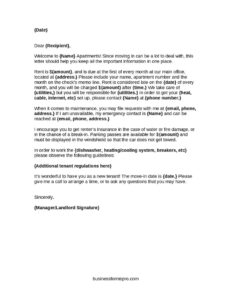
Move-In Letter
Welcome new tenants with a Move-In Letter that puts rent, utilities, and maintenance details in one place — free template download in PDF and DOCX.
DOCX
0
likes
Download Files
- DOCX
A Move-In Letter is a friendly, practical welcome note a landlord or property manager gives a new tenant to gather all the essential rental details in one place. People most often use it to set clear expectations from day one — covering rent, utilities, maintenance, and parking — so the tenancy starts smoothly. You can download this Move-In Letter free in both PDF and DOCX formats, with no signup required.
What Is a Move-In Letter?
A Move-In Letter is a written welcome and orientation document issued by a landlord, property manager, or leasing office to a tenant who is about to occupy a rental unit. While the lease is the binding contract, the Move-In Letter is a plain-language companion that summarizes the day-to-day information a tenant needs: when and where to pay rent, which utilities are covered, who to call for repairs, and how to operate appliances or systems in the unit. It documents practical details that aren’t always easy to find in a dense lease agreement. Used well, it reduces confusion, cuts down on repeat phone calls, and helps the relationship between landlord and tenant begin on a positive, organized note.
When Do You Need a Move-In Letter?
This letter is useful any time a new resident is settling into a property. Common situations include:
- Welcoming a new tenant to an apartment, condo, or single-family rental and consolidating move-in logistics.
- Explaining rent procedures, such as the due date, the office address for payment, and what to write on the check’s memo line.
- Clarifying utility responsibilities — which services you cover as the landlord and which the tenant must set up and pay for.
- Providing maintenance and emergency contacts so tenants know exactly who to reach and how, both during and after business hours.
- Introducing parking rules, including pass fees and the requirement to display the pass to avoid towing.
- Sharing appliance and system instructions, like how to use the dishwasher, reset breakers, or operate the heating and cooling system.
What a Move-In Letter Should Have
A complete Move-In Letter is warm in tone but specific in content. It should open with a greeting and the tenant’s name, state the move-in date, and clearly lay out the rent amount, due date, late-payment policy, and any late fees. It should distinguish between landlord-paid and tenant-paid utilities, and give a contact for setting up services such as heat, cable, or internet. Strong letters include maintenance request instructions, an emergency contact, a recommendation to obtain renter’s insurance, parking pass details, and any appliance or building-system guidelines. Finally, it should close with the manager or landlord’s signature and an invitation to ask questions.
How to Fill Out a Move-In Letter
- Enter the date you are writing the letter at the top.
- Address the recipient by name and welcome them to your building, filling in the name of the apartments or property.
- State the monthly rent amount, that it is due on the first, and the office address where payment is made. Note that the check memo line should include the tenant’s name, apartment number, and the month.
- Specify the date rent is considered late, the time after which a late charge applies, and the late fee amount.
- List the utilities you cover and the utilities the tenant is responsible for.
- Provide the name and phone number of the contact for setting up heat, cable, internet, or similar services.
- Give your maintenance request email, phone, and address, then add the emergency contact’s name and their contact details.
- Add parking pass cost and the windshield-display reminder.
- Write any appliance or system operating guidelines and additional tenant regulations, fill in the move-in date, and sign as the manager or landlord.
Move-In Letter vs. the Lease Agreement
It’s important to understand that the Move-In Letter does not replace the lease. The lease is the legally binding contract that defines the terms of tenancy, rent obligations, and the rights and duties of both parties. The Move-In Letter is a supplementary, informational document that restates and clarifies key points in friendlier language and adds practical orientation details the lease may not spell out — like how to operate the dishwasher or who to call after hours. If anything in the letter appears to conflict with the lease, the lease governs. For that reason, keep the letter consistent with the signed agreement and avoid introducing new terms or fees that weren’t already part of the lease.
Tips for a Smooth Move-In
Pair the letter with a move-in checklist or condition report so both parties document the unit’s state before occupancy. Offer to walk through the apartment together on the move-in date to demonstrate appliances and answer questions in person. Keep a signed or acknowledged copy on file, and provide the tenant a copy they can post on the fridge for quick reference. A clear, courteous letter sets a cooperative tone that often pays off in fewer disputes and better communication throughout the lease.
Common Mistakes to Avoid
- Leaving placeholders unfilled — vague entries like “{amount}” or “{date}” undermine the letter’s whole purpose.
- Contradicting the lease by listing a different rent figure, due date, or late fee than the signed agreement states.
- Being unclear about utilities, which leads to disconnected service or unexpected bills.
- Omitting emergency contact details, leaving tenants stranded during after-hours problems.
- Forgetting parking instructions, resulting in towed vehicles and frustrated tenants.
- Skipping appliance guidelines, which often causes avoidable maintenance calls for misused systems.
Frequently Asked Questions
What is a Move-In Letter? It is a welcome document a landlord or property manager gives a new tenant that gathers essential rental information — rent payment, utilities, maintenance contacts, parking, and appliance instructions — into one easy reference. It complements the lease rather than replacing it.
Is a Move-In Letter legally binding? The letter itself is generally an informational document, not a contract. The legally binding terms live in the lease agreement. If the letter and lease ever conflict, the lease typically controls, so keep the letter consistent with it.
How do I fill out the Move-In Letter? Replace each bracketed placeholder with your specifics: the date, tenant name, rent amount and due date, late-fee terms, utility responsibilities, maintenance and emergency contacts, parking details, and appliance guidelines. Then add the move-in date and sign as the landlord or manager.
Does a Move-In Letter need to be notarized or witnessed? No. Because it is a welcome and orientation letter rather than a binding contract, notarization or witnesses are not required. A signed copy from the landlord is usually all that’s needed, and many landlords ask tenants to acknowledge receipt.
Should I require renter’s insurance in the letter? Many landlords recommend renter’s insurance to protect against water or fire damage and theft, as this letter does. Whether you can require it depends on your lease and local rules, so reflect what your lease states rather than adding new obligations here.
How much does this Move-In Letter template cost? Nothing — it is completely free to download from Business Forms Pro in both PDF and DOCX formats, with no signup required. You can edit the DOCX version to match your property and reuse it for future tenants.
This Move-In Letter template is a general example provided for informational purposes only and is not legal, financial, or tax advice. Landlord-tenant requirements vary by state and locality, and this letter does not replace your lease. Consult a qualified attorney or property professional to ensure your documents comply with applicable laws.
Official resource: for the rules that apply to your situation, see HUD.
Related Forms
- Landlord Warning
- Move In Letter
- Tenant Property Damage Letter
- Apartment Manager Individual Ledger
- Landlord Late Rent Notice
- Tenant Security Deposit Log
Browse more in Landlord Documents.