
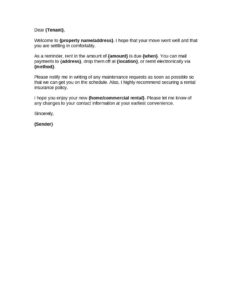
Move In Letter
Welcome new tenants and set clear expectations with our free Move In Letter template, available as a free download in PDF and DOCX formats.
DOCX
2 downloads
0
likes
Download Files
- DOCX
A Move In Letter is a written welcome document a landlord or property manager gives to a new tenant at the start of a tenancy, most often to confirm move-in details, share important contacts, and remind the renter of key lease responsibilities. It is the single most common way to start a tenancy on the right foot and reduce early misunderstandings. You can download this Move In Letter free in PDF and DOCX, with no signup required.
What Is a Move In Letter?
A Move In Letter is a friendly but practical communication issued by a landlord, property management company, or leasing agent to a tenant moving into a rental unit. It documents the start of occupancy and gathers the most useful information in one place: the move-in date, where to send rent, how to request repairs, utility setup expectations, and house rules. While it is not a substitute for the lease, it reinforces what the lease says in plain language. A well-written Move In Letter sets a professional tone, prevents confusion during the first weeks of a tenancy, and gives the tenant a single reference point they can keep on the refrigerator or in a drawer for the duration of their stay.
When Do You Need a Move In Letter?
This letter is most valuable at the very beginning of a new lease, but it comes up in several specific situations:
- A new tenant is taking possession of a unit and you want to confirm the keys, move-in date, and first month’s rent in writing.
- You manage multiple properties and need a consistent, repeatable way to onboard every renter with the same information.
- A unit changes hands mid-lease — for example a roommate replacement or a sublet — and the incoming occupant needs the building’s basics.
- You want to pair it with a move-in inspection checklist so the tenant documents the unit’s condition before settling in.
- Utility accounts must be transferred into the tenant’s name and you want to spell out which services are their responsibility.
- Local rules require disclosures at move-in, and a welcome letter is a convenient envelope for delivering parking rules, trash schedules, and emergency contacts.
What a Move In Letter Should Have
A complete Move In Letter is warm but specific. At minimum it should identify the property and the tenant, confirm the official move-in date, and state how and where rent is paid along with the due date and any grace period. It should explain the procedure for maintenance and emergency repairs, including a contact name and phone number. Strong letters also list which utilities the tenant must set up, any parking or storage assignments, trash and recycling instructions, and a reminder of key lease rules such as quiet hours, smoking policies, and guest limits. Finally, it should include the landlord or manager’s contact details and an invitation to ask questions.
How to Fill Out a Move In Letter
Because this is a flexible template, fill it in section by section so nothing important is left out:
- Date the letter and address it to the tenant by name so it feels personal and reads as official.
- Identify the property with the full rental address, unit number, and the confirmed move-in date.
- Add a welcome line that introduces yourself and your role (owner, manager, or agent).
- State rent details — the monthly amount, the due date, accepted payment methods, where to send it, and any late-fee or grace-period terms.
- Explain maintenance and repairs, listing how to submit a routine request and who to call for after-hours emergencies.
- List utilities and services the tenant must activate, with provider names or account-transfer steps where helpful.
- Cover building basics such as parking spot, mailbox, trash pickup days, and any amenity access.
- Reinforce key rules briefly, then point the tenant to the lease for full details.
- Close with your contact information and your signature, and invite the tenant to reach out with questions.
Pairing the Letter With a Move-In Inspection
One of the smartest uses of a Move In Letter is to bundle it with a move-in condition checklist. Encourage the tenant to walk through the unit within the first few days, note any existing damage, take photos, and return a signed copy to you. This protects both parties: the tenant avoids being blamed for pre-existing wear, and you have a documented baseline for comparing the unit’s condition when they eventually move out. Mentioning the checklist in the letter — and giving a clear deadline to return it — turns a friendly welcome into a practical safeguard for the security deposit.
Move In Letter vs. the Lease Agreement
It is important not to confuse the two documents. The lease is the binding contract that governs the entire tenancy, including rent, term length, and legal obligations. The Move In Letter is a supporting communication that summarizes and clarifies — it does not override the lease and should never contradict it. If anything in the letter differs from the lease, the lease controls. Treat the letter as a helpful onboarding tool, and keep all enforceable terms in the signed lease itself.
Common Mistakes to Avoid
- Contradicting the lease by stating a different rent amount, due date, or rule than the signed agreement.
- Leaving out emergency contacts, so the tenant has no idea who to call for a burst pipe at midnight.
- Being vague about utilities, which leads to lapsed service and finger-pointing over who was responsible.
- Skipping the move-in inspection invitation, weakening your position in any future deposit dispute.
- Forgetting to date and sign the letter, which makes it harder to reference later.
- Using a cold, rule-heavy tone that sets an adversarial mood instead of a cooperative one.
Frequently Asked Questions
What is a Move In Letter used for? It is used to welcome a new tenant and confirm the practical details of moving in, such as the move-in date, rent payment instructions, maintenance procedures, and utility responsibilities. It puts the most useful information in one easy reference while reinforcing the lease. Landlords use it to start the tenancy professionally and cut down on early questions.
Is a Move In Letter legally binding? The Move In Letter itself is generally a communication rather than a contract, so the lease is what carries the binding legal terms. Where the letter restates lease provisions, those provisions remain enforceable through the lease. Keep the letter consistent with the lease and rely on the lease for anything you need to enforce.
Does a Move In Letter need to be notarized? No, a Move In Letter does not typically need notarization or witnesses because it is an informational welcome document rather than a signed contract. A clear date and the landlord’s signature are usually enough. If your jurisdiction requires specific move-in disclosures, deliver those alongside the letter.
How do I fill out a Move In Letter? Start with the date and the tenant’s name, then add the property address and move-in date. Fill in rent details, maintenance and emergency contacts, utility responsibilities, building basics like parking and trash, and a brief reminder of key rules. Close with your contact information and signature.
When should I give the tenant the Move In Letter? Provide it at or just before the move-in date, often together with the keys and a move-in inspection checklist. This timing lets the tenant act on the information immediately, such as setting up utilities and noting the unit’s condition. Some landlords email it in advance and hand a printed copy at key handover.
How much does this Move In Letter template cost? Nothing — this Move In Letter template is completely free to download from Business Forms Pro in both PDF and DOCX formats. There is no signup required and no watermark. You can edit the DOCX version to match your property details and reuse it for every new tenant.
This Move In Letter template is provided as a general example for informational purposes only and is not legal, financial, or tax advice. Landlord-tenant requirements and disclosure rules vary by state and locality, so consult a qualified attorney or property professional to ensure your documents comply with the laws that apply to you.
Official resource: for the rules that apply to your situation, see HUD.
Related Forms
- Pre-Rental Comparison Checklist
- Landlord Lease Renewal
- Landlord Notice To Enter Premises
- Landlord Late Rent Notice
- Apartment Manager Ledger
- Security Deposit Return Letter
Browse more in Landlord Documents.