
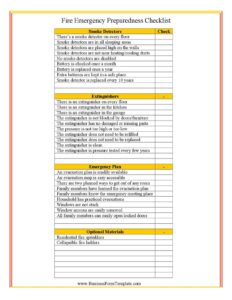
Fire Emergency Checklist
Use this free Fire Emergency Checklist template to inspect smoke detectors, extinguishers, and evacuation plans at home — free download in PDF and DOCX.
PDF
2 downloads
0
likes
Download Files
A Fire Emergency Checklist is a simple inspection tool that helps households verify their smoke detectors, fire extinguishers, and evacuation plans are ready before an emergency ever happens. Most people use it to run a quick, organized home fire-safety audit so nothing critical gets overlooked. It’s free to download here in both PDF and DOCX formats — no signup required.
What Is a Fire Emergency Checklist?
A Fire Emergency Checklist is a structured list of safety items that a homeowner, renter, landlord, or safety coordinator works through to confirm a property is prepared for a fire. It documents the condition and placement of smoke detectors, the readiness of fire extinguishers, and the existence and practice of an evacuation plan. Rather than relying on memory, the checklist gives you a repeatable, written record you can revisit monthly or seasonally. It’s commonly used at home, but the same format works for rental units, vacation properties, and small businesses. The goal is straightforward: catch a dead battery, a blocked exit, or a missing escape route while there’s still time to fix it.
When Do You Need a Fire Emergency Checklist?
This checklist is useful any time you want to confirm your fire defenses are actually working rather than assuming they are. Common situations include:
- Moving into a new home or apartment and assessing existing smoke detectors and extinguishers.
- Running a routine monthly or quarterly home safety inspection.
- Preparing a household evacuation plan and teaching it to children or elderly family members.
- Getting ready for fire season in a wildfire-prone region.
- A landlord documenting that a rental unit meets basic fire-safety standards between tenants.
- Reviewing safety before holidays when cooking, candles, and space heaters increase fire risk.
What a Fire Emergency Checklist Should Have
A complete Fire Emergency Checklist covers the three pillars of home fire safety. The first is detection — smoke detectors that are correctly placed, powered, and maintained. The second is suppression — fire extinguishers that are accessible, charged, and undamaged. The third is escape — a tested evacuation plan with two ways out of every room and a known meeting place. A good checklist also includes optional reinforcements like residential sprinklers and collapsible fire ladders, plus space to note dates so you can track when batteries were last checked or extinguishers last pressure tested.
How to Fill Out a Fire Emergency Checklist
- Smoke detectors: Confirm there’s a detector on every floor and in all sleeping areas, that they’re mounted high on walls, and that none are near heating or cooling ducts. Verify no detector is disabled.
- Detector maintenance: Check that batteries are tested monthly, replaced yearly, and that spare batteries are stored safely. Note whether each detector is under 10 years old, since units should be replaced after a decade.
- Extinguishers: Mark whether you have an extinguisher on every floor and in the kitchen and garage. Confirm none are blocked by doors or furniture.
- Extinguisher condition: Inspect for damaged or missing parts, verify the pressure gauge reads correctly, and check whether the unit needs refilling, replacing, or cleaning. Note the last pressure-test date.
- Emergency plan: Confirm an evacuation plan and map are accessible, that every room has two exits, and that family members have learned the plan and know the meeting place.
- Practice and exits: Verify the household has practiced evacuations, that windows aren’t stuck, screens come off easily, and everyone can open locked doors.
- Optional items: Note residential fire sprinklers and collapsible fire ladders if present.
Smoke Detectors, Extinguishers, and Escape Routes
Each section of the checklist reinforces the others, and skipping any one leaves a gap. Smoke detectors buy you the seconds needed to react, which is why placement on every floor and in sleeping areas matters so much — a fire that starts while everyone is asleep is detected only if an alarm is within earshot. Mounting detectors high catches rising smoke, while keeping them away from ducts prevents drafts from delaying activation. Fire extinguishers are your first line of suppression for small, contained fires, so an unblocked extinguisher in the kitchen and garage — the two highest-risk rooms — is far more valuable than one tucked behind furniture. Finally, the escape plan turns preparation into action. Two exits per room, unstuck windows, removable screens, and a practiced route mean that if suppression fails, everyone still gets out.
Keeping the Checklist Current
A Fire Emergency Checklist is most effective when used on a recurring schedule rather than once and forgotten. Many households run through the smoke-detector battery checks monthly, replace batteries annually, and complete the full inspection — including extinguisher pressure and evacuation practice — once or twice a year. Save each completed copy with a date so you can see when items were last addressed. If you rent, sharing a completed checklist with your landlord creates a written record that detectors and extinguishers were inspected. Households with young children, older adults, or anyone with mobility needs should pay special attention to the escape-route items, since opening locked doors and removing window screens may require extra planning or equipment like collapsible ladders.
Common Mistakes to Avoid
- Disabling a smoke detector to silence nuisance alarms and forgetting to re-enable it.
- Assuming a fire extinguisher works without checking the pressure gauge or expiration.
- Storing extinguishers behind doors, in cabinets, or otherwise out of easy reach.
- Creating an evacuation plan but never actually practicing it with the whole household.
- Overlooking second exits — counting only doors and forgetting windows that may be painted shut.
- Failing to teach children and guests where the emergency meeting place is located.
Frequently Asked Questions
What is a Fire Emergency Checklist used for? It’s used to inspect and document a home’s fire-safety readiness, covering smoke detectors, fire extinguishers, and evacuation plans. Running through it regularly helps you catch problems — like a dead battery or a blocked exit — before they become dangerous. It also creates a written record of when each item was last checked.
How often should I use this checklist? Test smoke detector batteries monthly and replace them at least once a year. Complete a full inspection, including extinguisher checks and an evacuation drill, at least once or twice annually, and any time you move into a new home.
How do I know if my fire extinguisher is still good? Check that the pressure gauge sits in the green zone, that there are no damaged or missing parts, and that it hasn’t passed its refill or replacement date. The checklist also reminds you that extinguishers should be pressure tested periodically — follow the manufacturer’s guidance on the label.
Where should smoke detectors be placed? Install one on every floor and in all sleeping areas, mounted high on the walls or ceiling where rising smoke gathers. Keep them away from heating and cooling ducts, which can blow smoke past the sensor and delay the alarm.
Is this Fire Emergency Checklist free to download? Yes. You can download this checklist for free in both PDF and DOCX formats with no signup required. Use the editable DOCX to add your own rooms, dates, or notes, or print the PDF to fill out by hand.
Do I legally need a fire safety checklist at home? A personal checklist generally isn’t legally required, though smoke detector and extinguisher rules vary by state and locality, and rental properties often have specific requirements. Check your local fire codes and any lease terms to confirm what applies to your situation.
This Fire Emergency Checklist template is a general example provided for informational purposes only and is not professional safety, legal, or compliance advice. Fire codes and equipment requirements vary by jurisdiction and property type — consult your local fire department or a qualified safety professional to ensure your home meets applicable standards.
Related Forms
- Monthly Project Timetable
- Monthly Multiple Project Timetable
- Fire Drill Log
- College Application Comparison Checklist
- Baby Care Daily Log
- Pest Sighting
Browse more in Log and Inventory.