
College Application Comparison Checklist
Compare colleges side by side on cost, academics, location and more with this free College Application Comparison Checklist template, free download in PDF and DOCX.
PDF
3 downloads
0
likes
Download Files
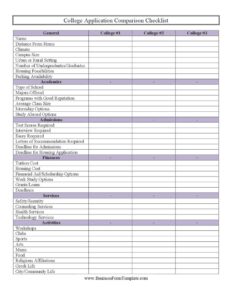
A College Application Comparison Checklist is a simple side-by-side worksheet that lets students rate and compare up to three schools across the factors that matter most — location, academics, admissions requirements, cost, services, and campus life. Most people use it during the spring and fall of their decision season to keep details straight when applications and acceptance letters start piling up. It’s free to download here in both PDF and DOCX formats, with no signup required.
What Is a College Application Comparison Checklist?
A College Application Comparison Checklist is an organizing tool — not an official document — that gathers the key characteristics of several colleges into one structured table. It’s typically used by high school juniors and seniors, transfer students, parents, and school counselors who want an objective way to weigh options. Instead of juggling brochures, browser tabs, and campus tour notes, you record each school’s data under the same categories so you can compare apples to apples. The checklist documents everything from tuition and majors to housing availability and Greek life, then sets it beside two other schools in dedicated columns for College #1, College #2, and College #3.
When Do You Need a College Application Comparison Checklist?
This checklist is most useful whenever you’re researching, applying to, or choosing between schools. Common situations include:
- You’re building a college list and want to narrow a dozen options down to a realistic few.
- You’ve toured several campuses and need a structured way to remember what you saw at each one.
- You’ve received multiple acceptance letters and have to commit by the deadline.
- You’re comparing financial aid packages and want tuition, housing, grants, and work-study side by side.
- A parent and student want a shared document to discuss priorities and trade-offs together.
- A school counselor is helping several students organize their research consistently.
What a College Application Comparison Checklist Should Have
A complete checklist groups its fields into clear categories so nothing important gets overlooked. The strongest versions cover general details (name, distance from home, climate, setting, and size), academics (type of school, majors, reputation, class size, internships, and study abroad), admissions (test scores, essays, interviews, recommendations, and deadlines), finances (tuition, housing cost, aid, scholarships, and work-study), services (safety, counseling, health, and technology), and activities (clubs, sports, arts, food, religious affiliations, Greek life, and community life). Three columns let you score each school the same way, and a notes habit keeps your impressions fresh.
How to Fill Out a College Application Comparison Checklist
- Write each school’s name at the top of the College #1, #2, and #3 columns so every row applies to all three.
- Complete the general section: record distance from home, climate, campus size, urban or rural setting, number of undergraduates and graduates, housing possibilities, and parking availability.
- Fill in the academics rows — type of school, majors offered, programs with a strong reputation, average class size, internship options, and study abroad options.
- Capture admissions requirements: test scores required, whether an interview or essay is needed, letters of recommendation, and the deadlines for both admissions and housing applications.
- Enter the finances data: tuition cost, housing cost, financial aid and scholarship options, work-study, grants and loans, and any related deadlines.
- Note the services available — safety and security, counseling, health, and technology services.
- Round out the activities section with workshops, clubs, sports, arts, music, food, religious affiliations, Greek life, and city or community life.
Tips for Comparing Schools Fairly
The value of this checklist comes from consistency, so gather the same data for each school from the same kinds of sources. Pull tuition and deadline figures directly from official admissions and financial aid pages, since these change yearly and unofficial sites can be outdated. For subjective categories like climate, food, or community life, use a simple rating — a 1-to-5 scale or a quick word like “great,” “okay,” or “poor” — so the columns stay easy to scan. Fill in factual rows first, then add your gut reactions after visiting or attending a virtual session. Leaving a cell blank is itself useful information: it flags a question you still need to research before committing.
Turning the Checklist Into a Decision
Once every column is filled, step back and identify your non-negotiables. Maybe a strong nursing program, an in-state tuition rate, or being within a few hours of home matters more than anything else — highlight those rows and let them carry extra weight. Compare the deadlines across all three columns and put the earliest admissions and housing dates on your calendar immediately, because missing a housing deadline can cost you a spot even after acceptance. Finally, look at the finances section as a package rather than a single number: a higher tuition school with generous scholarships and work-study may cost less than a cheaper school with few grants. The checklist won’t decide for you, but it makes the trade-offs visible.
Common Mistakes to Avoid
- Comparing different data points. Listing total enrollment for one school and only undergraduates for another makes the size column meaningless.
- Ignoring deadlines. Filling in academics and finances but skipping the admissions and housing deadline rows leads to missed opportunities.
- Using out-of-date costs. Tuition and aid figures change annually; always verify against the current official year.
- Overweighting one visit. A rainy tour day or a great cafeteria meal can skew your ratings; balance impressions with facts.
- Leaving the finances vague. Note actual numbers for tuition, housing, grants, and loans rather than “affordable” so you can truly compare.
- Forgetting to update it. Aid packages and decisions arrive over weeks; revisit the checklist as new information comes in.
Frequently Asked Questions
What is a College Application Comparison Checklist used for? It’s used to organize and compare the most important features of several colleges in one place, from cost and academics to campus life and deadlines. Students, parents, and counselors rely on it to make a clearer, more objective decision. It turns scattered research into a single side-by-side view.
How do I fill out the checklist? Start by labeling the three columns with your school names, then work through each category — general, academics, admissions, finances, services, and activities — entering the same information for every school. Pull factual data like tuition and deadlines from official college pages, and use short ratings for subjective items. Update it as new acceptance and aid details arrive.
Is this checklist free to download? Yes. You can download the College Application Comparison Checklist for free in both PDF and DOCX formats, with no signup or account required. Use the editable DOCX to type directly into the columns, or print the PDF to fill it in by hand.
Can I compare more than three colleges? The template is set up for three schools, which keeps the comparison focused and readable. If you’re considering more, you can print or copy a second sheet for additional schools, then compare your top finalists on one final page. Many students use several rounds to narrow a long list down to three.
Where do I find the data to fill it in? Use each college’s official admissions, financial aid, and student life web pages for accurate, current figures. Campus tours, virtual info sessions, and conversations with current students are great for the activities and community-life rows. Your high school counselor can also help verify deadlines and requirements.
Is this checklist an official application? No — it’s a personal planning and research tool, not an application or any document submitted to a college. The actual applications, test scores, essays, and forms are handled separately through each school’s admissions process or a common application platform. Think of this checklist as the worksheet that helps you decide where to apply and enroll.
This template is a general example provided for informational and organizational purposes only and is not admissions, financial, or legal advice. College requirements, costs, and deadlines vary by institution and year — always confirm details with each school’s official admissions and financial aid offices and consult a qualified counselor or advisor for guidance specific to your situation.
Related Forms
- Office Supplies Inventory
- Computer Update Tracker
- Phone Tree
- Coin Collector Log
- Donations Tracker Thermometer
- Perpetual Inventory Form
Browse more in Log and Inventory.