
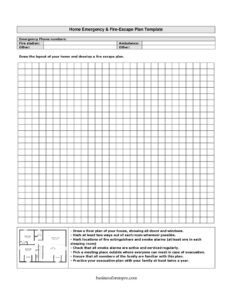
Fire Escape Plan Template
Use this free Fire Escape Plan Template to map exits, mark meeting spots, and list emergency numbers for your home; free PDF and DOCX download.
PDF
DOCX
0
likes
Download Files
- DOCX
A Fire Escape Plan Template is a printable worksheet that helps your household map out exit routes, mark a safe meeting place, and record key emergency phone numbers before a fire ever happens. People most often use it to make sure every family member knows two ways out of every room and where to gather outside. It’s free to download here in both PDF and DOCX formats, with no signup required.
What Is a Fire Escape Plan Template?
A Fire Escape Plan Template is a simple, ready-to-use document that guides you through creating a written and drawn plan for evacuating your home during a fire or other emergency. It is typically used by families, renters, landlords, daycare providers, and caregivers to document the layout of a home, identify all available exits, and assign a designated outdoor meeting point. The template includes space to write down critical contacts such as the fire department, ambulance service, and other emergency numbers. Rather than relying on memory in a panic, the plan turns escape into a rehearsed routine. Once completed, it serves as both a planning tool and a visual reference you can post where everyone can see it.
When Do You Need a Fire Escape Plan Template?
Almost every household benefits from having a written escape plan, but certain situations make one especially important:
- You have just moved into a new home or apartment and need to learn its exits, windows, and safest routes out.
- You live with young children, elderly relatives, or anyone who may need extra help evacuating quickly.
- You are a landlord or property manager preparing safety documentation for tenants.
- You run a home daycare, in-home business, or vacation rental and want to brief guests or staff on emergency procedures.
- Your home has multiple floors, basements, or rooms with limited exits where a second escape route matters.
- You are holding a family fire drill, school safety project, or community preparedness event and want a clear, printable guide.
What a Fire Escape Plan Should Have
A complete fire escape plan goes beyond a single exit. To be genuinely useful, your finished plan should include the following:
- A drawn floor layout showing every room, door, window, and hallway.
- At least two ways out of every room, ideally a primary door and a secondary window or alternate route.
- Clearly marked smoke alarm locations and, where present, fire extinguishers.
- A single, specific outdoor meeting place a safe distance from the building.
- Emergency phone numbers written out and easy to read.
- Notes about who is responsible for helping children, pets, or family members with limited mobility.
How to Fill Out a Fire Escape Plan Template
Work through the template room by room so nothing is overlooked:
- Start with the emergency phone numbers section. Fill in your local fire station number, then the ambulance or medical emergency line. In many areas a single number such as 911 covers all services, so list both that and any direct local lines you have.
- Add any other important contacts in the remaining number field, such as a poison control line, a non-emergency police number, a trusted neighbor, or a relative who should be notified.
- Use the layout area to draw the layout of your home. Sketch each room, labeling them, and include all doors and windows.
- Mark every exit with an arrow showing the direction of escape, and draw a second route from each room.
- Indicate smoke alarm and fire extinguisher locations on the drawing.
- Mark the outdoor meeting spot clearly so everyone knows exactly where to go and stay.
How to Practice and Use Your Plan
A plan only works if everyone knows it. After you finish the template, gather the household and walk through each route together, opening doors and unlatching windows so they aren’t a surprise during a real emergency. Practice a drill at least twice a year, including one at night, since most fatal home fires happen while people sleep. Time how long it takes everyone to reach the meeting point, and adjust the plan if anyone struggles. Teach children to stay low under smoke, to feel doors for heat before opening them, and never to go back inside for belongings or pets. Post the completed plan somewhere visible, such as a hallway, refrigerator, or near a bedroom, and keep a copy with your other emergency documents.
Adapting the Plan for Special Needs
Tailor your escape plan to the people who actually live in your home. For infants and young children, assign a specific adult to carry or guide them out. For elderly residents or anyone using a wheelchair, walker, or oxygen, choose rooms near accessible exits and plan a clear path free of obstacles. If someone is hard of hearing, consider smoke alarms with strobe lights or bed-shaker accessories. Note where pets typically hide so you can account for them safely without delaying your own escape. Keep escape ladders near upper-floor windows if your home has more than one story, and make sure everyone knows how to use them.
Common Mistakes to Avoid
- Planning only one way out of each room instead of two, leaving no backup if the main exit is blocked.
- Choosing a vague meeting spot like “the front yard” rather than a specific, fixed landmark such as a particular tree or mailbox.
- Forgetting to test windows and security bars to confirm they actually open from the inside.
- Writing the plan but never practicing it, so the routes are unfamiliar under stress.
- Leaving the emergency number fields blank or using outdated contacts.
- Failing to update the plan after remodeling, moving furniture, or a change in who lives in the home.
Frequently Asked Questions
What is a fire escape plan template used for? It is used to map your home’s exits and create a clear, rehearsed evacuation route for every member of the household. The template gives you space to draw your floor layout, mark two ways out of each room, choose a meeting point, and record emergency phone numbers so you’re prepared before a fire happens.
How do I fill out the fire escape plan template? Begin by writing your fire station, ambulance, and other emergency numbers in the contact fields. Then sketch each room of your home, draw arrows for primary and secondary exits, mark smoke alarms, and circle a single outdoor meeting spot. Walk the routes with your family to confirm everything is realistic.
How many exits should each room have? Fire safety guidance generally recommends two ways out of every room whenever possible, typically a door and a window. If a window is your second route, make sure it opens easily and that you have an escape ladder for upper floors.
How often should we practice the plan? Most safety organizations suggest practicing a home fire drill at least twice a year, including one drill at night. Regular practice keeps the routes familiar and helps everyone, especially children, react quickly and calmly.
Where should I keep the completed plan? Post it in a visible, central location such as a hallway, the refrigerator door, or near bedrooms. Keep an extra copy with your other emergency documents, and review it whenever your household or home layout changes.
Is this fire escape plan template free? Yes. You can download it free from Business Forms Pro in both PDF and DOCX formats, with no signup required. The DOCX version lets you type in your details, while the PDF is ready to print and fill in by hand.
This template is a general example provided for informational purposes only and is not professional safety, legal, or emergency-planning advice. Fire codes, building requirements, and recommended procedures vary by location and property type. Consult your local fire department or a qualified safety professional to ensure your plan meets the needs of your specific home and household.
Related Forms
- Housesitting Instructions
- Basic Entry Form White
- Restaurant Shift Schedule
- Goal Planner
- Request Transcript
- Business Purchase Proposal
Browse more in Miscellaneous.