
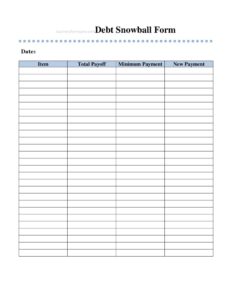
Debt Snowball Form
Use this free Debt Snowball Form template to list debts smallest to largest, track payments, and pay off balances faster. Free download in PDF and DOCX.
PDF
DOCX
2 downloads
0
likes
Download Files
- DOCX
A Debt Snowball Form is a simple worksheet that helps you list all your debts from the smallest balance to the largest, then pay them off one at a time for fast motivation and visible progress. People most often use it when they feel overwhelmed by multiple balances and want a clear, organized plan to become debt-free. You can download this Debt Snowball Form free in both PDF and DOCX formats, with no signup required.
What Is a Debt Snowball Form?
A Debt Snowball Form is a personal-finance worksheet built around the debt snowball method, a popular payoff strategy that prioritizes momentum over math. Instead of attacking the highest-interest debt first, you order your debts by balance and focus every extra dollar on the smallest one while paying minimums on the rest. Once the smallest is cleared, you roll its payment into the next debt, creating a growing “snowball.” The form is used by individuals, couples, and families managing credit cards, medical bills, car loans, student loans, and personal loans. It documents each balance, minimum payment, interest rate, and target payoff date so you can see your entire debt picture on a single page.
When Do You Need a Debt Snowball Form?
This worksheet is useful any time you want structure and accountability around paying off what you owe. Common situations include:
- You have several credit card balances and aren’t sure which one to tackle first.
- You’re starting a budget reset and want to fold debt payoff into your monthly plan.
- You and a partner are combining finances and need a shared view of all household debts.
- You just received a bonus, tax refund, or raise and want to direct the extra money strategically.
- You’ve tried random payments before and need a repeatable system that keeps you motivated.
- You want a printable tracker to mark off each debt as it gets eliminated.
Debt Snowball vs. Debt Avalanche
It helps to know how the snowball method compares to its main alternative. The debt snowball orders debts from smallest to largest balance, ignoring interest rate, because early wins build momentum and keep you motivated. The debt avalanche orders debts by highest interest rate first, which can save more money over time. Neither is wrong; the best method is the one you’ll actually stick with. Many people choose the snowball precisely because crossing a paid-off debt off the list feels rewarding and encourages them to keep going. This form is designed for the snowball approach, but you can easily adapt it for the avalanche method by sorting your entries by interest rate instead of balance.
What a Debt Snowball Form Should Have
A complete worksheet captures everything you need to make and follow a plan:
- A row for each individual debt, listed in order from smallest to largest balance.
- The creditor or account name so each line is easy to identify.
- The current balance owed.
- The minimum monthly payment required.
- The interest rate (APR) for reference.
- A space for the extra “snowball” amount you’re applying.
- A target payoff date and a checkbox or status column to mark debts as paid.
- A running total so you can watch your overall balance shrink.
How to Fill Out a Debt Snowball Form
Work through the form one line at a time:
- Gather your most recent statements for every debt so your numbers are accurate.
- In the creditor column, write the name of each account, such as a store card, auto lender, or medical provider.
- Enter the current balance for each debt, then sort all rows from smallest balance to largest.
- Record the minimum monthly payment for each account so you never miss a required payment.
- Note the interest rate (APR) beside each balance for reference, even though the snowball ignores it for ordering.
- Decide your total monthly debt budget, then identify the extra amount above the combined minimums.
- Apply that extra snowball amount to the smallest debt while paying minimums on the rest.
- Estimate a payoff date for the first debt and write it in the target column.
- When the smallest debt is paid, mark it complete and roll its full payment into the next debt down the list.
- Update balances each month and recalculate your running total to track progress.
Tips for Making the Snowball Work
The form is only as powerful as the habits behind it. Set a fixed day each month to update your balances so the numbers stay current. Whenever you find spare cash, by trimming expenses or earning extra income, send it straight to your target debt rather than spreading it thin. Resist opening new lines of credit while you’re paying down existing ones, since new debt resets your momentum. Consider posting the printed form somewhere visible, like the refrigerator, so you and your household stay motivated. Celebrate each payoff in a small, free way to reinforce the habit. Keeping minimum payments current on every account also protects your credit while you focus extra funds on one balance.
Common Mistakes to Avoid
- Ordering debts by interest rate instead of balance, which turns the snowball into a different method and can blunt the motivational payoff.
- Forgetting to pay the minimum on every other debt while you focus the extra on one, risking late fees.
- Leaving off small or forgotten debts, so the plan is incomplete from the start.
- Failing to update balances each month, which makes the form go stale and inaccurate.
- Adding new debt mid-plan, which resets your progress and demoralizes you.
- Setting an extra snowball amount so aggressive that you can’t cover essentials and have to borrow again.
Frequently Asked Questions
What is the debt snowball method? It’s a payoff strategy where you list your debts from smallest balance to largest, pay minimums on all of them, and throw every extra dollar at the smallest debt first. Once that debt is gone, you roll its payment into the next one, building momentum like a snowball rolling downhill. The goal is quick, visible wins that keep you motivated to finish.
How do I fill out the Debt Snowball Form? List each debt with its creditor name, balance, minimum payment, and interest rate, then sort the rows from smallest balance to largest. Apply your extra payment to the top (smallest) debt, mark it paid when finished, and roll that payment into the next debt. Update your balances each month to keep the worksheet accurate.
Should I sort by balance or by interest rate? The debt snowball sorts by smallest balance first to maximize motivation, while the debt avalanche sorts by highest interest rate to minimize total interest paid. This form is built for the snowball, but you can sort by rate if you prefer the avalanche. The best choice is the one you’ll consistently follow.
Is the debt snowball method effective? Many people find it effective because the early payoffs create a sense of accomplishment that keeps them going. Mathematically, paying the highest interest first can save more money, but motivation often matters more for long-term success. Choose whichever approach helps you stay committed to becoming debt-free.
Does using this form affect my credit score? The form itself is just a planning worksheet and has no direct impact on your credit. However, consistently making payments and reducing balances over time can help your credit standing. Always keep at least the minimum payment current on every account to avoid late marks.
How much does this Debt Snowball Form cost? It is completely free to download from Business Forms Pro in both PDF and DOCX formats, with no signup or account required. The DOCX version is easy to edit on your computer, and the PDF is ready to print and fill in by hand. You can reuse and update it as often as you like.
This Debt Snowball Form template is a general example provided for informational purposes only and is not financial, tax, or legal advice. Personal finance strategies and outcomes vary by individual circumstance. For guidance tailored to your situation, consult a qualified financial professional.
Official resource: for the rules that apply to your situation, see the Consumer Financial Protection Bureau.
Related Forms
- Fixed Expenses Worksheet
- Open Orders Tracker
- Weekly Payroll Form
- Dependent Care Claim Form
- Income Sources
- Break Even Analysis
Browse more in Money.