
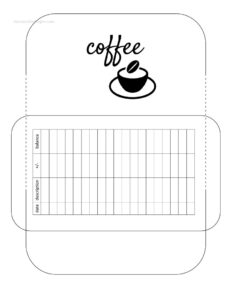
Coffee Cash Envelope
Download a free Coffee Cash Envelope template to budget your coffee spending with the cash envelope method — free PDF and DOCX download, no signup.
PDF
DOCX
2 downloads
0
likes
Download Files
- DOCX
A Coffee Cash Envelope is a simple budgeting tool that holds the physical cash you’ve set aside for coffee purchases during a set period, helping you control one of the easiest categories to overspend on. People most often use it to stop daily café runs from quietly draining their monthly budget. It’s free to download here in both PDF and DOCX formats, with no signup required.
What Is a Coffee Cash Envelope?
A Coffee Cash Envelope is a labeled envelope used in the cash envelope budgeting system, dedicated specifically to your coffee and café spending. At the start of each pay period or month, you load it with a fixed amount of cash, and every time you buy a latte, espresso, or bag of beans you pay from that envelope. When the cash runs out, your coffee spending for the period is done. The envelope template typically includes a place to label the category, record the budgeted amount, and track each transaction so you always know your remaining balance. It turns an abstract budget line into something physical and visible, which makes overspending much harder to ignore.
When Do You Need a Coffee Cash Envelope?
This envelope is useful any time coffee has become a budget blind spot. Common situations include:
- You buy a daily drink from a café and want to cap the monthly total without giving it up entirely.
- You’re following the cash envelope or zero-based budgeting method and need a dedicated category for discretionary treats.
- You’re trying to pay down debt or build savings and want to redirect leftover coffee cash toward those goals.
- You share a household budget and want a clear, agreed limit for coffee runs and beans.
- You’re teaching a teen or young adult how to manage spending with a tangible, low-stakes category.
- You’ve noticed small card swipes adding up and want the friction of paying with physical cash to slow impulse buys.
What a Coffee Cash Envelope Should Have
An effective coffee envelope keeps tracking simple while staying complete. The essentials are a clear category label so it doesn’t get mixed up with other envelopes, a budgeted amount for the period, a date range showing which pay cycle or month it covers, and a transaction log with columns for the date, where you spent, the amount, and a running balance. A starting balance line and an ending balance line let you reconcile the envelope at the end of the period. Leaving room for notes — such as rolling leftover cash forward or topping it up — rounds out a practical, reusable template.
How to Fill Out a Coffee Cash Envelope
Because this is a flexible budgeting template, you can complete it in a few minutes:
- Label the category. Write “Coffee” (or be specific, like “Café & Beans”) at the top so this envelope is unmistakable among your others.
- Set the period. Enter the date range it covers — a calendar month or your pay cycle, such as the 1st through the 30th.
- Record the budgeted amount. Decide how much coffee spending you can comfortably afford and write that figure as your starting balance.
- Load the cash. Place that exact amount of physical cash inside the envelope.
- Log each purchase. Every time you buy coffee, write the date, the place, and the amount spent in the transaction rows.
- Update the running balance. Subtract each purchase from the previous balance so the remaining amount is always current.
- Reconcile at period end. Compare the cash left in the envelope to your written ending balance, and note whether you’ll roll it over or top up next period.
Tips for Making the Coffee Envelope Work
The power of the cash envelope method comes from its limits, so resist the urge to borrow from another envelope when the coffee one empties. If you consistently run out early, that’s useful data — either raise the budget intentionally or adjust your habits. Many people brew at home on weekdays and reserve the envelope for weekend treats, which stretches the cash further. Consider rolling any leftover balance into a savings envelope at month’s end so the money you didn’t spend on coffee visibly grows into something else. Keeping the envelope somewhere you’ll see it, like by your keys or wallet, reinforces the habit and reminds you to pay from it rather than reaching for a card.
How It Fits Into a Larger Budget
A coffee envelope rarely stands alone — it’s usually one of several category envelopes such as groceries, gas, dining out, and entertainment. Treat coffee as a discretionary line that sits below your essential bills and savings. If you use zero-based budgeting, every dollar should have a job, and the coffee envelope is simply the dollars you’ve assigned to enjoyment. Reviewing all your envelopes together at the end of each period shows where cash is tight and where you have room, making it easy to shift a few dollars between fun categories without breaking the overall plan.
Common Mistakes to Avoid
- Forgetting to log small purchases. A single missed entry throws off your running balance and defeats the tracking.
- Raiding other envelopes. Pulling cash from groceries or gas to fund extra lattes hides the real problem.
- Setting the budget unrealistically low. An amount you can’t stick to leads to frustration and abandonment.
- Paying by card out of habit. Card swipes bypass the envelope and the budget loses its meaning.
- Not reconciling at period end. Skipping the final count means you never learn whether your limit is right.
- Ignoring leftover cash. Letting unspent money pile up unlabeled invites it to be spent elsewhere.
Frequently Asked Questions
What is a Coffee Cash Envelope used for? It’s a dedicated envelope that holds the physical cash you’ve budgeted for coffee and café spending during a set period. Paying from it instead of a card makes your limit tangible and helps stop small daily purchases from adding up unnoticed.
How much should I put in my coffee envelope? There’s no fixed amount — it depends on your income, your other expenses, and how much coffee matters to you. A practical approach is to review what you actually spent last month, then set a slightly lower target as your starting balance and adjust over time.
Do I have to use physical cash? The traditional method relies on cash because the friction of handing over bills curbs impulse spending. If you prefer, you can use the same template as a digital tracker, but you’ll lose the tactile limit that makes the cash system effective.
What happens if the envelope runs out before the period ends? That’s the system working as intended — it signals you’ve hit your coffee limit for the period. You can choose to stop until the next refill, brew at home, or intentionally raise the budget next cycle if the limit was too tight.
Can I roll over leftover cash? Yes. Many people carry a small balance forward or sweep the leftover amount into a savings or treat envelope at the end of the period. Decide your rule in advance and note it so the cash doesn’t quietly disappear.
Is this Coffee Cash Envelope template free? Yes, it’s completely free to download in both PDF and DOCX formats with no signup required. Print the PDF as-is or open the DOCX to customize the category name, budget amount, and transaction rows before printing.
This template is a general example provided for informational purposes only and does not constitute financial, budgeting, or tax advice. Personal financial situations vary, so consider consulting a qualified financial professional for guidance tailored to your circumstances.
Official resource: for the rules that apply to your situation, see the Consumer Financial Protection Bureau.
Related Forms
- Christmas Cash Envelope
- Tax Refund Planner
- Lump Sum Payment Planning Form
- List of Accounts
- Appointment Of Collection Agent
- Petty Cash Voucher
Browse more in Money.